



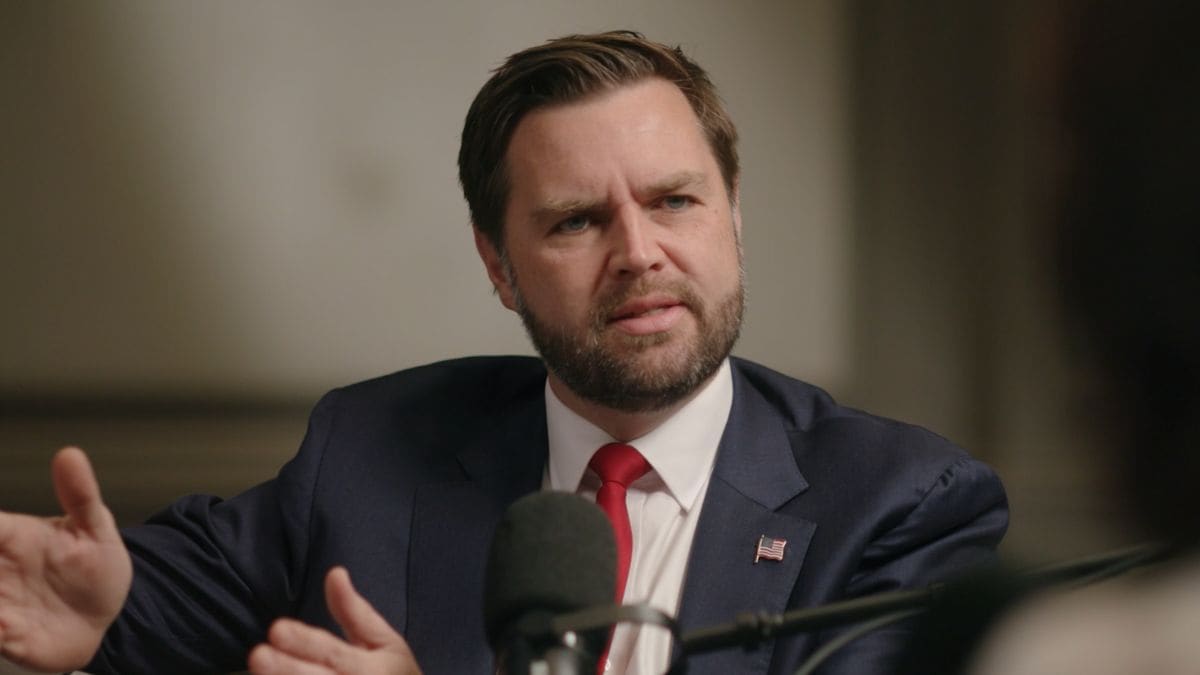
In a notable development, US Vice President JD Vance has called the ceasefire agreement between Tehran and Washington ‘a fragile truce’, suggesting potential future escalation of the ongoing West Asia conflict.
Speaking at an event in Budapest, Hungary, Vance offered a candid look at the administration’s stance, balancing a desire for diplomacy with a stern warning to Iranian leadership.
Vance warns against “misrepresentation” of the deal
As per a report published by Reuters, Vance expressed concern over how the agreement is being portrayed within Iran. He claimed that the deal brokered to de-escalate rising tensions in the Middle East is being misrepresented by certain factions.
“You have people who are lying about even the fragile truce that we’ve already struck,” Vance stated. While he did not provide specific names, observers interviewed by Reuters believe that he was referring to Iranian leadership.
In his remarks, Vance noted that the deal covers three primary areas. An immediate ceasefire, plans for formal high-level negotiations and the reopening of the Strait of Hormuz for commercial traffic.
Vance also addressed speculation regarding a potential diplomatic trip to Pakistan to participate in direct talks with Iranian officials. While his office declined to comment on travel plans, Vance emphasised that President Donald Trump is “impatient to make progress on Iran”.
Notably, Vance comments on the ‘fragility’ of the recently agreed-upon ceasefire came just minutes after fresh explosions were heard at Iran’s Lavan refinery.
Iranian state media has claimed that the refinery was struck after the ceasefire deal had been declared, suggesting a violation from either the American or the Israeli side.
Furthermore, UAE and Kuwait have also reported having dealt with a fresh wave of Iranian attacks after the announcement of the ceasefire deal.
Vance on ‘Good faith’ vs. ‘Economic leverage’
In his remarks at Budapest, Vance said that the U.S. is currently holding back from putting ‘aggressive economic pressure’ on the ongoing situation in West Asia.
Analysts interviewed by Reuters believe that Vance could have been hinting at new and stricter sanctions for Iranian products and other forms of fiscal punishments with his comments.
According to AP, Vance revealed that the U.S. is prepared to utilise “extraordinary economic leverage,” but has been instructed by the President to prioritise the negotiating table first.
“He’s told us to come to the negotiating table. But if the Iranians don’t do the exact same thing, they’re going to find out that the President of the United States is not one to mess around,” Vance said.
He added that a long-term deal is possible only if Iran negotiates in “good faith.”
Trump meets NATO Chief amid ceasefire violations
Following the announcement of a ceasefire agreement between the conflicting parties, President Trump held a high-stakes meeting with NATO Secretary General Mark Rutte at the White House.
The meeting comes on the heels of Trump’s recent criticism of NATO allies, whom he reportedly labelled “cowards” for their perceived lack of support during the height of the Iran crisis.
According to Reuters, the discussions focused on aligning the alliance’s strategy in the Middle East and ensuring that NATO partners contribute more to regional security.
The current ceasefire is designed as a 14-day “cool-down” period to prevent a full-scale regional war. Brokered with help from Pakistan, the truce went into effect following a period of intense military posturing.