



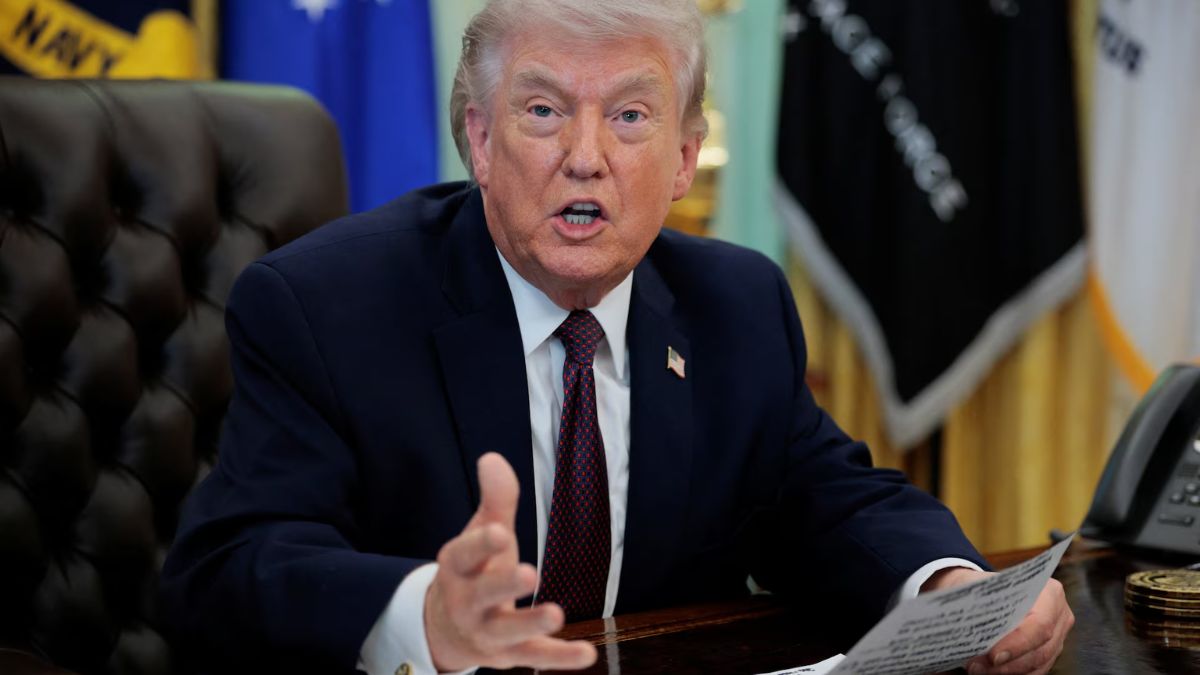
US President Donald Trump has issued a firm deadline for Iran to reopen the Strait of Hormuz or face “heavy bombing” of its infrastructure. The deadline, set for 8 p.m. ET Tuesday (3:30 a.m. Tehran time Wednesday), follows multiple similar ultimatums over recent weeks.
The Strait of Hormuz is a crucial chokepoint for global energy trade, making any disruption potentially catastrophic for oil prices and international shipping.
What Has Trump Said?
Trump warned of wide-ranging attacks on Iranian infrastructure if the deadline is missed. In a Truth Social post on Sunday, he renewed threats to target power plants, bridges, oil wells, and water desalination plants.
Speaking on Monday, he said, “I mean complete demolition by 12 o’clock.”
While Trump insisted the strikes are legal under international law, critics argue that targeting civilian infrastructure could constitute a war crime.
How Has Iran Responded?
Iran has publicly dismissed the threats, calling them “baseless” and “delusional.”According to CNN, Ebrahim Zolfaqari, spokesperson for the Khatam al-Anbiya Central Headquarters, said on Tuesday,“If attacks on non-civilian targets are repeated, our retaliatory response will be carried out far more forcefully and on a much wider scale.”
A foreign ministry spokesperson also urged Americans to hold their government accountable for what Iran calls an “unfair, aggressive war.”
According to CNN, Legal experts note that targeting objects essential to civilian survival—like water treatment plants—would violate the Geneva Conventions.
Margaret Donovan, a former US Army JAG Corps lawyer, said: “We’re seeing basically a direct threat to something that we know is going to be catastrophic to civilians.”
What About Negotiations?
Diplomatic efforts continue, but progress is slow. Pakistan, Egypt, and Turkey have mediated indirect talks between the US and Iran. Trump described Iran as “an active, willing participant” in negotiations, but recent attempts to implement a 45-day ceasefire and reopen the Strait of Hormuz failed.
Trump called the proposal a “significant step” but said it was “not good enough,” asserting that only he could decide on a ceasefire. Tehran returned a 10-clause response calling for a permanent end to hostilities “in line with Iran’s considerations.”
Why This Matters
The standoff threatens regional stability and global energy markets. Both sides are signaling readiness for escalation, while other countries have privately cautioned the US against attacks. How the situation unfolds in the coming hours could determine whether diplomacy prevails or the region sees a major military escalation.