



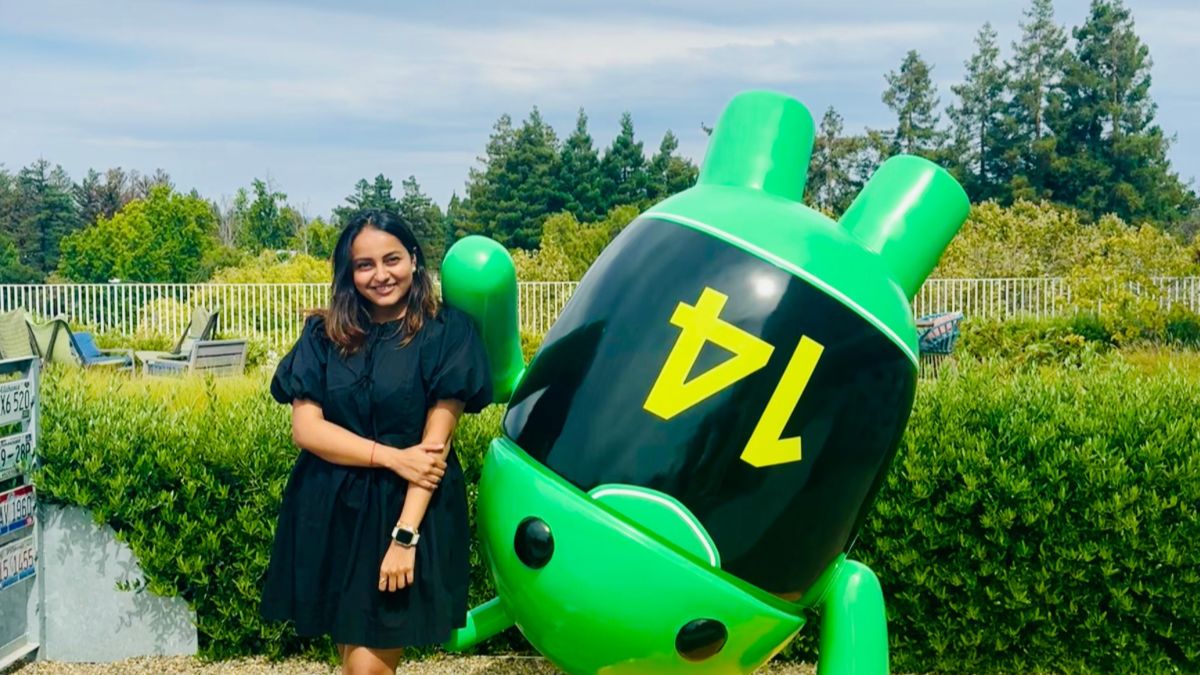
At 22, Dhruvi packed two bags, boarded a long flight, and carried with her a dream that millions recognise instantly — the American dream. “I travelled 8,000 miles with two bags and one big American dream,” she recalled in an interview with the Financial Express. At the time, she didn’t know that one day, after achieving that dream, she would quietly outgrow it.
Coming from a non-conventional background, Dhruvi was determined to break into big tech. At just 24, she joined Google as a Product Manager. She worked on App Ads, driving growth and revenue. For her, it was the dream role. On paper, everything had fallen into place.
More and more NRIs are finding themselves caught between the comfort of a life they worked hard to build and the pull of a home that still feels unfinished. Dhruvi’s journey is part of this growing moment — not a story of failure or burnout, but of pause, reflection, and choosing alignment over applause.
About a year and a half into her role at Google, Dhruvi got promoted. It was supposed to be a big moment, the kind people work years for. “When I first joined, I was in complete awe of the people around me,” she shared with FinancialExpress com. The intelligence, the ambition, the scale of problems being solved, all of it pushed her to learn and grow. She had seniors she admired and imagined becoming one day.
So when the promotion came, it should have felt euphoric. Instead, her first thought was simple and unsettling: “Okay… what next?” “The chase felt suddenly over,” she told Financial Express. “For the first time, I felt a strange sense of emptiness.”
That moment stayed with her. As she thought about her future, she realised there were only two paths that truly excited her. One was the expected route, becoming a Senior Product Manager and going deeper into the technical ladder. The other was uncertain, risky, but energising, building something of her own.
‘H-1B comes with real constraints’
From the outside, Dhruvi’s life at Google looked perfect. But the gaps were invisible. One of them was agency. The H-1B visa, while a privilege, also came with limits. She was tied to her employer. Quitting to build something of her own wasn’t simple, it came with legal and structural barriers. Even while succeeding, she realised she didn’t fully own her time or her ability to take risks. “The H-1B visa, while a privilege, also came with real constraints,” she said.
“At the same time, I was watching India’s startup ecosystem evolve rapidly. Since around 2016, the momentum and scale of what was being built back home had grown significantly. I felt a stronger pull to build in a market I deeply understood and emotionally belonged to,” she said.
Another gap was distance. Taking a high-risk path felt harder when she was far from family and her support system. If she was going to choose uncertainty, she wanted to do it closer to home. “I knew that if I didn’t try then,” she says, “I might always wonder whether I had waited too long.”
At that point in her life, Dhruvi had something many don’t: time, financial stability, fewer responsibilities, and the freedom to take risks. Choosing entrepreneurship didn’t feel like rebellion. It felt honest.
Living in Silicon Valley meant being a 20-hour flight away from family. While she was grateful for everything corporate America had given her, her personal life was slipping. Fitness, eating well, and a sense of community were no longer priorities.
“I’ve always been a people person,” she says. “Someone who enjoys ambition and hustle, but equally values time with loved ones.” In the US, she felt she was getting only one “kick” — career highs.
That’s when the realisation hit her clearly. She hadn’t failed the American dream. “I had simply outgrown it.”
Starting over, this time in India
Three years after joining Google, Dhruvi made a conscious decision to return to India and start again. Today, she works at a bootstrapped hair care and colour brand. Her focus is on driving growth through owned channels and building the brand from the ground up.
At the same time, she’s intentionally searching for a problem she can commit the next decade of her life to solving. Working at an Indian brand hasn’t reduced Dhruvi’s ambition. If anything, it has made her more thoughtful about where she applies it.
In big tech, especially in the US, problems are clearly defined. Systems are mature. Impact is often about scale and optimisation. That experience taught her discipline and rigour.
But being back in India has made her pause. “There are countless problems to solve here,” she observed. She’s noticed how often ideas are copied from the West and repackaged for India, without truly understanding local behaviour or long-term value. That’s shaped her thinking. She now wants to build something deeply rooted in Indian realities, not just trends or quick wins.
Being okay with not having it all figured out
A year after moving back, Dhruvi admits she hasn’t found “the problem” yet. And yet, she sounds calm. Before returning, she prepared carefully. She spoke to more than ten people who had made similar moves. She discussed the decision with mentors in the US. She even did a short project at Google that allowed her to live in India for three months, just to understand daily life here.
She also made sure she was financially ready. Her family supported her. She was single, with fewer dependencies.
Still, there were moments of doubt. “In the initial months, I questioned whether I had moved too soon,” she admits. But many things also fell into place. Being close to family gave her emotional strength. She finally had the energy to focus on health and interests outside work,” she said.
She also believes the “why” matters just as much as the “when”. Over the past year, she’s been exploring a problem close to her heart, how Indians and expats navigate life after moving back. The move itself is just the first step. The harder part is rebuilding, choosing the right career, city, neighbourhood, and sense of belonging. She sees it almost like matchmaking, helping people find a life in India that truly fits them.