



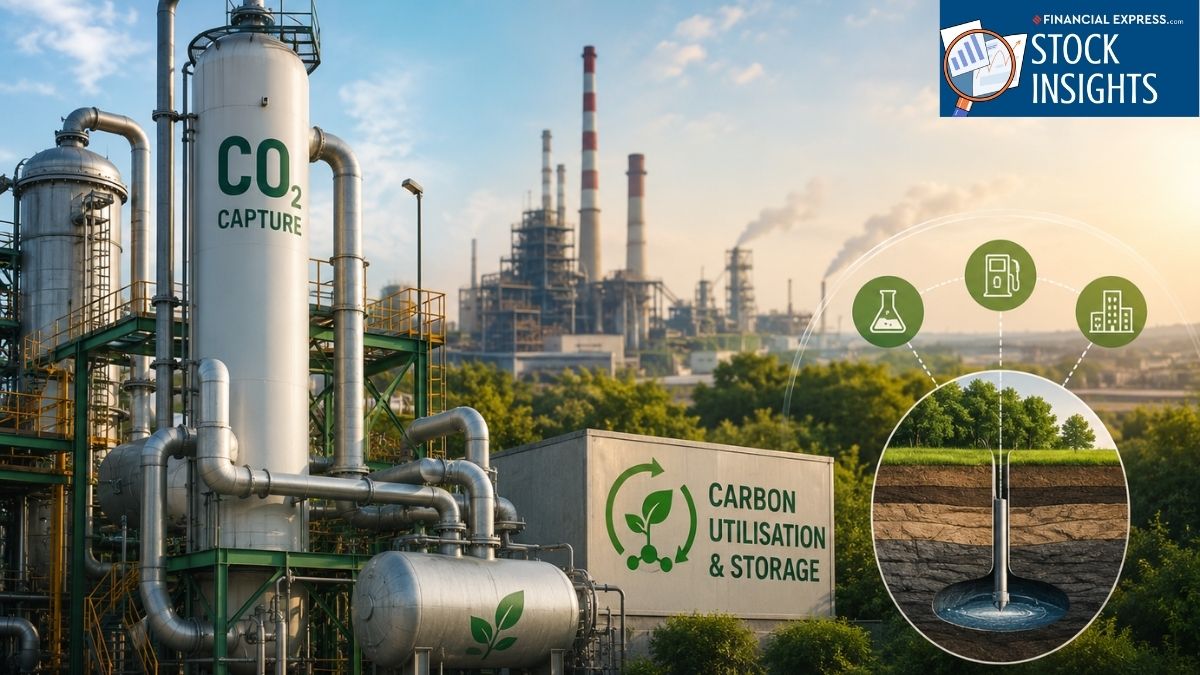
India is the world’s third-largest carbon dioxide emitter after China and the United States, with energy-related carbon dioxide emissions approaching 3 billion tonnes annually. A large share of these emissions comes from polluting sectors such as power, steel, cement and refineries, where reducing emissions remains a complex challenge.
This is where Carbon Capture, Utilisation and Storage (CCUS) is emerging as an important solution. The technology captures carbon dioxide before it enters the atmosphere. It also either stores it permanently underground or converts it into products such as chemicals, fuels and building materials. The policy tailwind is also backing CCUS.
Understanding India’s ₹20,000 Crore CCUS Strategy
India aims to meet its net-zero 2070 target. To achieve this, the government has begun building a policy framework to support its adoption. The Union Budget 2026 announced a ₹20,000 crore outlay over five years to accelerate CCUS deployment.
The programme is expected to support both pilot and commercial-scale carbon capture projects across key industries. The growing focus on carbon management is opening up opportunities across multiple segments of the value chain. We look at three listed companies with exposure to carbon capture technology, carbon capture projects and carbon credit-related businesses.
#1 Thermax: Indigenous CCU Innovation and Order Book Strength
Carbon capture is a critical component of Thermax’s broader energy transition portfolio. It is one of the company’s strategic emerging verticals, alongside green hydrogen and biofuels. As part of its long-term vision to enable a global shift toward sustainable energy, Thermax focuses heavily on carbon capture technologies to help industries reduce their environmental footprint.
To drive innovation and practical usage, Thermax has initiated a new technology development and demonstration project focused entirely on CCUS. This project was proposed as a bolt-on arrangement to an existing coal-to-methanol plant and has been officially sanctioned by the Department of Science and Technology.
Strategic Alliances: IIT Delhi & HPCL Partnerships
To execute this effectively, Thermax has built a strong academic partnership by signing a Memorandum of Understanding (MoU) with the Indian Institute of Technology Delhi (IITD), successfully kicking off the collaborative CCU project.
Furthermore, Thermax’s Research, Technology and Innovation Centre has signed another MoU with Hindustan Petroleum Corporation Limited. This collaboration aims to exchange scientific information, conduct joint research, and encourage the demonstration and deployment of advanced CO₂ capture solutions and other emerging new energy technologies.
Thermax’s CCU initiative aims to develop indigenous technology capable of converting captured CO₂ into highly value-added products, such as methanol and dimethyl ether. Beyond traditional industrial emissions, the company is actively expanding its CCU capabilities to include indigenous biogenic CO₂-to-methanol and syngas-to-methanol technologies.
Market Applications Across Heavy Industries
The CCU technology is currently under development. This can be used across heavy industries, including the steel, cement, and power sectors. It is already seeing significant market interest. Various stakeholders, including large Indian private companies and Public Sector Undertakings, have shown interest in the technology as they actively aim to scale up their coal-to-chemical projects and meet strict decarbonisation mandates.
Through these strategic partnerships, research investments, and technological advancements, Thermax aims to advance the Make in India vision while directly aligning its business operations with national and global climate objectives. The company’s total order book stood at ₹13,604 crore as of 31 March 2026.
Financial Performance: Order Book and Margin Expansion
The company’s revenue grew by 3.1% year-on-year to ₹10,694 crore. Operating profit grew to ₹1,293.3 crore, up from ₹1,159.8 crore, while margin improved to 12% from 11%. Profitability grew at a much faster pace, rising to ₹720 crore from ₹616.2 crore. Management expects the prolonged geopolitical crisis in the Middle East to impact project execution and order wins.
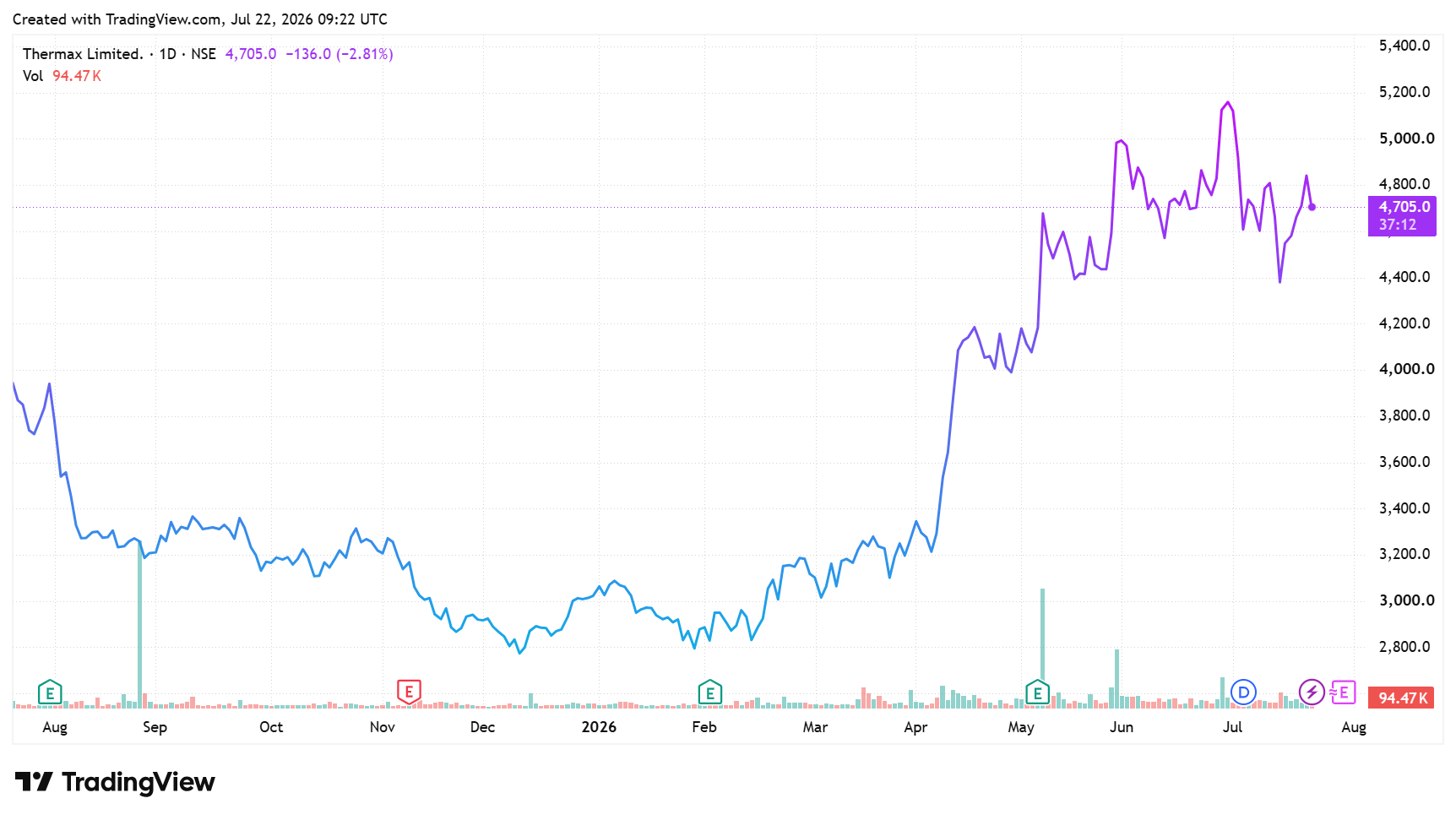
#2 JSW Steel: Modular Carbon Capture & Commercial Scale-Up
JSW Steel, part of the JSW Group, sees CCUS as key to deep decarbonisation technology. The company aims to achieve its long-term goal of becoming net-neutral in carbon emissions by 2050. To this end, JSW is actively investing in several key initiatives, research partnerships, and pilot projects.
Decarbonisation Pilots: Salav Works and Vijayanagar Initiatives
JSW Steel currently operates a 100 Tonnes Per Day (TPD) CCU facility at its Salav Works. This plant captures CO₂ and refines it into commercial-grade products for use in the food and beverage industry. It notes that this early adoption provides a strategic head-start for eventually scaling up CCUS alongside its Blast Furnace-Basic Oxygen Furnace operations.
The company has signed a joint study agreement with Carbon Clean, a start-up specializing in point-source carbon capture. It is exploring the deployment of CycloneCC modular technology at the Vijayanagar Integrated Steel Plant. This project has the potential to reduce 1.0 lakh tonnes of CO₂ annually.
Research Partnerships: Scaling CCUS with IIT Kharagpur
This will be the largest-ever use of this unique technology in the global steelmaking industry. JSW has signed an MoU with IIT Kharagpur to conduct pilot-scale studies for developing low-cost CCUS technologies. It is also partnering with various global engineering and technology firms to broadly explore and evaluate different carbon capture solutions and applications.
Looking ahead, the company’s short- to long-term roadmap is to advance these pilot projects to prove their commercial viability. It aims to integrate scalable CCUS technologies across its key operating sites wherever it is economically feasible.
Financial Highlights: Record Volumes vs Core Profitability
JSW Steel grew by 10% to ₹1,85,470 crore, driven by its highest-ever production and sales volumes. Total sales volume increased by 12% to 29.63 million tonnes (MT). Operating profit grew 30% to ₹29,821 crore due to a fall in overall costs per tonne, while margins stood at 16%. Net profit surged by 631% to ₹25,508 crore mainly due to an exceptional item of ₹18,489 crore.
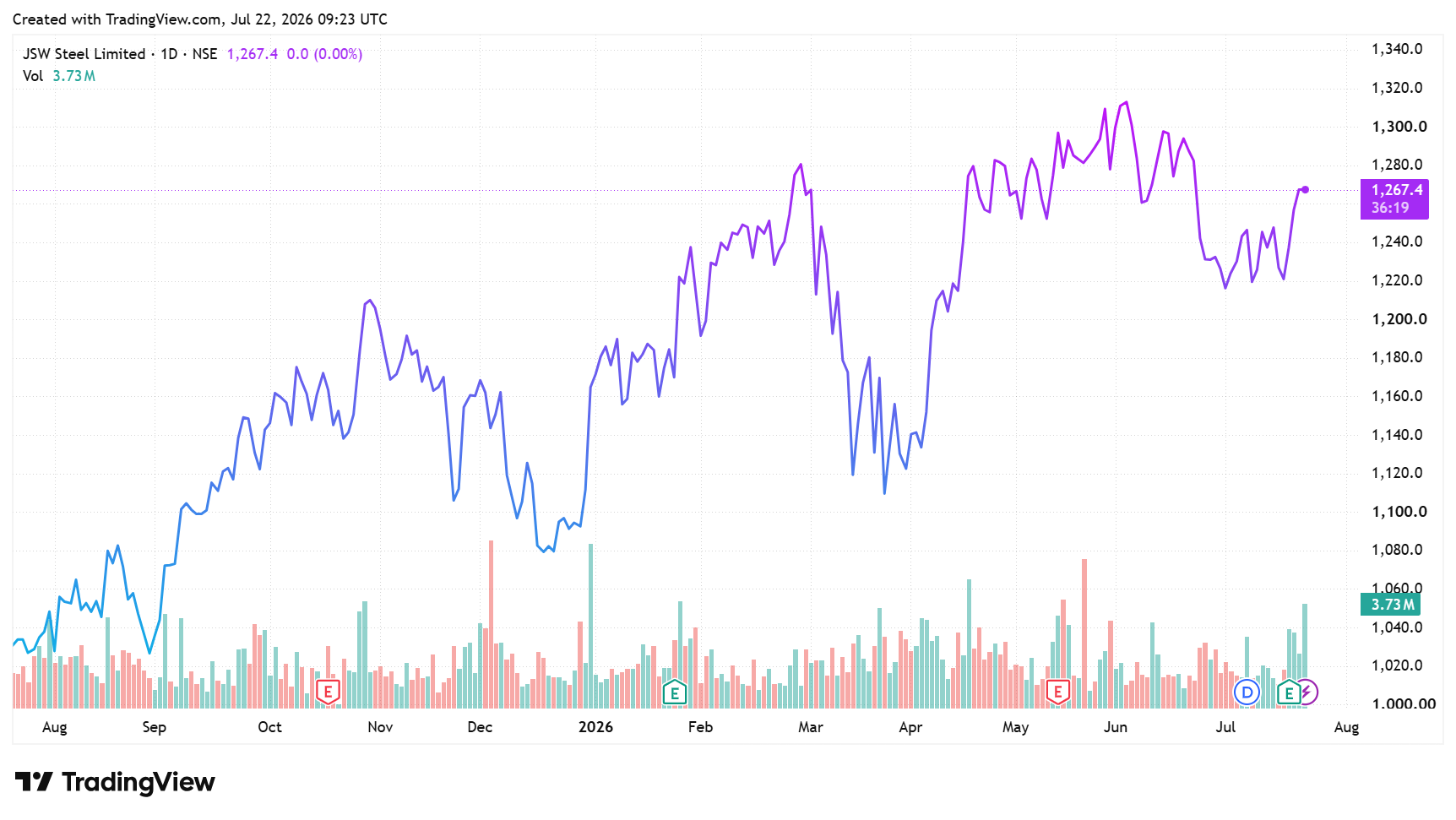
#3 CMR Green Technologies: Capitalizing on 2.7 Lakh Carbon Credits
CMR Green Technologies deals in metal recycling with a primary focus on aluminium. It is the largest domestic recycled aluminium company in India. With an annual installed capacity of 6.15 lakh MT per annum (March 2026), CMR is about 4X larger than its nearest domestic competitor.
Market Leadership & Global Joint Ventures
On a global scale, CMR ranks 12th in the aluminum recycling industry, even when including Chinese producers. It holds a 42% to 45% market share in the cast alloy segment for the Indian automotive industry, meaning that nearly every second vehicle on Indian roads uses recycled aluminum supplied by CMR.
CMR’s revenue is weighted toward aluminum, which makes up about 80-81% of its sales. The remaining 19-20% comes from other non-ferrous metals. The company is also diversifying into Wrought Alloys and Beverage Can Recycling. It has strategic JVs with major Japanese companies, including Toyota Tsusho, Nikkei MC Aluminium, and Nippon Light Metal.
CMR has built a highly diversified global supply chain. It procures 80% of its scrap from 198 suppliers across 73 countries and the remaining 20% domestically within India. At its core, CMR is an environmentally friendly company contributing directly to the global decarbonization of the automotive and manufacturing industries.
This is because producing recycled aluminum is more eco-friendly than primary production. It utilizes around 95% less power, reduces CO₂ emissions by 92%, consumes 95% less water, and generates negligible solid waste. It operates a zero-liquid-discharge and zero-solid-discharge facility.
Decarbonisation Impact & 2.7 Lakh Ton Carbon Credit Reserve
It ranks 6th globally in the S&P Global Corporate Sustainability Index for aluminum. CMR’s involvement with carbon credits began in 2015 when its Bhiwadi facility was officially accredited by the United Nations Framework Convention on Climate Change. This certification recognized the facility as a clean plant eligible to generate and accumulate carbon credits.
The company has a substantial reserve of these credits. As of April 2026, CMR holds a stock of 2.7 lakh tons of carbon credits. This inventory is constantly growing. Management notes it automatically accumulates an additional 70,000 to 80,000 tons of carbon credits every year. But revenue is yet to be recognised due to a lack of a structured marketplace.
However, the company views these credits as an untapped financial asset. As environmental regulations tighten globally and a formal marketplace is eventually established, management expects to monetize this entire stockpile, turning them into a significant source of future revenue. CMR reported strong FY26 performance.
FY26 Financial Results: Revenue and Profitability Surge
Revenue grew by 30% year-on-year to ₹8,640 crore, driven by a 24.4% increase in production to 4,09,292 MT. Operating profit grew 50% to ₹449 crore due to strong operating leverage, while margins stood at 5.2%. Net profit surged by 47.3% to ₹228 crore. CMR is expanding its capacity to nearly 7 lakh MT.
Following 24-25% volume growth in FY26, management expects to report 25% growth in FY27. The current revenue mix is weighted at about 80% aluminum to 20% non-aluminum. CMR expects a shift toward a 75:25 ratio, as it continues to diversify.
Valuation & Financial Ratios: How Key Players Compare
CMR Green stands out for its strong Return on Capital Employed (ROCE) and Return on Equity (ROE), followed by Thermax and JSW Steel, which have more capital-intensive businesses. Valuation-wise, all three companies are trading at a premium to the industry median multiple.
Relative to its own historical median valuation, Thermax trades at a premium while JSW Steel trades at a discount.
Particulars | Price-to-Earnings Multiple (X) | Return Ratios | |||
| Company | 3Y Median | Industry | ROE (%) | ROCE (%) | |
| Thermax | 102.0 | 69.8 | 34.4 | 10.6 | 13.9 |
| JSW Steel | 25.6 | 38.0 | 18.7 | 10.2 | 11.0 |
| CMR Green | 22.4 | NA | 15.0 | 14.6 | 14.0 |
| Source: Screener.in (As of 21 July 2026) | |||||
As India scales up carbon capture and develops its carbon market, opportunities are emerging across the entire carbon value chain. Thermax, JSW Steel and CMR Green are positioned in distinct segments. This gives exposure to technology development, industrial deployment and carbon credit creation rather than a single part of the theme.
Keep these companies in your watchlist to analyse how they capture the industry tailwind.
Disclaimer:
Note: Throughout this article, we have relied on data from http://www.Screener.in and the company’s investor presentation. Only in cases where the data were unavailable have we used an alternative, widely accepted source of information.
The purpose of this article is only to share interesting charts, data points, and thought-provoking opinions. It is NOT a recommendation. If you wish to consider an investment, you are strongly advised to consult your advisor. This article is strictly for educational purposes only.
About the Author: Madhvendra has been deeply immersed in the equity markets for over seven years, combining his passion for investing with his expertise in financial writing. With a knack for simplifying complex concepts, he enjoys sharing his honest perspectives on startups, listed Indian companies, and macroeconomic trends.
A dedicated reader and storyteller, Madhvendra thrives on uncovering insights that inspire his audience to deepen their understanding of the financial world.
Disclosure: The writer and his dependents do not hold the stocks discussed in this article.
The website managers, their employees (s), and contributors/writers/authors of articles have or may have an outstanding buy or sell position or holding in the securities, options on securities, or other related investments of issuers and/or companies discussed therein. The articles’ content and data interpretation are solely the personal views of the contributors/ writers/authors. Investors must make their own investment decisions based on their specific objectives, resources, and only after consulting such independent advisors as may be necessary.