



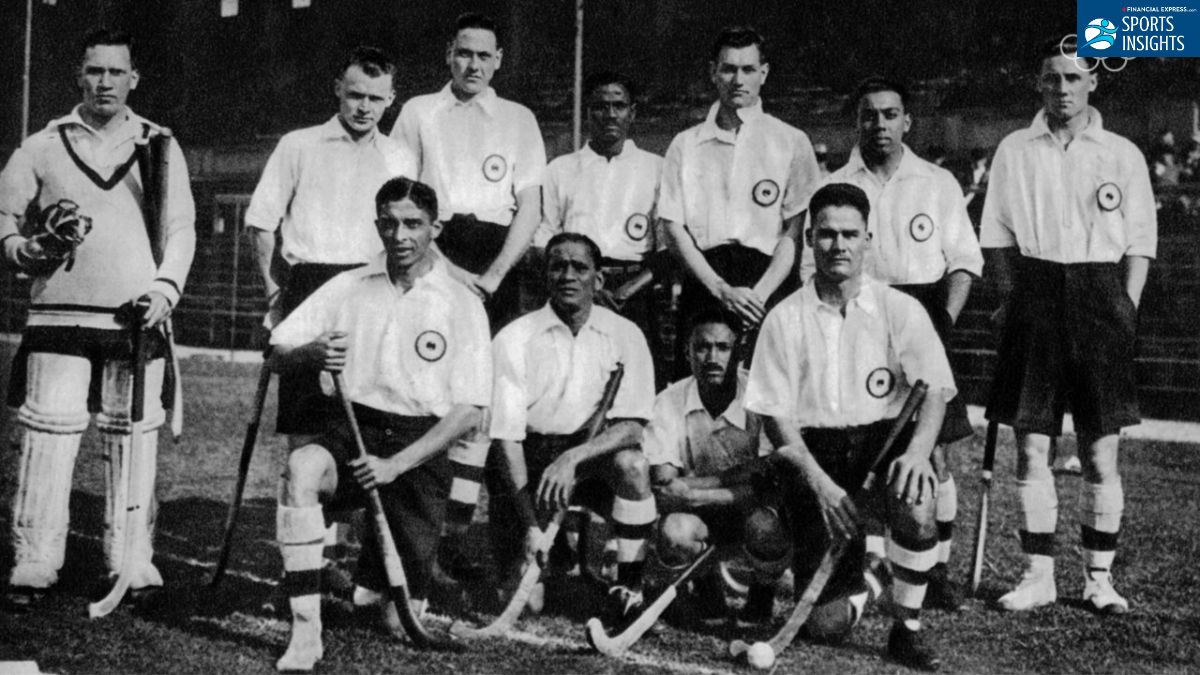
The ship was called Kaisar-I-Hind. It left Bombay on March 30, 1928. On board were sixteen men. Nine were Anglo-Indians who worked in telegraph offices and railway sheds. Seven were Indians.
One was a tribal boy from Bihar who had studied at Oxford. Another was a sepoy from the army who earned twenty-five rupees a month. They were going to Amsterdam to play a game that the British had taught them. They did not know they were about to break the world.
The Indian Hockey Federation had no money. This is the part the history books skip. They had the players. They had the skill. But when they asked Bombay, Madras, and Burma for help, these rich provinces turned away.
The federation was broke. The Olympic dream was dying before it started. Then the princes stepped in. Not out of charity. Out of pride.
Necklace and the Stick
Maharaja Bhupinder Singh of Patiala wore a necklace made by Cartier. It was worth 1000 million rupees. In today’s money, that is two point three billion dollars. He was the president of the Indian Olympic Association.
He looked at the hockey team and saw something more valuable than diamonds. He saw a flag. He paid for the ship. He paid for the shoes. He paid for the sixteen men to cross the sea.
But even his money was not enough at the last minute. Two players, Shaukat Ali and Rex Norris, were told they could not go. There was no cash for their tickets. The Bengal Hockey Association ran from door to door. They begged. They collected coins.
They raised what they called the requisite amount. The two men boarded the ship. This was not a professional sports team. This was a family selling jewellery to send a boy to college.
The hockey stick itself was cheap. A piece of wood. A curved end. In the streets of Calcutta or Lahore, a small boy could play with a stick and a stone. No pads. No turf. No expensive kit. Cricket needed bats and leather balls. Polo needed horses. Hockey needed only hunger. And India had plenty of that.
Tribal boy who left Oxford
Jaipal Singh Munda was the captain. He was a Munda from Bihar. He had gone to Oxford. He had become a Blue.
He was training for the Indian Civil Service in London when the team needed him. The India Office said no. They said he could not take leave to play a game. Jaipal said yes. He chose the stick over the desk.
He led the team through the early rounds. He organized them. He spoke to them in a language the British officials understood. But the stress broke him. The India Office threatened his career. They said he would have to repeat his year.
He left before the final. He went back to London. He resigned from the ICS. He returned to India and spent his life fighting for tribal rights. He never played in an Olympic final. But he made it possible for the team to reach one.
This is the debt Indian hockey owes. Not just to the princes with their necklaces. But to a boy who gave up a government job so that sixteen men could sail to Amsterdam.
The Sepoy and the Magic
Dhyan Chand was a sepoy in the Indian Army. He earned twenty-five rupees a month. A British soldier earned three times that. Dhyan Chand did not complain. He practiced on the fields near his barracks. He learned to move the ball so close to his stick that it looked like it was stuck there.
The Europeans played a different game. They hit hard. They ran fast. They used their shoulders. The Indians tapped. They passed. They moved the ball like it was a thought in their heads.
A legacy that continues to inspire. 🇮🇳
— Olympic Khel (@OlympicKhel) August 29, 2025
Remembering Major Dhyan Chand, the wizard who made the sport his own. 🏑✨#NSD2025 pic.twitter.com/Idy7sUm5fG
In Amsterdam, they played five matches. They scored twenty-nine goals. They conceded zero. Not one. Zero. Austria got six. Belgium got nine. Denmark got five. Switzerland got six. The Netherlands, the host nation, got three in the final.
Dhyan Chand scored fourteen of those twenty-nine goals. The Dutch thought he had a magnet in his stick. The Germans thought he was a magician. He was just a boy from the army who had practiced on dirt while others practiced on grass.
The British team did not come. They withdrew. Some say they were scared. Some say they had other plans. But everyone knew. The colony had become better than the master at the master’s own game. And the master did not want to be humiliated.
The boat to Los Angeles
Four years later, the world was poor. The Great Depression had emptied pockets. The team needed to reach Los Angeles. There was no money for the journey. So they played exhibition matches in Ceylon and India.
They sold themselves. They were the brand. They were the product. People came to watch because Amsterdam had made them famous.
In Los Angeles, they played the USA. The score was twenty-four to one. Dhyan Chand and his brother Roop Singh scored eighteen of those goals. The Los Angeles Times called Dhyan Chand the best athlete of the Olympic Games. Not the best hockey player. The best athlete. A sepoy from India who played with a wooden stick.
By 1936, they were a machine. They went to Berlin. Adolf Hitler watched the final. India beat Germany eight to one. The Indian flag went up in the heart of the Third Reich.
The Maharaja of Patiala was there. He had made sure India had a voice in the rooms where decisions were made. The team was no longer a group of telegraph operators and soldiers. They were a nation’s face.
The stick that became heavy
Then it ended. Not suddenly. Slowly. Like rust.
Pakistan beat India in the 1960 Rome final. One to zero. The monopoly broke. Then the world changed the surface. Natural grass became astro-turf. The Indians had learned to move the ball on mud and grass. Their sticks were made for earth.
The new turf needed different shoes. Different muscles. Different money. India did not build the new fields. The federation became a room full of old men fighting over chairs.
Cricket came. 1983. The World Cup. Television. Sponsors. Money flowed from hockey sticks to cricket bats. The children who once played hockey in the streets started playing cricket instead. The princes were gone. The railways stopped sponsoring teams. The telegraph offices closed.
The game that needed only a stick and a stone now needed a synthetic field that cost crores. And India was slow to pay.
Boy in Odisha
Today, Indian hockey is waking up again. Bronze in Tokyo. Bronze in Paris. The government of Odisha puts money into the sport. Punjab still produces boys who run all day. Haryana sends its soldiers to the field. But the game is different now. It is faster. Harder.
Still, sometimes, if you go to a village in Odisha or a cantonment in Punjab, you will see a boy with a broken stick. He is running with a ball made of tape. He is practicing the short pass. He is learning to keep the ball close.
He does not know about Amsterdam or Berlin. He does not know about Jaipal Singh Munda who gave up his job. He does not know about Dhyan Chand who earned twenty-five rupees. But his legs are moving the same way. His stick is tapping the same rhythm.
The stick cost one rupee. The ship cost a prince’s fortune. The dream cost everything. That is how you build a monopoly. Not with money. But with boys who refuse to let the ball leave their stick.
Boys who sail across oceans for a game that their rulers told them was not theirs. Boys who come back with gold around their necks and dirt under their nails. And then wake up the next morning ready to do it again.