



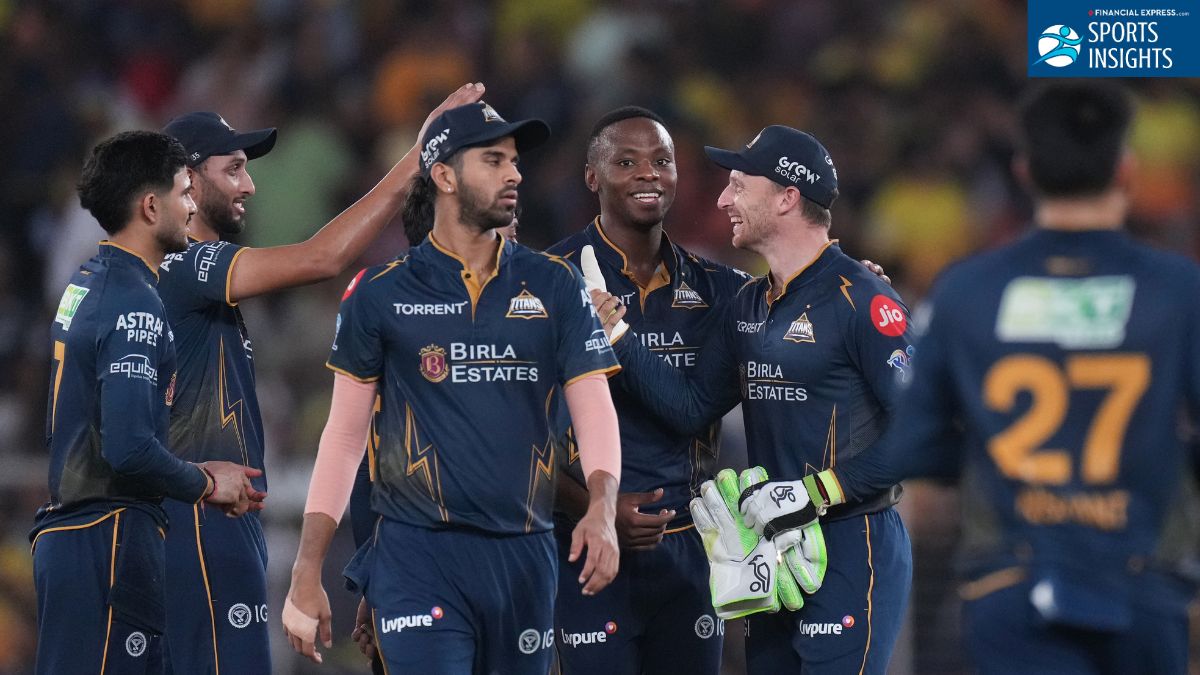
Gujarat Titans walked into the IPL in 2022 and won it. Nobody saw that coming. Five seasons later, they are sitting second in the 2026 standings with 18 points, having just eliminated Chennai Super Kings from playoff contention with an 89-run win, and people are still surprised every time it happens.
That surprise is the most interesting thing about this franchise.
Five seasons, one philosophy, zero panic
Most IPL franchises rebuild every two or three years. New overseas signings, new captains, new identity. Gujarat Titans have done none of that. Same coach since day one. Same top-order core. Same simple plan executed with quiet, almost boring consistency.
Champions in 2022. Runners-up in 2023, losing on the final delivery. Eighth in 2024 when Hardik Pandya left and rain washed out matches. Third in 2025 before falling to Mumbai Indians in the Eliminator. Second in 2026 with a shot at the final.
Their all-time win percentage across five seasons sits at 61.42 percent. No franchise in IPL history has sustained that kind of return. Not Mumbai Indians. Not Chennai Super Kings. Not anybody.
And yet before the 2026 season began, the only prominent analyst who predicted them in the top four was Cheteshwar Pujara.
The coach who carries a menu to matches
Ashish Nehra has become famous in IPL circles for his pen-and-paper approach. Cameras keep catching him during matches holding handwritten sheets while rival coaches stare at laptops and tactical dashboards. Analysts have written thousands of words about what those papers contain.
Nehra told Cricbuzz the truth: “There was nothing important on the paper. Paper pe sirf menu tha ki practice pe humara menu kya hoga.”
The menu. For the practice session. That was it.
This is either the funniest thing a winning coach has ever said or the most revealing. Probably both. Because what Nehra is describing is a philosophy, not a gimmick. Stop overcomplicating. Give players clear roles. Back them when they fail. Repeat.
Performance analyst Sandeep Raju put it plainly: “The biggest plus factor with him is that he believes in people. He puts confidence in players, support staff. He doesn’t treat anybody special. Everybody is equal.”
Nehra does not coach from a chair. During fielding innings, he spends nearly every over on the boundary line, talking to bowlers, adjusting fields, communicating in real time.
Against Lucknow this season, he delivered urgent instructions through a benched pacer when a late assault threatened to blow the game open. The next delivery took the wicket.
Against Delhi, Shubman Gill attempted an unnecessary direct hit that gave away four overthrows in the death overs. Nehra’s animated response from the boundary line was visible on camera. Gujarat held on to win by one run.
The man with the menu is not relaxed during matches. He is precise.
The top three and the tactical choice everyone misunderstands
On fan forums, Gujarat’s middle order gets described in terms that are printable only in certain publications. The criticism is consistent: no explosive finisher, no proven international batter at six or seven, too much dependence on the top three.
This is correct. It is also the plan.
Shubman Gill. Sai Sudharsan. Jos Buttler. These three absorb the bulk of the deliveries, control tempo, and build totals that the bowling attack can defend. The logic is simple: if the top three do their job, the middle order does not need to exist as a problem.
Against Chennai on May 21, Gill made 64 off 37 and Sudharsan made 84 off 53. They put on 125 together. That was their seventh century partnership in IPL history, breaking the record previously held jointly by Warner-Dhawan and Head-Abhishek Sharma.
Sudharsan took the Orange Cap in 2025 with 759 runs. Gill scored 650 in the same season. In 2026, Sai again holding the Orange Cap at present and followed by Gill (616 runs in 13 matches at average of 47 and strike rate of 162).
When this works, Gujarat are almost impossible to stop. When it does not, the whole structure collapses. Mumbai Indians posted 199 this season in Ahmedabad and Gujarat replied with 100. Their worst defeat ever.
Batting coach Matthew Hayden called the scorecard unacceptable. He was right. The vulnerability is real and it is the price they pay for the top-heavy design.
Role clarity as a weapon
Rookie wicketkeeper Kumar Kushagra joined the Gujarat setup and Nehra gave him one instruction: whenever you bat, it will be against a new ball, do not think about the old ball at all.
One sentence. Total clarity. No ambiguity about his role, his situation, his responsibility.
This is how Gujarat function. Washington Sundar knows which conditions he bats up the order. Rahul Tewatia knows he handles the pressure finishes regardless of domestic form.
Jason Holder, bought at mid-season for seven crore, was immediately handed a specific bowling role and took 13 wickets across six matches at an economy of 6.35. That is the most efficient return by any bowler delivering at least 15 overs this season.
Holder’s integration worked because the system absorbed him rather than asking him to redefine it. That is the Gujarat way. Find the role. Fill the role. Trust the role.
The chases that became club folklore
In their very first season, Gujarat chased 190 against Punjab needing 12 off the last two balls. Rahul Tewatia hit them for two consecutive sixes. Against Sunrisers the same year, they needed 22 off the final over. Rashid Khan hit three sixes, the last one off the final ball.
During the chase Rashid told his partner: “Not to panic if we face a dot ball or two. Focus on hitting the next ball and finishing the game.”
That kind of calm is not accidental. It comes from knowing your role so completely that pressure stops feeling like pressure.
Their record in run chases tells the same story. 205/0 in ten wickets against Delhi in 2025. 204 for 3 against Delhi earlier that season. 199 against Sunrisers in 2022. Six of the highest successful chases in franchise history, all built on the same foundation: top-order control, clear plans, no panic.
The Captaincy narrative that gets it wrong
The online consensus on Gujarat’s leadership can be summarised by one phrase fans keep repeating: “Jeete toh Nehra, haare toh Gill.”
If they win, Nehra gets the credit. If they lose, Gill takes the blame.
The numbers refuse this narrative. Gill’s win percentage as IPL captain stands at 56.41 across 39 matches, fourth best all-time among captains with more than 30 games. Behind only MS Dhoni, Sachin Tendulkar and Steve Smith. Ahead of Virat Kohli. Ahead of David Warner.
Nehra handles field placements and bowling changes from the boundary. Gill handles the batting, the chase calculations, and the leadership of the group. These are different jobs, not competing ones. The division of labour is the feature, not the flaw.
Qualifier 1, Dharamshala and what comes next
Gujarat will face RCB in Qualifier 1 on May 26 at Dharamshala. High altitude. Pace-friendly surface. Siraj and Kagiso Rabada will be looking to move the new ball early against a top order that has been the best in the tournament.
Win and they go straight to the Ahmedabad final. Their home ground. 132,000 seats. The same place they lifted the trophy in 2022.
Lose and they get another chance through Qualifier 2. Two bites at the final. The reward for finishing in the top two.
Ashish Nehra will be on the boundary line with his sheet of paper. The menu will probably say something about lunch. And Gujarat Titans will do what Gujarat Titans do.
Show up. Execute. Win more than they lose.
It has been enough for five seasons. It might be enough for a second title.