



A revised index showed on Monday that output of India’s nine core sectors grew at a five-month high rate of 5% in June. The rise was led by iron ore, the newest addition to the Index of Core Industries (ICI), according to data released by the Department for Promotion of Industry and Internal Trade.
This is the first core industries data based on the new ICI, which now covers nine sectors instead of eight in the old series. The revised ICI series updates the base year to 2022–23 (April-March) from 2011-12 in the previous series.
As per the revised index, the nine core industries grew 3.2% in May and 1.1% in June 2025. The old series had shown eight core industries growth of 1.0% in May and 2.2% in June last year.
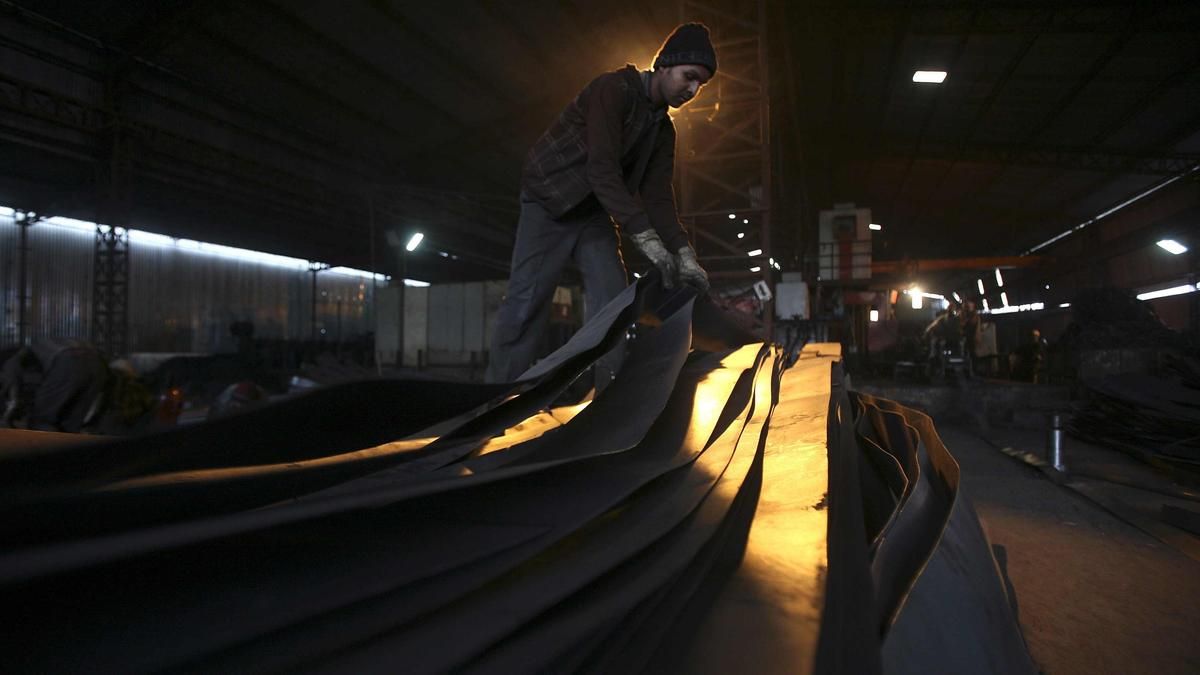
Iron ore, included in core industries with a 4.9% weight, grew 43.9% in June. This staggering growth in iron ore production, up from 19.0% in May, was driven by a statistical effect of a low base. Iron ore output had contracted 16.4% in June 2025. Iron ore production tends to be highly volatile as it is driven by seasonal factors and demand from the steel industry.
Cement and electricity sectors also supported the growth in core industries output in June. Cement sector output grew 9.8% in June, the highest in five-months.
Output of electricity sector, which now has the highest weight at 30.9%, also grew 9.8% in June, though slower than 11.2% in May. Electricity production benefitted from increased demand amidst higher temperatures and lower rainfall in June, economists said.
Poor rainfall last month also supported the growth in output of iron ore and coal, as rainfall typically disrupts mining activity. Growth in coal production was 1.4% in June against (-)9.5% in May.
“This pickup (in core industries growth) was not broad-based and was led by an improvement in the performance of just four of the nine sectors between these months,” said Rahul Agrawal, principal economist, ICRA.
Output of crude oil, natural gas, refinery products, and fertilisers contracted year-on-year in June. According to Bank of Baroda Chief Economist Madan Sabnavis, the contraction in energy-related sectors can be attributed to “higher imports with global crude prices cooling off.”
Crude oil output fell 4.2% on year in June, the same as in May. Crude oil output has seen negative growth in 25 of the last 26 months. Natural gas production declined even more in June, contracting 7.4% against a 5% fall in May.
“Fertiliser output contracted for the fourth consecutive month, likely reflecting the continued adverse impact of the West Asia tensions, while steel output growth slumped to a 21-month low of 4.6% in the month,” Agrawal said.
The new ICI shows that growth for May for the existing eight sectors was “more or less within range in the old and new series,” Sabnavis said. In the new series, core industries growth was higher during
April-June at 3.6% compared to 1.0% in the same period a year ago. Core sector output grew 3.0% in FY26 and 4.3% in FY25, as per the new series.
The nine core industries together make up 32.88% of the Index of Industrial Production (IIP) in the
new series, down from 40.27% in the previous series. Bank of Baroda’s Sabnavis projects the Index of Industrial Production growth to slow to 3-4% in June from 5.1% in May.
“The key details of today’s release points to total IP (industrial production) growth cooling only modestly in June, to 4.7%, from 5.1% (in May),” said Miguel Chanco, chief emerging Asia economist, Pantheon Macroeconomics.
According to Chanco, core industries growth numbers for the June quarter suggest that GDP growth is still tracking at around 6% for the quarter, “supporting our base case that the latter will decelerate sharply to this pace by the end of this year.”