



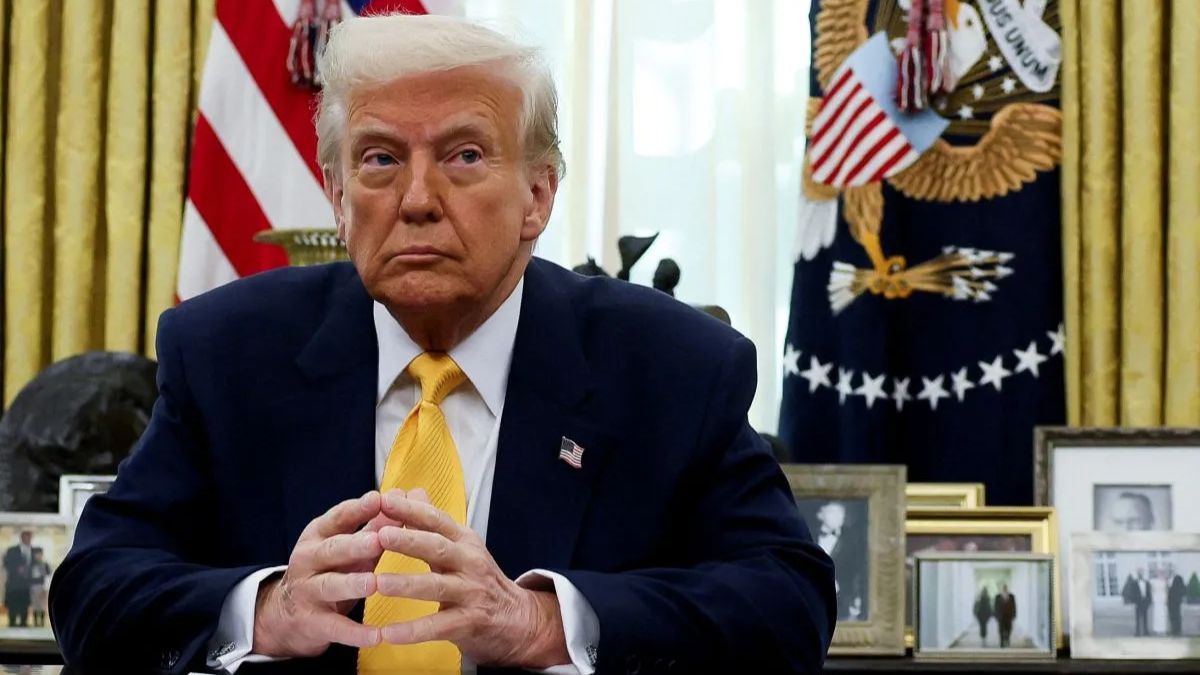
President Donald Trump is doubling down on his disruptive tariff agenda despite facing a major setback with the US Supreme Court ruling in a 6-3 vote that he exceeded his authority in using the International Emergency Economic Powers Act (IEEPA) to impose sweeping duties on many countries in the world, including India.
Before Trump 2.0, no US president had invoked provisions of the IEEPA—intended to address “unusual and extraordinary” threats during a national emergency—to levy such duties. Tariffs are not part of this 1977 law.
Trade policy uncertainty will nevertheless continue as the US president has imposed a 150-day 15% global tariff under Section 122 of the Trade Act of 1974 and will launch investigations under Section 301 that could result in higher levies than those that prevailed under the IEEPA regime.
What the SCOTUS ruling does not do?
Trump’s tariff tyranny thus remains unchecked as the apex court ruling does not impinge on his ability to impose punitive tariffs under Section 338 of the Tariff Act of 1930 or Section 232 of the US Trade Expansion Act of 1962 on steel, aluminium, or autos on national security grounds.
These are indeed challenging times for India and the global economy as Trump appears unfazed by the historic ruling despite the Supreme Court being packed by his nominees and handing him several wins in the recent past, including the deportation of migrants.
The European Union is set to hold an emergency meeting on Monday to reassess its pending trade deal with the US. India, too, is closely studying these developments on US tariffs amidst indications that a visit by a team to Washington to finalise the legal text for the first phase of this agreement will be rescheduled at a mutually convenient date.
India-US trade talks
India and the US have agreed on a framework for an interim bilateral trade agreement under which tariffs will come down to 18%. With these IEEPA tariffs now invalidated, the new duties on Indian goods will not be any different at 15% plus most-favoured nation duties of 3.3%.
India must clinch this deal at the earliest as the interim agreement is best read as a calibrated holding operation that buys time, eases frictions, and keeps the comprehensive strategic partnership with the world’s most powerful economy on track.
No doubt Trump is putting up a brave front, but the landmark US apex court ruling strikes a body blow to an expansive vision of his presidential power. It has checked his unbridled, if not whimsical, exercise of authority to unilaterally impose tariffs without congressional oversight.
Unlike the IEEPA regime, the alternative means of raising tariffs are procedurally more time-consuming. Considerable uncertainty lies ahead as US businesses gear up to demand refunds as tariff revenues on emergency powers amounted to $142 billion in 2025, according to The Budget Lab at Yale University.
This matter was brought up by a group of businesses and 12 US states who argued that they have been harmed by tariffs.
The governor of Illinois has demanded a refund of $1,700 for every family in that state. Besides the legal check on his powers, there are also signs of legislative pushback as the US House of Representatives recently voted to rescind tariffs that Trump imposed on Canada—a rare bipartisan rebuke of his trade policy.
These are interesting times indeed as countries around the world reassess their trading agreements with the US.