



By MS Sahoo & Raghav Pandey, respectively Fellow, Insolvency Law Academy, and Assistant Professor, National Law University, New Delhi
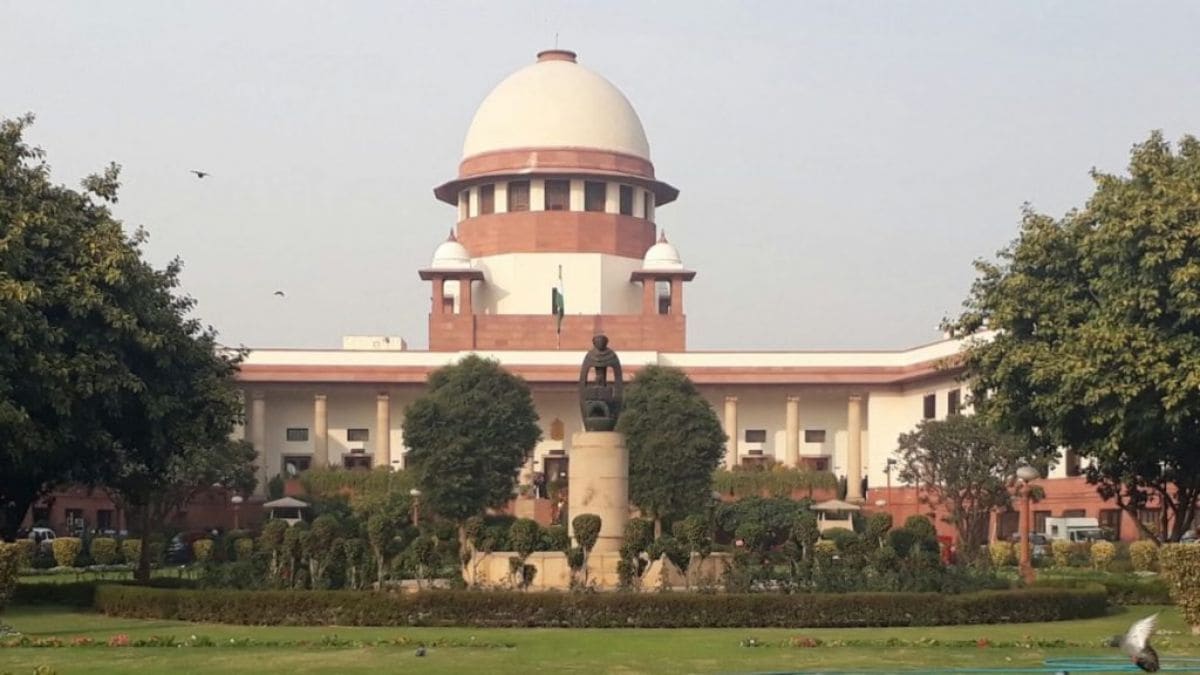
On February 13, a Supreme Court judgment held that spectrum allocated to telecom service providers (TSPs), although reflected as an asset in their books of account, cannot be subjected to proceedings under the Insolvency and Bankruptcy Code (IBC), 2016. This ruling implies two structural propositions.
First, the licence entitling a TSP to use spectrum cannot be dealt with within the IBC process. If that licence cannot be continued, transferred, or otherwise accommodated in a resolution plan, the TSP cannot be rescued as a going concern. The practical effect is binary: either mechanisms outside the IBC framework resolve financial stress, or liquidation becomes inevitable, in which case the government—as the licensor of the spectrum—effectively stands above the waterfall, with consequential haircuts for fully secured creditors. In a capital-intensive, licence-dependent sector, exclusion of the core operating asset effectively disables resolution.
Second, the ruling’s logic extends beyond accounting characterisation. If the right to use spectrum is excluded because it concerns a scarce public natural resource held in trust, the same reasoning would apply to enterprises dependent on rights to mining leases, coal blocks, petroleum fields, water extraction, or other regulated natural resources. By parity of reasoning, such entities too would either be resolved outside the IBC or face liquidation. The decision thus risks carving out an entire class of regulated industries from the insolvency framework.
Yet, while foreclosing recourse to the IBC, the court does not articulate an alternative stress-resolution architecture for such entities. The result is a regulatory vacuum. Enterprises remain subject to insolvency risk, creditors retain enforceable claims, and financial distress will inevitably arise. But the dedicated statutory mechanism designed to address such stress has been declared inapplicable, without a parallel framework to fill the void. In sectors where the operating licence constitutes the economic heart of the enterprise, that vacuum is not merely procedural; it is systemic.
The judgment effectively neutralises several statutory provisions, a phenomenon legal scholars term as interpretative erasure whereby explicit legislative commands are rendered functionally invisible through judicial construction.
The most glaring omission is the absence of any engagement with the explanation to Section 14(1) of the Code. That explanation declares, in unequivocal non-obstante terms, that a licence, permit, registration, or a similar grant or right given by the central or state government or any authority shall not be suspended or terminated on the grounds of insolvency. This protection is subject to the condition that there is no default in payment of current dues arising during the moratorium period. Parliament thus consciously decoupled the survival of a licence from pre-insolvency liabilities. The legislative choice was clear: rescue the enterprise as a going concern, so long as ongoing obligations are honoured.
The court, however, ruled that the right to use the spectrum cannot be utilised or transferred unless all past dues are cleared. By conditioning continuation on payment of past dues, the court effectively deletes the explanation through judicial fiat. It does not explain why the non-obstante clause does not override sectoral provisions, nor does it engage with the statutory text well. The silence is doctrinally significant.
The reasoning further rests on the premise that the corporate debtor does not own the spectrum and, therefore, it is not an asset under Section 18 of the Code. This approach ignores the structure of Section 14, which protects not merely ownership but any legal right or beneficial interest. Parliament recognised that in a modern economy, value often inheres in usufructuary and statutory rights rather than title itself.
Even if the TSP does not hold ultimate sovereign title to spectrum, it undeniably holds a present, legally enforceable right to use it, a beneficial interest of substantial economic value. By anchoring analysis exclusively in ownership under Section 18, the court renders the broader protective language of Section 14(1)(b) otiose.
Similarly, Section 14(1)(d) prohibits recovery of property by a lessor where such property is occupied by the debtor. The Code defines “property” expansively to include every description of interest arising out of or incidental to property. The right to use spectrum is precisely such an interest. Yet the court applies a restrictive common law conception of property that sits uneasily with the statutory definition it was bound to interpret.
The disconnect between the judicial interpretation and legislative intent is underscored by the provisions of the amendment Bill before Parliament. The proposed Section 31(5), framed with a non-obstante clause, provides that a licence linked with an approved resolution plan shall not be suspended or terminated if the corporate debtor complies with obligations in respect of the remaining period of such grants. Parliament is thus clarifying what the court declined to recognise: continuity depends on payment of future dues, not historical arrears. That is the clean slate principle fundamental to insolvency law.
The danger of the ruling lies in its precedential reach. If a government licence is not an asset for insolvency purposes, the principle will not remain confined to the spectrum. Sectoral regulators may assert that their statutes override the Code, producing as many insolvency regimes as there are regulated sectors. Such fragmentation undermines the predictability and certainty essential to economic organisation and detracts from the objective of efficient resource allocation.
The legal quagmire stemmed from a wrongly framed question. The proceedings began by asking whether TSPs could invoke an insolvency proceeding to evade sovereign dues. This was the wrong lens through which to view the problem. The appropriate response to non-payment is vigilant regulatory enforcement before insolvency, not dismantling the insolvency framework after debt has accumulated. Once a regulator permits continued operations despite arrears, the enterprise inevitably enters the domain of insolvency law. Regulatory inaction cannot justify disabling the statutory rescue mechanism.
The IBC is a comprehensive economic legislation, drafted with precision to balance competing interests. Every word serves a defined economic purpose. The explanation to Section 14 was a deliberate legislative instruction to prioritise rescue over recovery of government dues. By effectively deleting that instruction, narrowing the statutory conception of property, and elevating the licensor above the waterfall, the judgment unsettles the architecture of the code and risks supplanting legislative design with judicially crafted exceptions across regulated sectors.