



By Ron Dermer
When I became Israel’s Ambassador to the United States in 2013, my wife and I arrived in Washington, DC with five children under the age of 10, including a two-year-old boy and four-month old girl.
We hoped to hire an au pair so that my wife could assume the duties that come from being an Ambassador’s spouse, from hosting events in our official residence to attending functions in DC to accompanying me on visits outside of the capital.
One of my colleagues at our embassy told me that a woman named Helen, the sister of his Indian au pair, was interested in coming to America to work as well. While my wife was nervous about bringing someone into our home whom she had never met before, we decided to take a chance on Helen.
Helen proved to be a godsend — a smart, kind, and trustworthy woman who treated our children as if they were her own. It didn’t take long before my wife felt confident enough to leave our kids alone in Helen’s capable hands. Helen even earned the respect and trust of the toughest family critic, my mother, who admired her work ethic and resourcefulness.
But as time went on, it was harder and harder for Helen to be away from her husband Vinaya and her daughter Roshni, who was only 12 when Helen left India in order to provide her with a better future. When Vinaya was able to fill a vacant position in the Ambassador’s residence, some of Helen’s homesickness abated. Still, the separation from her daughter Roshni remained difficult, even as her work helped finance Roshni’s education as a nurse.
When my more than seven-year tenure in Washington ended in 2021, we asked Helen if she would be willing to return with us to Israel to help care for my mother, who had suffered a stroke. Helen agreed, once again separating herself from her family.
After seven years caring for our children, Helen spent another four years caring for my mother, who passed away last May. I will be forever grateful for the dignity and respect that Helen showed my mother in her final years.
For 11 years, Helen was more than an employee to us. Helen was family.
So when Helen invited us to India for Roshni’s wedding, there was no doubt in our minds that we would be there to celebrate with her. That is how I, my wife and three of our children found ourselves in the village of Amtady in Karnataka — on my first visit to this remarkable country.
Highlights from Ron Dermer’s 10-day India visit
That 10-day visit included many unforgettable memories: the incomparable majesty of the Taj Mahal, the lush coffee plantations of Coorg, a tiger safari in Rajasthan, the mesmerising Jayalakshmi sari shop in Mangalore, and the wonderful and warm people we met everywhere.
I also had the opportunity to meet with senior Indian officials, including Ajit Doval, your experienced national security advisor, and Dr. Jaishankar, your indefatigable foreign minister. We talked about how to expand the great partnership between India and Israel, which are not only two modern countries but also two ancient civilizations.
We discussed deepening cooperation in fighting terrorism and advancing new technologies. With both countries embracing the future, I am confident that the strategic partnership between India and Israel will expand dramatically in the years ahead.
Dremer’s understanding of India’s core and its future
But the highlight of my first visit to India was the time I spent in Amtady, which began with a roce ceremony on a Thursday night and ended with the wedding ceremony the following Sunday. It was hard to keep track of all the different rituals we witnessed but one thing stood out in all of them – the centrality of family. As literally hundreds of people poured coconut milk on Roshni and conveyed their blessings, I realized that this was not just the wedding of a couple but a merger of two families and two communities.
I know India faces many challenges. It must safeguard its national security. It must expand infrastructure to keep pace with development. It must ensure an educated, hardworking and entrepreneurial workforce can find good jobs that keep its talented human capital within its own borders. It must reduce pollution, alleviate poverty and address a myriad of other issues that a rapidly developing nation must address.
But I see a brilliant future for India, and I see it because of what I witnessed at Roshni’s wedding. The family, the basic building block of every strong society, is under stress in so many parts of the world. But in India, the family is strong.
Family is what led a woman like Helen to work years abroad to give her daughter a chance at a better future. It is what made Helen’s siblings and relatives step in to help raise Roshni when her mother was elsewhere. It is what creates the unbreakable bonds and timeless values that forge resilient communities and successful nations.
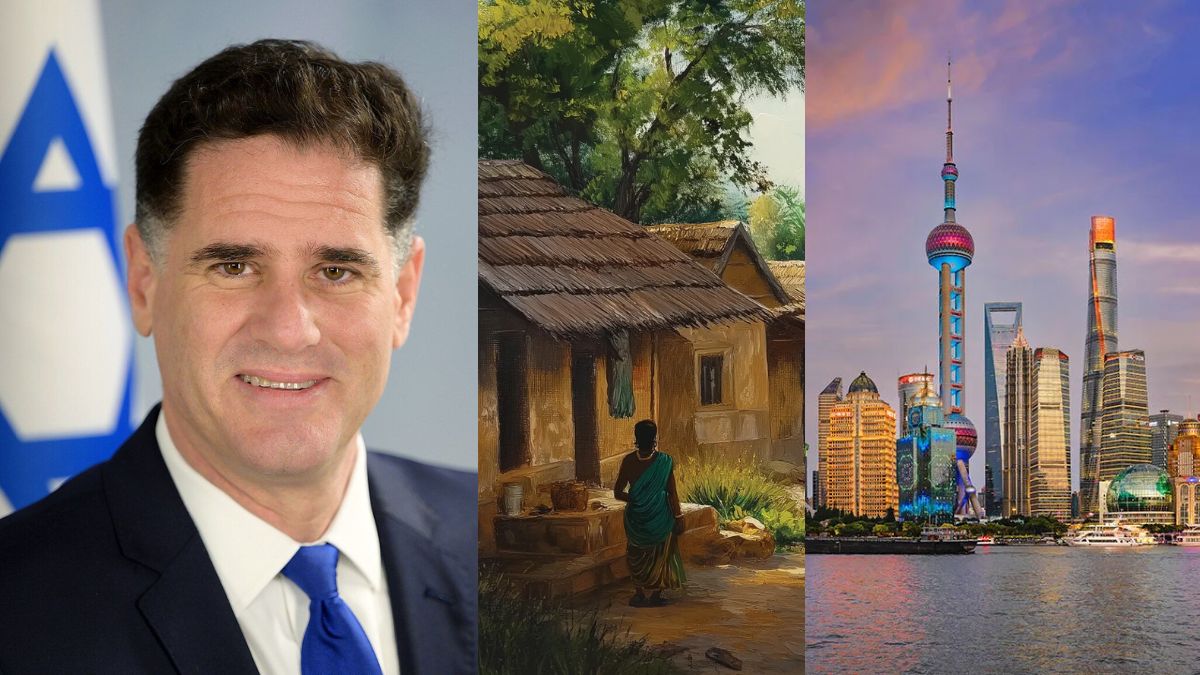
Many debate whether the 21st century will be an American century or a Chinese century. Don’t be surprised if in the decades ahead, India emerges from the shadow of both.
If it does, it will be because of places like Amtady and because of people like Helen. It will be because an ancient civilization rooted in family and determined to embrace the future is a nation for whom only the sky is the limit.
The writer was Israel’s Minister of Strategic Affairs (2022-2025) and its Ambassador to the United States (2013-2021).
Disclaimer: The views expressed are the author’s own and do not reflect the official policy or position of Financial Express.