



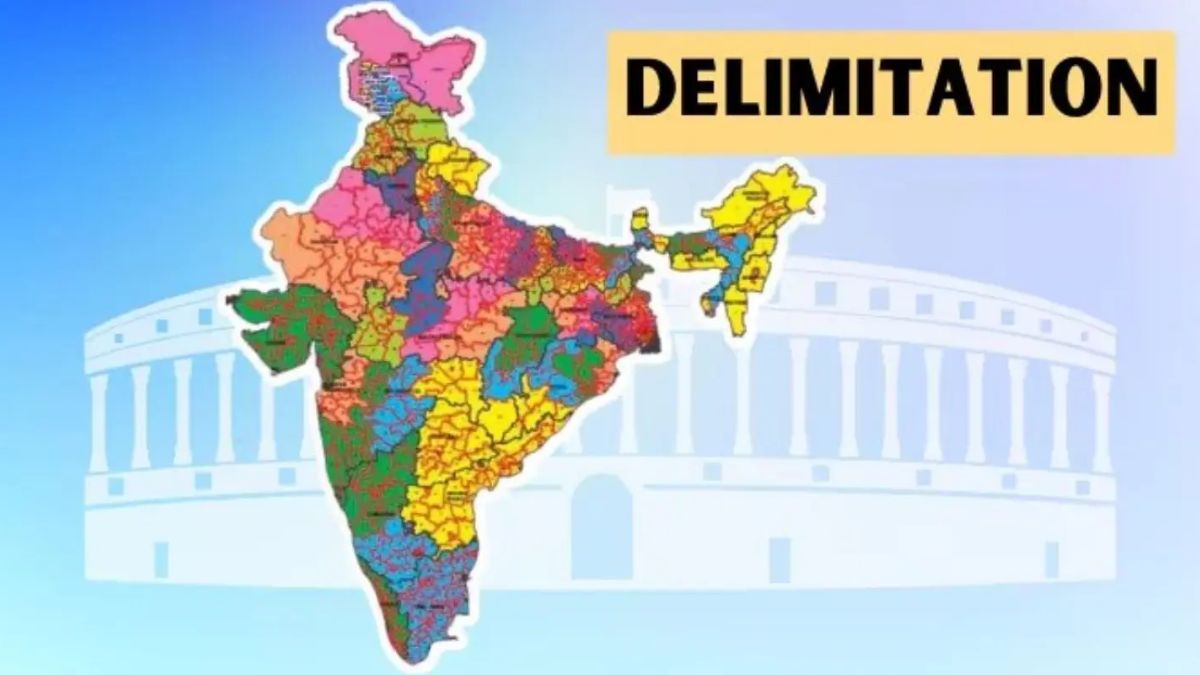
India cannot postpone delimitation indefinitely as a democracy of its scale cannot continue to rely on population ratios frozen decades ago. The principle of “one citizen, one vote, one value” demands correction, and the current exercise—linked to women’s reservation—has both logic and legitimacy. The case for delimitation is strong as constituencies today represent vastly unequal populations, undermining electoral fairness.
Members of Parliament serve electorates that are often too large to engage meaningfully, weakening accountability. Updating seat distribution and expanding the Lok Sabha are, in that sense, overdue reforms. The proposal to raise the House’s strength to around 850 members also attempts a political balancing act—ensuring that no state loses seats in absolute terms while aligning representation more closely with demographic realities. There is also a clear enabling function—delimitation is the trigger for implementing one-third reservation for women in Parliament and state assemblies. That alone gives the exercise a historic urgency.
Demographic Paradox
Yet necessity does not justify haste—or opacity. That this legislation is being rushed through, with barely any time for public debate, just days before voters in two crucial states go to the polls, makes the timing odd. Concerns raised, particularly by southern states, go to the heart of India’s federal compact. Even with an expanded House, a population-based redistribution will shift relative political weight towards faster-growing states.
For those that invested in population control and human development, this creates a paradox—better outcomes risk translating into diminished influence. This is why perception matters. If delimitation is carried out transparently and consultatively, it can command legitimacy. If it appears rushed or ambiguous, it risks deepening regional mistrust. The government would do well to recognise that this is not an ordinary legislative exercise as delimitation reshapes political power for decades. It cannot be approached as a numbers-driven correction alone, nor bundled too tightly with other reforms without clarity. The absence of explicit guarantees—such as how inter-state balances will be protected—only fuels suspicion.
Calibrating Expansion
The challenge, then, is to find a middle path—one that reconciles democratic arithmetic with federal sensitivity. Expanding the Lok Sabha is part of the answer, but the scale matters. An over 50% growth may be excessive without institutional reform. Even with 543 MPs, Parliament struggles as a deliberative body, with frequent disruptions, declining sittings, and weakened committee scrutiny. A more calibrated expansion—around 20–25%—could achieve key objectives—accommodating women’s reservation, reducing constituency size, and moderating regional imbalance. It would also allow institutions time to adapt. Beyond numbers, safeguards are essential. Strengthening the role of the Rajya Sabha as a forum of state representation can help offset shifts in the Lok Sabha. Clear, transparent formulas for fiscal transfers and devolution can reassure states that political weight will not be the sole determinant of influence.
Equally important is process. A reform of this magnitude demands visible, structured consultation—across states, parties, and expert bodies. Parliamentary committees, inter-state councils, and even a phased implementation timeline can help build consensus. The goal should not merely be to pass a delimitation law, but to ensure that it is accepted as fair. India stands at an inflection point. Delimitation is both necessary and inevitable. But in a federal democracy, how change is carried out is as important as the change itself. Bulldozing through a politically sensitive reform may secure short-term legislative success, but at the cost of long-term cohesion. A larger Lok Sabha may well be inevitable; a divisive one is not.