



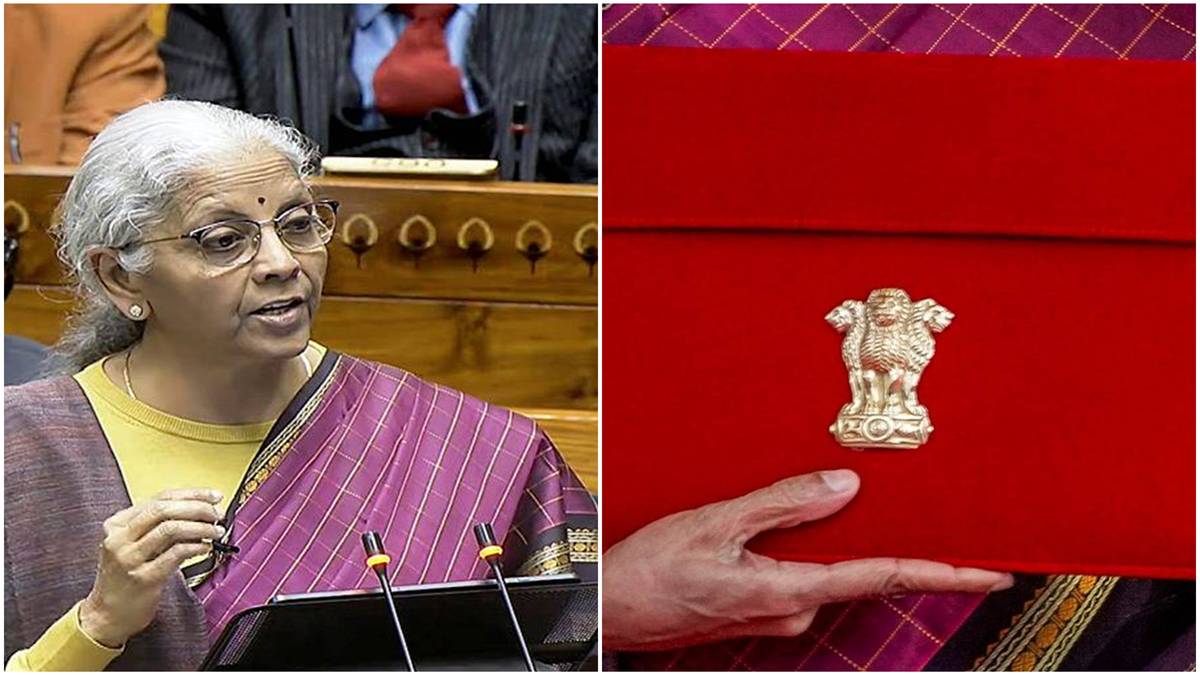
The Union Budget for 2026–2027 introduces statutory changes that affect individual taxpayers dealing with financial assets, capital market transactions, overseas remittances, and return filing. Instead of announcing new exemptions or incentives, the Budget focuses on rewriting the income tax law, adjusting transaction taxes, modifying compliance timelines, and offering limited disclosure relief. Several measures take effect from April, 1 2026, making them relevant for the upcoming assessment cycle and ongoing financial arrangements.
Budget 2026 key highlights
- Securities Transaction Tax increased on derivatives
Transaction costs for derivatives trading are revised. The Budget proposes to “raise the STT on Futures to 0.05% from the present 0.02%.” Securities Transaction Tax is levied on each transaction executed on recognised stock exchanges.
For options, the Budget states that STT on both “options premium and exercise of options” will be increased to “0.15%.” These rates apply per transaction and affect both trading and settlement stages.
- Share buyback proceeds to be taxed as capital gains
The Budget changes the taxation of share buybacks. Referring to the “improper use of buyback route by promoters,” it proposes to “tax buyback for all types of shareholders as Capital Gains.”
The measure introduces an additional tax incidence for promoters. The effective tax rate is specified as “22% for corporate promoters” and “30% for non-corporate promoters.” This applies uniformly across shareholders, with the additional burden arising from the revised buyback tax structure.
- Income Tax Act, 2025 to replace the existing law from April 1, 2026
The Budget confirms the completion of a comprehensive review of the income tax framework. It states that the “Income Tax Act, 2025 will come into effect from 1st April, 2026.”
According to the Budget, the new law will be supported by simplified rules and redesigned forms so that “ordinary citizens can comply without difficulty.” The announcement establishes that the existing Income-tax Act will be replaced by a new statute rather than amended incrementally.
- Tax Collection at Source reduced for overseas travel and education
The Budget revises Tax Collection at Source (TCS) under the Liberalised Remittance Scheme. It proposes to reduce the rate on the “sale of overseas tour program package” to “2% without any stipulation of amount.”
It also reduces the Tax Collection at Source rate for remittances made for “pursuing education and for medical purposes” under the Liberalised Remittance Scheme from 5% to 2%.
- One-time foreign asset disclosure scheme with defined limits
A compliance window is introduced for individuals who did not disclose overseas income or assets in earlier returns. The Budget announces a “one-time 6-month foreign asset disclosure scheme.”
The scheme applies to undisclosed foreign income or assets up to “1 crore rupees.” Taxpayers can obtain immunity from prosecution by paying “30% as additional income tax in lieu of penalty.” The provision is time-bound and limited in scope.
- Interest on motor accident compensation made tax-free
The Budget provides relief relating to compensation awarded in motor accident cases. It proposes that “any interest awarded by the Motor Accident Claims Tribunal to a natural person will be exempt from Income Tax.”
As a result, “TDS on this account will be done away with.” Tax Deducted at Source will no longer apply to such interest payments.
- Centralised submission of Form 15G and Form 15H through depositories
To simplify procedural compliance, the Budget proposes that depositories will be enabled to “accept Form 15G or Form 15H from the investor and provide it directly to various relevant companies.”
Form 15G and Form 15H are declarations submitted to prevent tax deduction on interest income when eligibility conditions are met. The change removes the need to submit these forms separately to multiple companies.
- Extended timelines for revised returns and staggered due dates
The Budget proposes to extend the timeline for revising income tax returns. Revised returns can now be filed “up to 31st March with the payment of a nominal fee,” instead of the earlier 31st December deadline.
It also proposes staggered filing schedules, allowing “non-audit business cases or trusts” to file returns up to 31st August.
- Customs duty reduced on personal imports and select medicines
The customs duty structure for individuals is revised. The “tariff rate on all dutiable goods imported for personal use” is reduced from “20 per cent to 10 per cent.”
In addition, the Budget states that it will “exempt basic customs duty on 17 drugs or medicines” used for the treatment of cancer and rare diseases.
- Capital gains exemption on Sovereign Gold Bonds clarified
The Budget clarifies the conditions under which capital gains tax exemption applies to Sovereign Gold Bonds. The exemption will be available only where bonds are “subscribed to by an individual at the time of original issue and are held continuously until redemption on maturity.”
Bonds acquired through secondary market transactions are excluded from this exemption.
Conclusion
Overall, the introduction of a new income tax law, higher levies on derivatives, revised buyback taxation, and a time-limited disclosure window indicate a framework built around enforcement and procedural clarity
It is seen as a step towards taking forward the long-term goals of Viksit Bharat.