



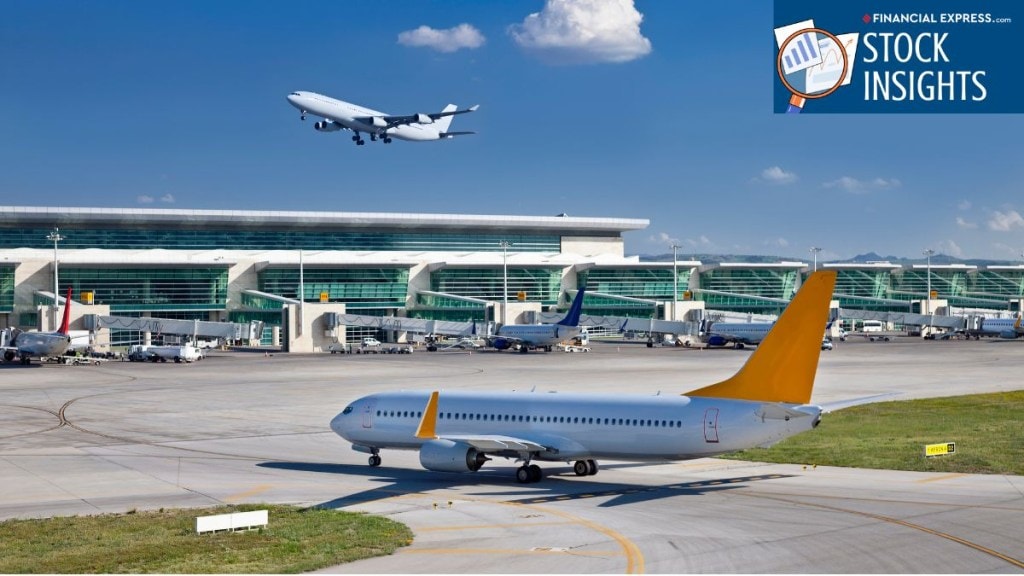
The Airports Authority of India has announced a major airspace and infrastructure expansion initiative with a capex of around ₹15,000-17,000 crore, targeted for completion by 2029. Civil construction (central tower) will account for 60% of the cost, while the remaining 40% will be spent on technology, including automation and navigation tools, as per Angel One.
This plan will cover around 65 high-traffic airports across the country. Simply speaking, the budget will be spent on upgrading automation, radar systems, and communication technology to improve traffic management, reduce congestion, and enhance safety.
This boost reflects India’s position as one of the fastest-growing aviation markets globally, where increasing passenger and cargo movements require more efficient use of airspace. This budget could lift the wider aviation ecosystem, offering direct and indirect gains for airport operators, air navigation service providers, Maintenance, Repair, and Overhaul players, and airlines.
Let’s take a look at key companies that could benefit from the move…
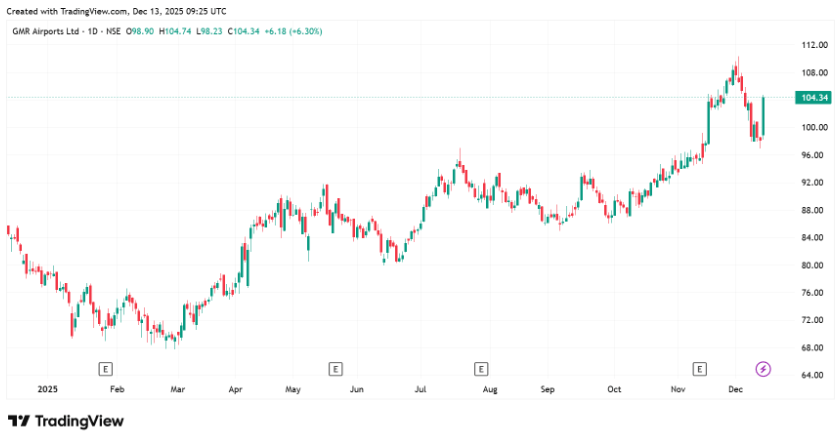
#1 GMR Airports: The Direct Beneficiary of Better Traffic Flow
GMR Airports, a part of the GMR Group, is Asia’s largest and the world’s second-largest private airport operator by passenger volume. The company currently operates, manages, and develops Indira Gandhi International Airport (Delhi), Rajiv Gandhi International Airport (Hyderabad), and Manohar International Airport (Goa).
It is also strategically involved in Kualanamu International Airport in Medan, Indonesia.
Building a Wider Global Airport Footprint
Additionally, GMR is developing large greenfield airports, including Bhogapuram International Airport in Andhra Pradesh and Crete International Airport in Greece. Physical progress at the Bhogapuram project is 80% complete as of September 2025. This will allow it to begin commercial operations much earlier than its original timeline.
Airspace Upgrades Ease Operational Bottlenecks
Given its diverse expertise, GMR stands to indirectly benefit from the expansion of ATC and airspace capacity. Greater airspace efficiency allows airports to handle more people without immediate physical expansion. This can streamline flight operations, reduce congestion, and increase passenger traffic. This could also increase aerospace revenue (landing, parking) and non-aerospace revenue.
Capacity Expansion Sets Up Revenue Momentum
The company is also undertaking major expansions, such as the Phase 3A expansion at Delhi Airport, which will enable the airport to directly handle over 10 crore passengers annually and meet continued traffic growth.
Similarly, capacity expansions at Hyderabad Airport to 3.4 crore passengers accommodate increasing traffic, translating directly into higher revenue generation from aeronautical fees.
Additionally, investments in optimizing airport processes can significantly improve aeronautical revenue performance. For example, the implementation of revised tariffs at Delhi Airport led to a 166% year-over-year increase in aeronautical revenue in Q2 FY26. Besides, GMR has increased parking charges to discourage airlines from parking aircraft for long periods, thereby easing congestion.
This led to parking charges substantially increasing, which, in turn, drove up overall aero yield per passenger in the short term, encouraging faster aircraft turnaround times. In addition, investments in high-tech operational control systems increase throughput and reduce disruptions. Recent operational optimization has reduced wait times by 20% through resource planning.
Earnings Rebound as Aero Revenue Gains Begin to Flow Through
On the financial front, GMR’s gross income rose 45% year-on-year to ₹3,750 crore, driven by a 69% increase in aero yield at Delhi Airport and non-aero revenue at Hyderabad Airport. This occurred even as passenger traffic declined by 3.5%. EBITDA (Earnings before interest, tax, depreciation, and amortisation) grew by 59% to ₹1,530 crore, with margins at 53%.
GMR posted a profit of ₹35 crore after three quarters, from a loss of ₹429 crore in the same quarter last year. Looking ahead, the company expects a significant increase in Aero revenue, which could support sustainable cash flow under a mature and predictable tariff regime.
Platform-Level Adjacencies Begin to Reshape the Revenue Mix
The company is strengthening its non-aero adjacency businesses at the platform level. This includes duty-free cargo, car parking, food and beverages, and hotels. These businesses are expected to drive higher revenue growth while maintaining capital efficiency, providing them with operating leverage.
To this end, GMR has already taken over the Delhi and Hyderabad duty-free and the award of the cargo city concession at Delhi, which are expected to contribute starting Q3 FY26. The completion of expansion projects (as stated above) at Delhi, Hyderabad, and Goa is also expected to improve its EBITDA profitability.
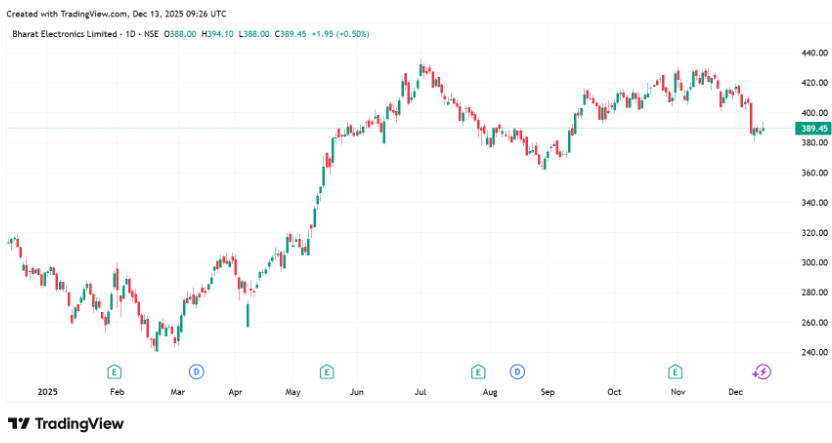
#2 BEL: From Borders to Boarding Gates
Bharat Electronics, a public sector enterprise, is a major defence player that is gradually diversifying into non-defence and civilian markets. It aims to diversify beyond the core defence business, with plans to increase non-defence revenue to 10%, up from 5.7% in FY25.
Expanding Solutions Across Civilian Infrastructure
To this end, its main focus is on automation, radar systems, and communication technologies to improve traffic flow, reduce congestion, and enhance safety. BEL is actively involved in developing and delivering solutions for intelligent traffic management systems, air traffic management, and rail and metro solutions.
Positioning for Opportunities in Air Traffic Modernisation
The strategy is to target opportunities in Civil Aviation solutions, specifically to enhance traffic control and airport infrastructure. To this end, BEL is a prime candidate as it already works on Air Traffic Control Radars and Air Traffic Management systems. It works in collaboration with AAI and global companies to modernise airport and ground infrastructure.
BEL provides solutions such as air surveillance radar, mono-pulse secondary surveillance radar, and advanced surface movement and guidance control systems. It has also developed a domestic radar for seamless air traffic control that meets global standards. A new in-house product is an air traffic management system for civil airports.
Consistently Strong Financial Performance
From a financial perspective, BEL revenue rose by 15.6% year-on-year to ₹10,232 crore in the first half of FY26, driven by the execution of a strong order book. EBITDA margin increased by 289 basis points (bps) to 30.2%. This led to a 19.7% increase in net profit to ₹2,256 crore.
As of October 2025, BEL’s order book stood at around ₹75,600 crore, providing it with revenue visibility for 3 years based on FY25 revenue of ₹23,769 crore. Apart from this, the company also expects to receive large orders in the next five months of FY26. BEL expects to report 15% year-on-year revenue growth in FY26.
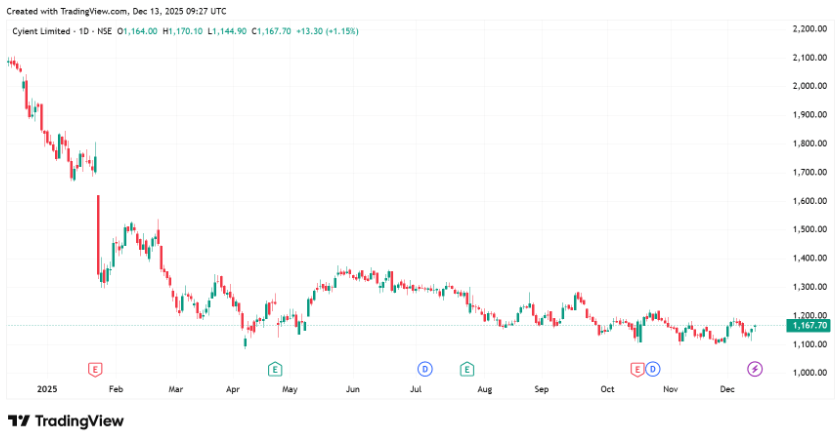
#3 Cyient: Leveraging Engineering Strength in Airspace Upgrades
Cyient is a global engineering and technology solutions company that delivers solutions across Engineering and Technology, with a strong focus on the Aerospace & Defence sector. It has over 300 global customers, including in the aerospace industry, and provides expertise in the design, manufacture, operation, and maintenance of products and services across its value chain.
Expanding Capabilities Across the Aerospace Value Chain
It has diverse delivery centers and offices across India, including in Hyderabad, Telangana, and facilities in Bangalore, Vizag, Kakinada, Warangal, Pune, and Noida. The company leverages its technical strength to secure advanced contracts.
Well-Aligned With India’s Airspace Modernisation Push
Cyient has deep domain expertise in geospatial and navigation technologies. Its engineering lifecycle supports the entire aerospace value chain, from initial design to manufacturing and aftermarket support. Specifically, it has deep expertise in ATC engineering, including mapping, satellite-based navigation, and systems integration.
This aligns with the AAI’s modernization of automation, surveillance, and communication systems. The company already has a large, multi-year contract to design and manufacture electronic controllers for flight control systems for a Japanese eVTOL player.
Profitability Softens as Strategic Exits Weigh on Q2 Performance
On the financial front, Cyient’s revenue fell 3.7% year-on-year to ₹1,781 crore in the second quarter of FY26. This was due to strategic exits from lower-value deals and the ramp-down to a larger platform. EBITDA margin declined 260 bps to 13.4% due to salary hikes and operating deleverage.
As a result, net profit fell 23.5% to ₹143.0 crore. Despite this, Cyient management reported a stronger second-half performance than in the first half, both in revenue growth and margins.
How Valuations Stack Up
GMR Airports is currently loss-making, so we have used EV/EBITDA to assess valuation. Since it remains loss-making on a full-year basis, RoE is negative at this stage. Its Return on Capital Employed (RoCE) of 6.9% highlights the subdued operating profitability.
Cyient’s return ratios are average due to the recent profit slump, with a RoCE of 16.6% and a Return on Equity (RoE) of 12.8%. Meanwhile, BEL has best-in-class return ratios, both RoCE and RoE, as its profitability has consistently improved.
Valuation Assessment (X)
| Company | EV/EBITDA | 5-Year EV/EBITDA | Industry EV/EBITDA | RoCE (%) | RoE (%) |
| GMR Airports | 29.1 | 26.2 | 17.5 | 6.9 | NA |
| Cyient | 10.3 | 11.6 | 16.9 | 16.6 | 12.8 |
| BEL | 34.0 | 19.1 | 32.8 | 38.9 | 29.2 |
Cyient’s growth is slowing due to some structural business slowdowns. Nevertheless, it trades at an EV/EBITDA multiple of 10.3x, which is below both the 5-year median and the industry multiple. The recent rerating has pushed BEL’s valuation above the 5-year median. But it continues to trade at a discount to the industry. GMR Airports has also recently been re-rated, pushing its multiples above the industry and its own median valuation.
Disclaimer:
Note: Throughout this article, we have relied on data from http://www.Screener.in and the company’s investor presentation. Only in cases where the data were unavailable have we used an alternate, widely accepted, and widely used source of information.
The purpose of this article is only to share interesting charts, data points, and thought-provoking opinions. It is NOT a recommendation. If you wish to consider an investment, you are strongly advised to consult your advisor. This article is strictly for educational purposes only.
About the Author: Madhvendra has been deeply immersed in the equity markets for over seven years, combining his passion for investing with his expertise in financial writing. With a knack for simplifying complex concepts, he enjoys sharing his honest perspectives on startups, listed Indian companies, and macroeconomic trends.
A dedicated reader and storyteller, Madhvendra thrives on uncovering insights that inspire his audience to deepen their understanding of the financial world.
Disclosure: The writer and his dependents do not hold the stocks discussed in this article.
The website managers, its employee(s), and contributors/writers/authors of articles have or may have an outstanding buy or sell position or holding in the securities, options on securities or other related investments of issuers and/or companies discussed therein. The articles’ content and data interpretation are solely the personal views of the contributors/ writers/authors. Investors must make their own investment decisions based on their specific objectives, resources, and only after consulting such independent advisors as may be necessary.