



India’s semiconductor ambitions are gathering pace.
The ₹1 Lakh Crore Semiconductor Fund
The government is preparing a new fund of about $11 billion (nearly ₹1 lakh crore) to accelerate domestic chip manufacturing, marking the next phase of the India Semiconductor Mission.
The move comes as several semiconductor projects, from fabrication plants to assembly and testing facilities, are already underway across the country. Industry estimates suggest that once these plants become operational, India could produce 75-80 million chips per day.
For a country that still imports most of its semiconductors, this signals a decisive shift. It marks a transition from being largely an electronics consumption market to gradually becoming a participant in the global semiconductor supply chain. Against this backdrop, we examine three semiconductor stocks expected to benefit from this move…
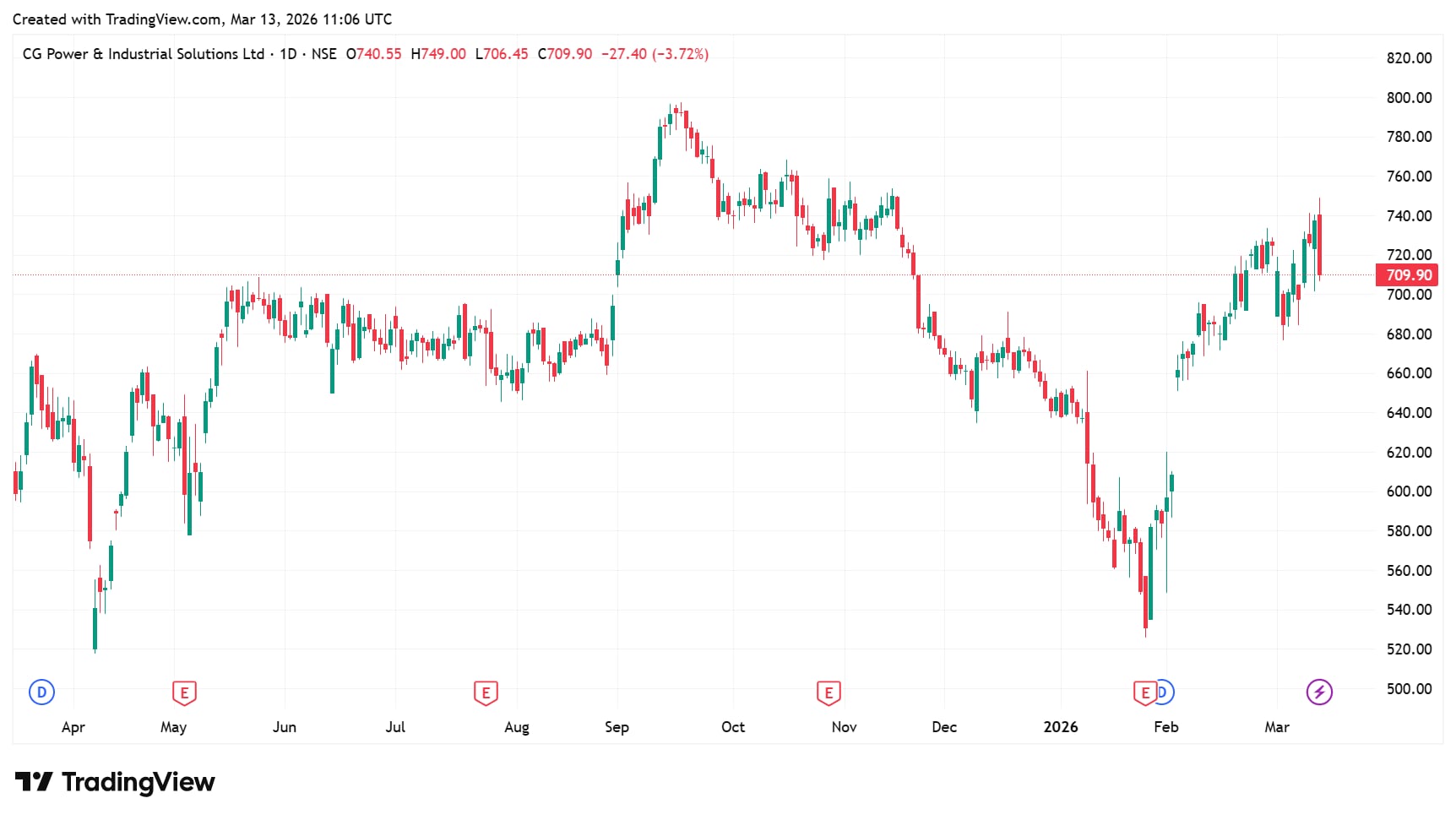
#1 CG Power: The ₹15,700-crore giant front-running the OSAT wave
CG Power is a manufacturing and engineering company that operates across several key technological and industrial segments. It designs and manufactures power transformers and switchgear, as well as industrial and electric-vehicle motors.
Strategic Entry into OSAT and Renesas Partnership
The company is expanding into the semiconductor space. It is establishing an Outsourced Semiconductor Assembly and Test (OSAT) manufacturing facility in collaboration with Renesas. This includes a currently operational mini plant and a larger facility expected by the end of 2026. Additionally, it runs a semiconductor design business through its Axiro Semiconductor Group.
Operational Outlook: Yields and Plant Timelines
The company expects to start generating sales from the mini plant on a small scale in the next two quarters, with volumes gradually ramping up over time. The plant is currently operating at an excellent yield of 98-99%. This is better than what the company initially anticipated in its business case.
The new, larger manufacturing facility is scheduled to be ready by the end of December 2026. The company expects operational activity at this plant to begin in Q4 of the next financial year. Lead times for customer chip validation and approvals are expected to be shorter at the main plant than at the mini plant.
About one-third of the capacity is allocated to the company’s collaboration agreement with Renesas. The company is actively in discussions with multiple other agencies and customer types. They noted that the automotive industry has the longest lead time for capacity uptake due to the stringent nature of auto-grade approvals.
Financial Impact: Short-term Losses vs. Long-term Visibility
Management views the CG Semi business as a start-up and an investment for the future. It plans to absorb initial losses before it starts making a profit. In Q3FY26, the semiconductor business had a negative impact of ₹41 crore, with a 130 bps impact on margins.
The design work (managed by Axiro) operates independently. It has committed around $64 million for FY26 and expects to complete work worth approximately $56 million. Management states this revenue level will bring the design operations to a ‘break-even’ position, if no further funding is required.
From a financial perspective, revenue grew 26% year-on-year to ₹3,175 crore in Q3FY26, driven by growth in the power business. EBITDA was 30% higher at ₹474 crore, with margins at 14.9%. Net profit (before exceptional items) grew by 34% to ₹319 crore. As of Q3FY26, the order book stands at ₹15,753 crore, providing over one year of visibility.
#2 Kaynes Technology: The Vertical Integration Play
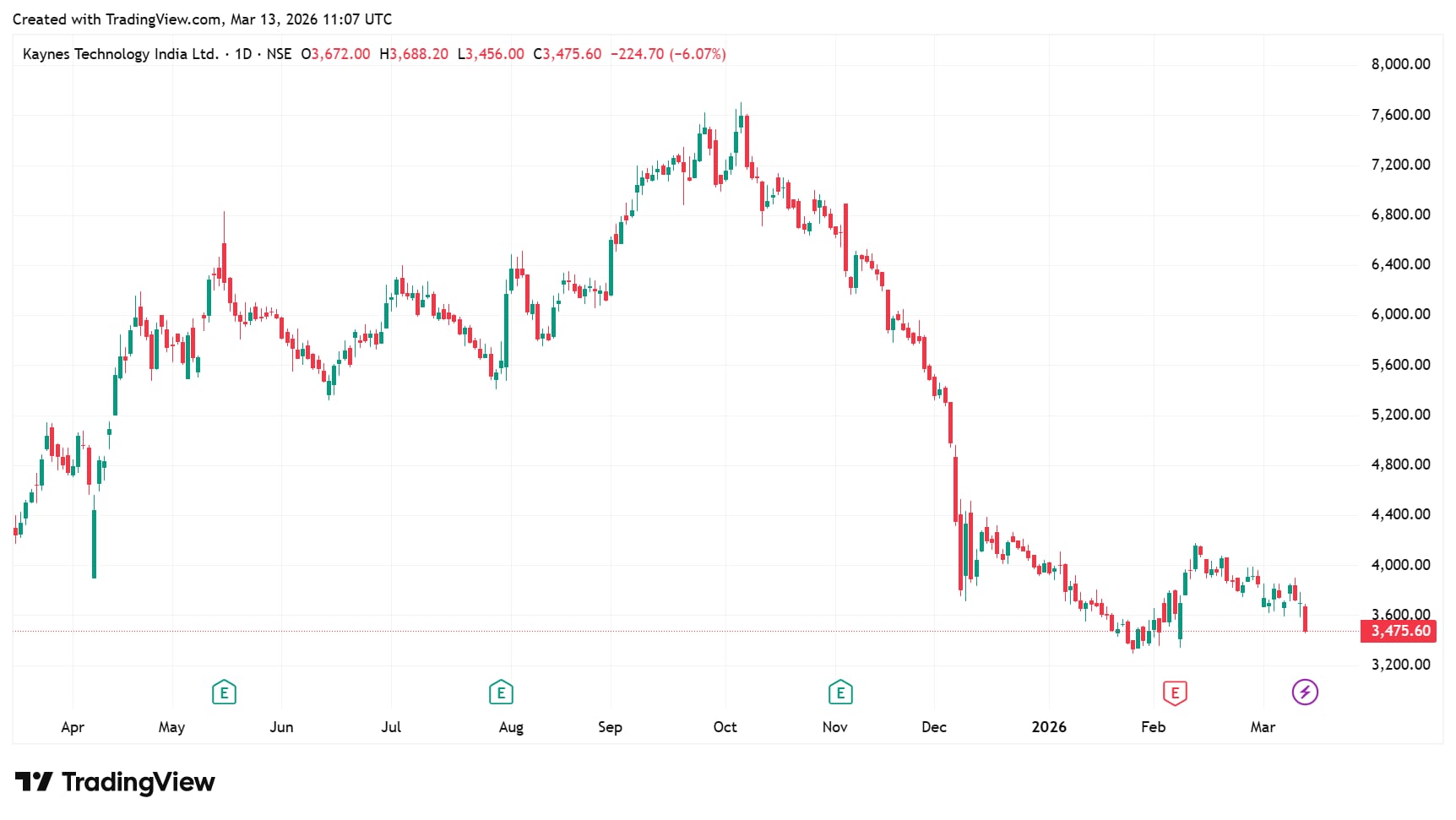
Kaynes Technology is a leading ESDM company. The company provides a comprehensive suite of services that spans the entire product lifecycle, offering conceptual design, process engineering, integrated manufacturing, and post-sales support to Original Equipment Manufacturers (OEMs).
Kaynes Technology has decisively moved its semiconductor ambitions from intent to execution. As a core part of its vertical integration strategy, it has set up an Outsourced Semiconductor Assembly and Test (OSAT) facility in Sanand, Gujarat. The pilot line (Unit 1) is already operational and is steadily ramping up its production.
Unlocking Value via the India Semiconductor Mission
A major milestone for the company’s semiconductor venture is the approval of the Financial Support Agreement under the India Semiconductor Mission framework. This approval assures Kaynes of a 50% central government subsidy and a 20% state government subsidy on allowable capital expenditure.
Securing this approval significantly improves project visibility, reduces cash flow uncertainty, and reinforces confidence in the company’s long-term financial roadmap. The total planned capex for the OSAT project is ₹3,200 crore. The company expects to complete Phase 1 with a cumulative capex of around ₹1,700 crore.
Technological Milestones: India’s First Multi-chip Module
Kaynes has already achieved a significant technological milestone by launching India’s first commercial Multi-chip module from the Sanand OSAT facility. The company is currently shipping Intelligent Power Modules (IPMs) to AOS, with mass production ramping up by January 2026.
These semiconductor packages will primarily be used in power electronics for the automotive, healthcare, and industrial sectors, as well as in consumer goods, wireless devices, and the Internet of Things (IoT).
Revenue Roadmap: Targeting ₹2,500 Crore from OSAT
Kaynes has secured agreements with three OSAT clients, which are expected to bring in at least ₹2,500 crore. Management has set a baseline revenue expectation of ₹1,500 crore from the OSAT business. It anticipates that the subsidiary will start generating positive operating cash flows by FY28.
This strategic expansion aligns with the broader growth of the Indian OSAT market, which is projected to grow at an 8% to 15% CAGR. This domestic growth is fueled by booming electronics consumption and global reshoring initiatives. Globally, the OSAT industry market size is forecasted to nearly double, reaching $99.37 billion by 2035.
Financial growth has moderated. Revenue grew 22% year-on-year to ₹804 crore in Q3FY26, driven by performance across aerospace, automotive, and industrial segments. EBITDA was 24% higher at ₹116.8 crore, with margins at 14.5%. Net profit grew by 15% to ₹76.6 crore. As of Q3FY26, the order book stands at ₹9,072.2 crore, providing over 2 years of visibility.
#3 Moschip Technologies: The Fabless Engineering Leader
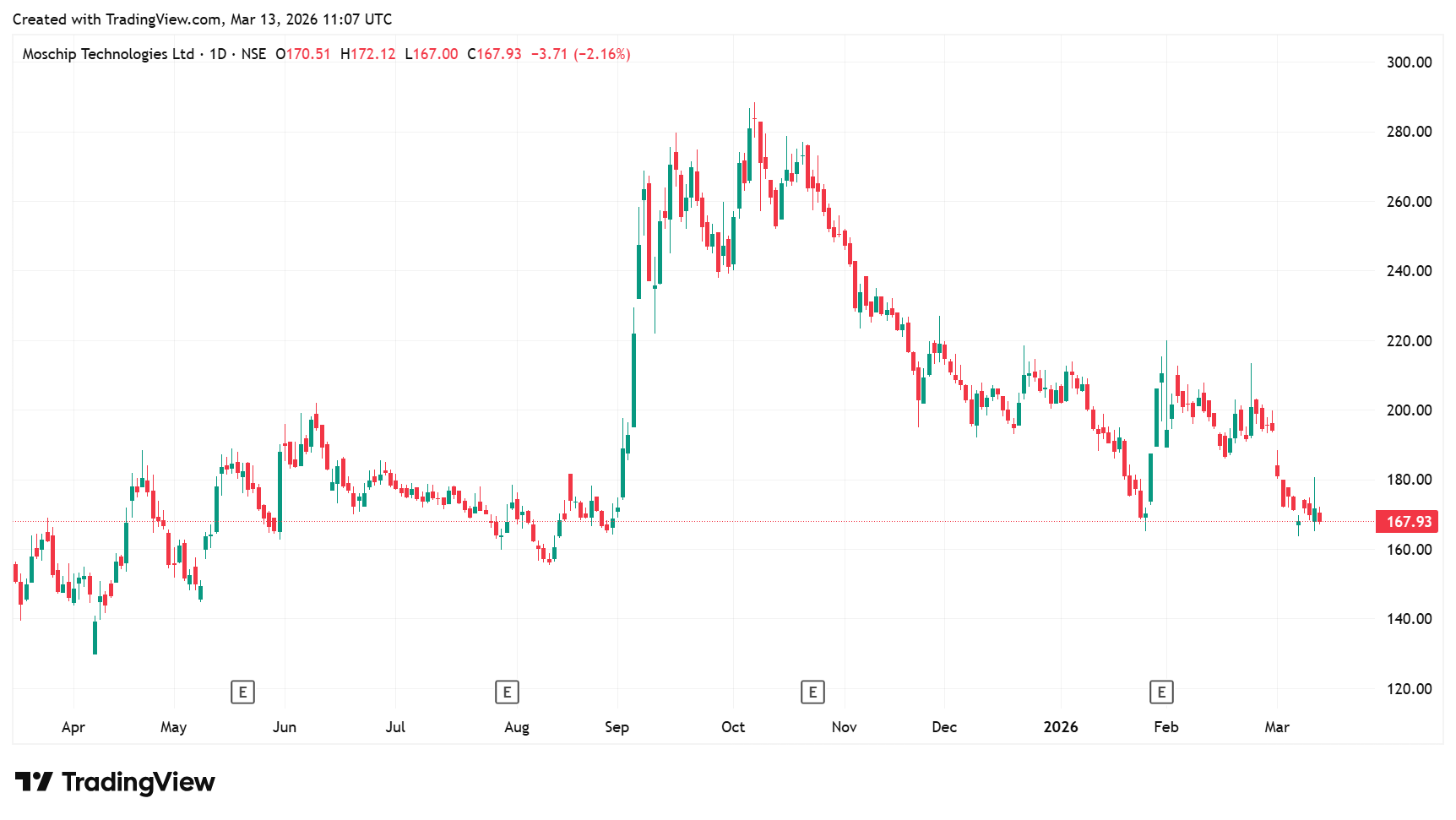
Moschip is India’s first Fabless Semiconductor company. It has several key business units, including Semiconductors, Software, and Product Engineering (Embedded Software, Digital Engineering).
MosChip identifies itself as a global engineering partner with two complementary domains: silicon engineering and product engineering. Its strategic direction focuses on diversification and high-growth areas. MosChip provides semiconductor design services.
Scaling Global Design and Emulation Services
The company plans to continue growing its design services offerings, aiming to deepen and stabilise its engagement. Moschip also aims to maintain its position among the top global semiconductor companies, as 10 of the top 20 are current clients. It plans to add emulation to the semiconductor service portfolio.
Indigenous Innovation: Smart Meters and HPC Processors
MosChip is developing an indigenous Smart Energy Meter IC under the Government of India’s Design-Linked Incentive Scheme. This product will cater to both the domestic and global markets. The market for smart energy meter ICs in India is expected to reach about 60 million units, and the overseas market 2 billion units by 2028.
It is also co-developing the AUM processor (an Indigenous HPC SoC) with C-DAC on TSMC 5 nm technology, which is part of India’s National Supercomputing Mission. This project is expected to create significant opportunities in both domestic and international markets for complex tasks, such as AI and scientific simulations.
Q3 Financial Scan: Revenue Growth vs. Profitability Headwinds
Moschip’s revenue rose 18.4% to ₹149.4 crore in Q3FY26, driven primarily by strong performance across both business segments. Net profit more than halved to ₹4.3 crore, down from ₹11.1 crore in the same period last year, due to an impact of ₹5.8 crore resulting from the new Labor Code.
Semiconductor Stocks: Comparison of Valuation and Returns
CG Power leads the pack in return ratios such as Return on Capital Employed (ROCE) and Return on Equity (ROE). Kaynes’ return ratios have softened due to capacity expansion and sluggish profitability growth. Valuation-wise, these companies are still trading at a premium relative to industry multiples, while valuations have cooled below their historical valuations.
| Peer Comparison (X) | |||||
| Company | P/E | 3Y Median P/E | Industry P/E | ROCE (%) | ROE (%) |
| CG Power | 102 | 97.0 | 32.5 | 37.5 | 27.7 |
| Kaynes | 61.0 | 120.0 | 28.1 | 14.3 | 10.7 |
| Moschip | 79.0 | 169.3 | 23.9 | 11.9 | 11.2 |
| source: screener.in | |||||
The government’s renewed push signals a long-term policy commitment to building a domestic chip ecosystem. For companies such as CG Power, Kaynes, and Moschip, this shift could gradually translate into technology partnerships and ecosystem-led growth.
However, beyond policy announcements, execution timelines, capacity ramp-ups, and customer adoption will determine how much of this opportunity converts into sustainable earnings. Meanwhile, add them to your watchlist and stay tuned.
Disclaimer:
Note: Throughout this article, we have relied on data from http://www.Screener.in and the company’s investor presentation. Only in cases where the data were unavailable have we used an alternative, widely accepted, and widely used source of information.
The purpose of this article is only to share interesting charts, data points, and thought-provoking opinions. It is NOT a recommendation. If you wish to consider an investment, you are strongly advised to consult your advisor. This article is strictly for educational purposes only.
About the Author: Madhvendra has been deeply immersed in the equity markets for over seven years, combining his passion for investing with his expertise in financial writing. With a knack for simplifying complex concepts, he enjoys sharing his honest perspectives on startups, listed Indian companies, and macroeconomic trends.
A dedicated reader and storyteller, Madhvendra thrives on uncovering insights that inspire his audience to deepen their understanding of the financial world.
Disclosure: The writer and his dependents do not hold the stocks discussed in this article.
The website managers, their employees (s), and contributors/writers/authors of articles have or may have an outstanding buy or sell position or holding in the securities, options on securities, or other related investments of issuers and/or companies discussed therein. The content of the articles and the interpretation of the data are solely the personal views of the contributors/writers/authors. Investors must make their own investment decisions based on their specific objectives, resources, and only after consulting such independent advisors as may be necessary.