



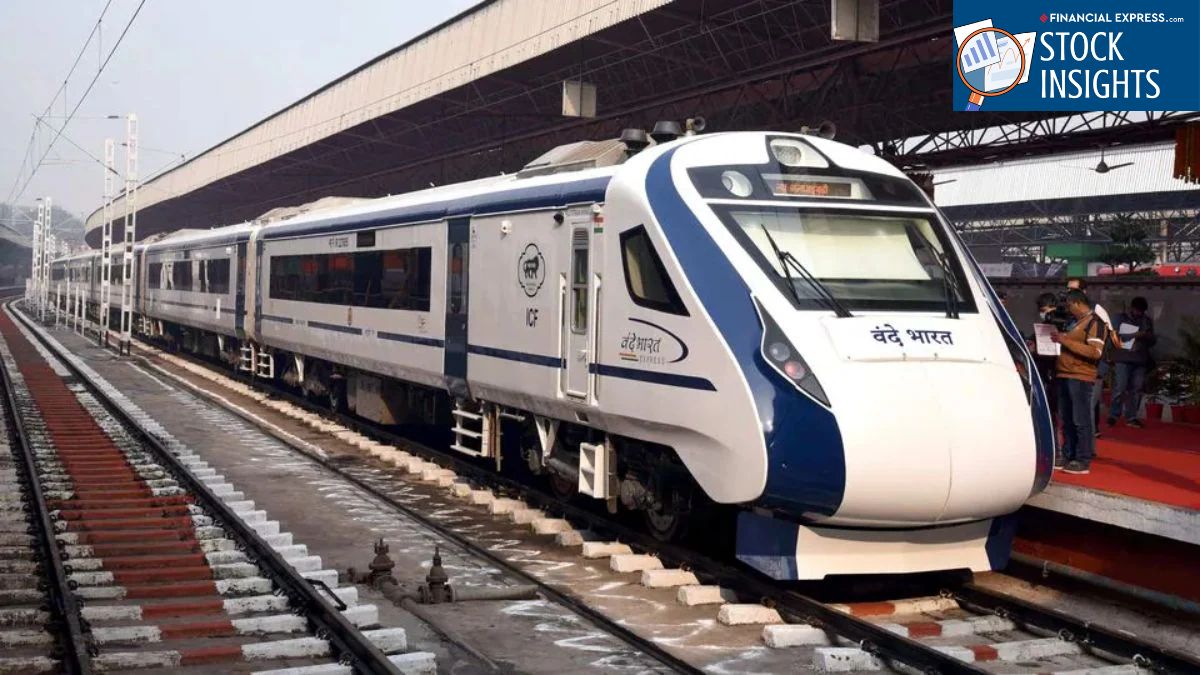
The Union Budget 2026 allocated a record ₹293,030 crore to the Ministry of Railways. The funding is targeted at new lines, gauge conversion, doubling, traffic facilities, rolling stock, and the KAVACH railway safety system. In fact, while addressing the media, Railway Minister Ashwini Vaishnaw explicitly stated that the “focus on safety is topmost priority”.
In line with the safety push, the budget allocated ₹7,500 crore (up 35%) to signalling and telecom, including KAVACH safety implementation. This reinforces the government’s sustained effort to strengthen the safety network and reduce accidents.
Indian Railways plans to implement KAVACH across more than 40,000 kilometers of its 85,000-kilometer railway network. Concord Control Systems estimates the total opportunity size to be ₹40,000 crore through 2030. Amid rising budget spending, let’s take a closer look at the likely beneficiaries of the increase.
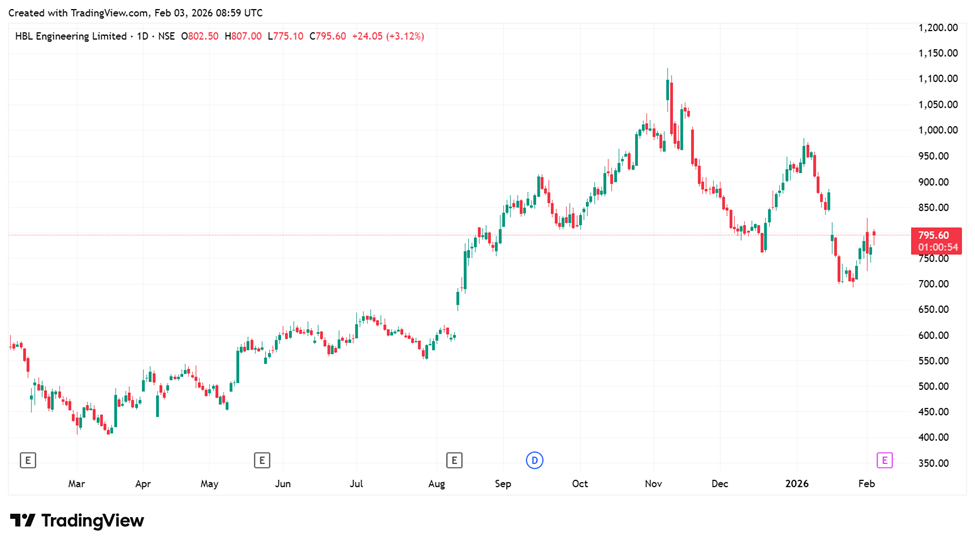
#1 HBL Engineering: The first-mover advantage in SIL4 Certification
HBL Engineering operates in the batteries, defence, and railway sectors. HBL’s business model is built on identifying and filling technology gaps in India. This strategy focuses on building sustained competitive advantages through owned technology.
From prototype to commercial scale
KAVACH is an indigenous Train Collision Avoidance System (TCAS) developed by HBL Engineering within its Industrial Electronics Segment. The development journey began in 2005 when the Research Designs and Standards Organisation asked HBL to invest in developing an indigenous system without external funding.
Why Certification is the ultimate moat
HBL views KAVACH as a “moat” that is difficult for competitors to cross due to high entry barriers posed by technology and safety certification. It took about 20 years from conception to commercial success. HBL successfully demonstrated the concept on tracks in October 2012 under specification v3.1, which was later revised to v3.2 for interoperability with other firms.
HBL’s KAVACH system is certified for SIL4 (Safety Integrity Level 4) by ItalCertifer, a European safety assessment agency. A key development was the shift from specification v3.2 (designed for speeds up to 110 kmph) to Version 4.0, which is designed to protect trains operating at 160 kmph.
The development of the v4.0 specification began in 2022 and was formally frozen on 16 July 2024.
HBL was the first OEM to demonstrate v4.0 functionality on 24 September 2024, and the first to obtain v4.0 certification on 13 May 2025. HBL held a lead of approximately eight to nine weeks over its competitors regarding this qualification. Despite this, HBL’s FY25 sales were below budget, as the railways deferred tenders to allow OEMs to obtain certification.
The 12,129 lock units demand
The immediately addressable visible demand now stands at around 12,129 loco units. HBL expects meaningful traction in the loco segment and estimates at least ₹1,000 crore of loco KAVACH revenue in FY27, with some execution extending into FY28.
In addition, HBL has station KAVACH orders totaling about ₹900 crore scheduled for execution in FY27, with another ₹400 crore expected in FY28. Additional station tenders are also likely in FY27, with some contributions expected within the year. On 1 February, HBL won a ₹575 crore KAVACH order from Integral Coach Factory.
Overall, HBL expects KAVACH revenue to be about ₹1,880 crore in FY26. For FY27, despite recent tender setbacks, management continues to guide for at least ₹1,900 crore in KAVACH revenues, supported by a mix of loco and station deployments. KAVACH sales are budgeted to remain stable at approximately ₹1,300-1,500 crore per year in FY26, FY27, and FY28.
Electronic Fuzes and TMS System pivot as a post-2030 growth anchor
HBL states that covering the entire Indian Railways network will take much longer than five years. However, by the time KAVACH sales potentially decline in FY 2030, the company expects other segments, such as Electronic Fuzes and Train Management Systems (TMS), to grow significantly. Overall, HBL expects sales of ₹3,000 crore in FY26, up from ₹1,967 crore in FY25.
The guidance is based on strong growth in H1FY26, during which it already surpassed last year’s revenue. Revenue rose by 75.3% year-on-year to ₹1,825 crore, while net profit expanded by 217.4% to ₹530 crore. Profit surged as the operating margin almost doubled to 40% from 21% in H1FY25.
#2 Concord Control: High-margin integration via subsidiary synergies
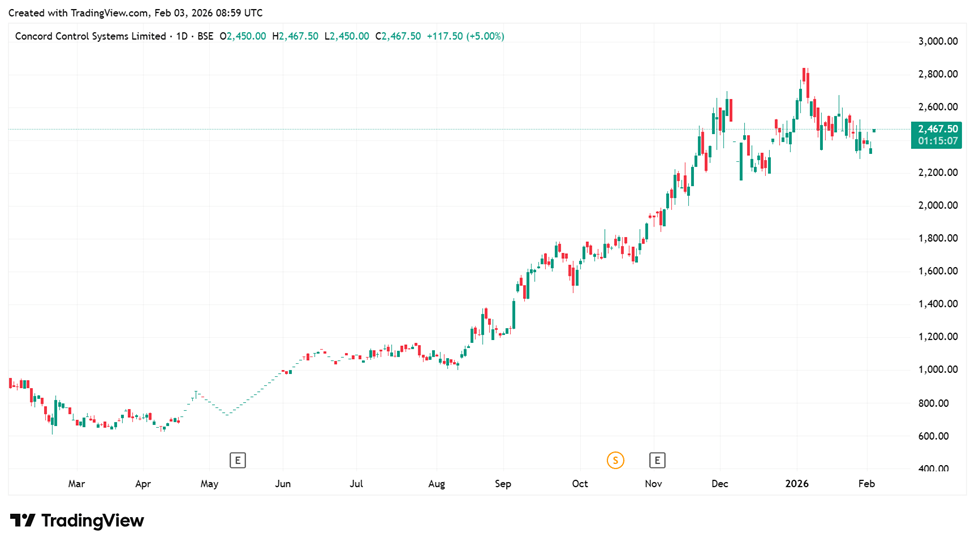
Concord Control has evolved from a manufacturer of coach-related and electrification products into a research-backed, design-focused railway innovation company. Concord, through its associate company Progota India (in which it recently hiked its stake from 26% to 46.5%), has achieved big milestones in the indigenous automatic train protection system, KAVACH.
Concord received Research Designs and Standards Organisation (RDSO) Technical Prototype Clearance for KAVACH 4.0. This status allows them to participate as a Developmental Vendor in all upcoming KAVACH tenders, including those for train sets and locomotives. As a developmental vendor, they are eligible for up to 20% of a tender’s Quantity.
Cracking the 5,000 KM trial barrier
To transition from developmental to an approved vendor status, firms must complete field trials of 5,000 loco-kilometers. This is expected to be executed in the H2FY26 and could be completed in roughly one month.
How subsidiary-driven subsystems squeeze higher margins
Accordingly, Concord received its first field-trial order worth ₹19.45 crore. This includes installing the system at five stations and a 53 km section in the South Central Railway zone. Since KAVACH is 100% developed in-house, it offers a high margin (estimated EBITDA margin exceeding 25%).
The company has a competitive edge through its subsidiary, Advanced Rail Controls. Concord already manufactures critical locomotive subsystems for KAVACH, including Brake Interface Units, Driver Display Units, and Vehicle Control Units. This allows it to integrate the system faster and more cost-effectively than peers who may need to source these components externally.
Beyond the initial installation, KAVACH creates an annuity stream through maintenance contracts and upgrades, providing long-term cash flow. The presentation estimates trackside cost at ₹50 lakh/km and locomotive fitment at ₹70 lakh/unit.
A 5x Revenue Ambition
While the company officially maintains a conservative revenue CAGR guidance of 40-50% for the next 3-5 years, internal ambitions are significantly higher. Management explicitly stated a goal to grow FY25 revenue base (₹124 crore) by 5x over the next 2-3 years. As of 30 September 2025, the company’s order book stands at ₹313 crore, providing 2 years of revenue visibility.
Concord has developed India’s first indigenous zero-emission propulsion system to convert old diesel locomotives into battery/electric locomotives. This product is the linchpin of their export strategy. Management aims for 50% of the company’s top line to eventually come from global markets.
In addition, the acquisition of an 80% stake in Fusion Electronics creates a new revenue stream with the potential to generate ₹200 Crores at full capacity and margins of 20%+. This moves Concord into the high-value Electronic Manufacturing Services space. It serves as backward integration for its own PCB requirements while enabling “box-build” solutions for global railway OEMs.
From a financial perspective, the company’s revenue rose by 64% year-on-year to ₹81.6 crore in the first half of FY26. Net profit surged by 85% to ₹16 crore, but the margin compressed by 189 basis points to 26.7%. Management indicated that, historically, H2 has been stronger than H1 and expects this trend to continue in FY26.
#3 Kernex Microsystems: Managing a transformative ₹5,000 crore pipeline
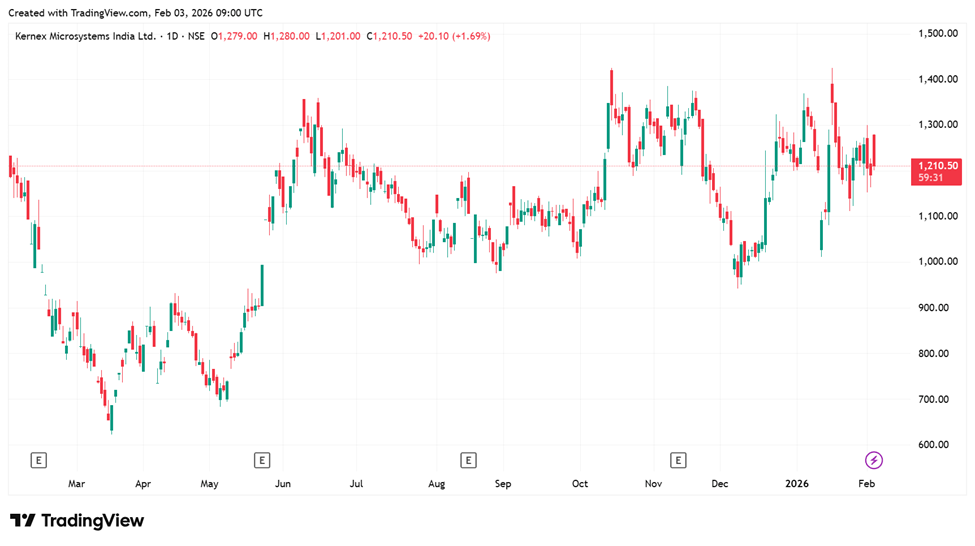
Kernex is a leading company engaged in the manufacture and sale of security systems and software services for railways. It is deeply involved in high-growth sectors such as railway security, telecommunications, and defence. However, its core business is rail security equipment and services, which constitute its sole segment.
Kernex holds a unique and strategic position in the Indian railway safety market. The KAVACH technology was developed in collaboration between the RDSO and three original equipment manufacturers: Kernex, Medha Servo Drives Private Limited, and HBL Engineering.
Monthly capacity of 450 KAVACH Units
Kernex has a production capacity of 450 KAVACH units and 10 level-crossing gates per month, which can be expanded to 23 units per month. It is also actively developing Armor 4.0, with hardware and software implementation complete. In fact, it received RDSO approval for Armor version 4.0 in October 2025.
Navigating the ₹5,000 crore concentrated order book
As of 30 September 2025, Kernex held an outstanding order book of ₹2,563 crore. In addition, it also won an order worth ₹2,466 crore on 15 January 2026, taking the total order book to around ₹5,000 crore. This provides a revenue visibility of about 5 years.
The company is also developing new generation MIE 3.0 cards based on Microchip/Xilinx FPGAs, which will enable the foundational components for Moving Blocks and Communications-Based Train Control systems. The prototype platform was expected by Q3FY26. Kernex is also developing Network Monitoring Systems and Pulse Generators.
De-risking via International Telecom Success
In addition, Kernex has supplied and commissioned Level Crossing (Lx) gates for Egyptian National Railways. The original project scope was shortened from 136 Lx gates to 124 Lx gates. Final Handover is ongoing and has been completed for 81 of 85 currently operational sites.
From a financial perspective, Kernex’s revenue surged 47.4% to ₹103 crore in H1FY25. Operating profit margin expanded 440 bps to 26.1%, leading to 33.7% jump in net profit to ₹13.9 crore from ₹10.4 crore in Q1FY25.
Valuation Verdict: Growth vs. Ticket Price
Return ratios, including Return on Capital Employed (ROCE) and Return on Equity (ROE), are strong across three companies. This shows strong profitability and operational efficiency. That said, most of the front end in the valuation has declined post the last year’s correction.
HBL is trading at a price-to-earnings (P/E) multiple of 32.6X, which is a discount to its historical median but a premium to the industry median. Similarly, it is now trading at a historical multiple but at a premium to the industry. Concord, however, continues to trade at a premium valuation.
| Peer Comparison (X) | |||||
| Company | P/E | 3Y Median | Industry P/E | ROCE (%) | ROE (%) |
| HBL | 32.6 | 51.7 | 25.3 | 27.3 | 20.6 |
| Kernex | 37.8 | 38.9 | 31.7 | 23.8 | 38.0 |
| Concord | 84.3 | 48.9 | 29.0 | 36.8 | 27.4 |
While valuations across KAVACH-linked stocks have cooled down, the broader opportunity remains significant. KAVACH offers a significant opportunity over the next 6-7 years. This is expected to be driven by the government’s focus on rail safety, automation, and speed, under initiatives such as Mission Raftar, which provides a long-term growth runway.
Yet, investors need to recognize that the KAVACH rollout will be phased and capital-intensive, with execution timelines stretching beyond this decade. Slow execution, low award-to-tendering, and order cancellations could also pose risks. Although all three companies offer exposure, HBL’s relative positioning is strong given its scale and diversification.
Kernex offers a more direct but concentrated play on the KAVACH theme. Concord, though smaller, could surprise as it transitions from a product supplier to a systems partner for Indian Railways.
Disclaimer
Note: Throughout this article, we have relied on data from http://www.Screener.in and the company’s investor presentation. Only in cases where the data was unavailable have we used an alternative, widely used and accepted source of information.
The purpose of this article is only to share interesting charts, data points, and thought-provoking opinions. It is NOT a recommendation. If you wish to consider an investment, you are strongly advised to consult your advisor. This article is strictly for educational purposes only.
About the Author: Madhvendra has been deeply immersed in the equity markets for over seven years, combining his passion for investing with his expertise in financial writing. With a knack for simplifying complex concepts, he enjoys sharing his honest perspectives on startups, listed Indian companies, and macroeconomic trends.
A dedicated reader and storyteller, Madhvendra thrives on uncovering insights that inspire his audience to deepen their understanding of the financial world.
Disclosure: The writer and his dependents do not hold the stocks discussed in this article. The website managers, its employee(s), and contributors/writers/authors of articles have or may have an outstanding buy or sell position or holding in the securities, options on securities or other related investments of issuers and/or companies discussed therein. The articles’ content and data interpretation are solely the personal views of the contributors/ writers/authors. Investors must make their own investment decisions based on their specific objectives, resources, and only after consulting such independent advisors as may be necessary.