



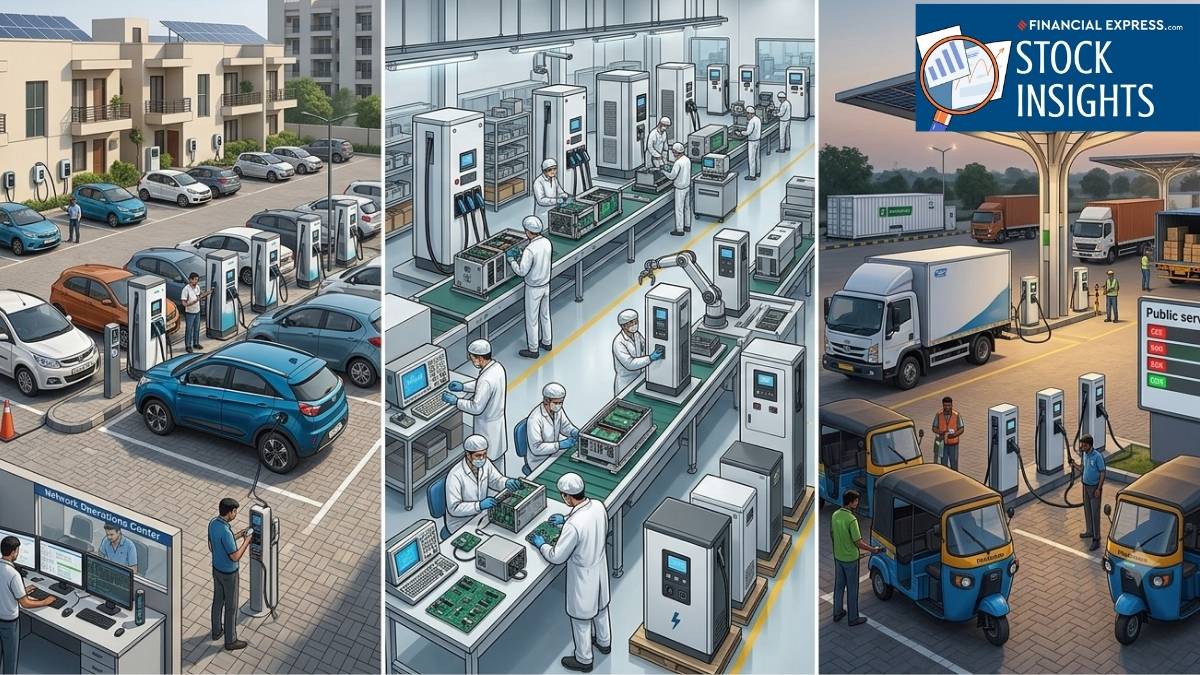
India’s EV charging story is entering a new phase backed by policy tailwind. While electric vehicle (EV) adoption is accelerating across the country, charging infrastructure is still struggling to keep pace.
As per the Indian Brand Equity Foundation, the Indian electric vehicle charging station market is projected to reach almost US$2.5 billion (around ₹24,000 crore) by 2030, up from US$0.7 billion in 2025. The need for this expansion is becoming increasingly evident.
India recorded 24.5 lakh EV sales in FY26, up 24.6%, with electric passenger vehicles crossing the 4.6% adoption threshold over the full year. This momentum surged directly into Q1FY27 as electric passenger vehicles quickly accelerated to account for 7% of new car sales, peaking at 7.7% by June 2026.
Macro Outlook: India’s EV Adoption and the 39-Lakh Charger Deficit
EV adoption is also spreading rapidly beyond metro cities, with Tier-2 cities witnessing the fastest penetration. However, charging infrastructure remains one of the biggest gaps. India currently has just one public charger for every 135 EVs, compared with the global benchmark of one charger for every 6 to 20 EVs.
According to the report Charging Ahead II by GameChanger Law Advisors and Speciale Invest, the country will need around 39 lakh charging stations by 2030 to support the government’s target of 8 crore EVs on the road. This demand is also receiving policy support under the PM E-Drive initiative.
Further, states are also coming to the forefront. The recently notified Delhi EV Policy 2026 aims to significantly expand charging infrastructure over the next four years as part of its roadmap to increase EV adoption. Thus, rising EV sales and under-penetrated charging infrastructure are creating a significant growth opportunity.
This article examines three leading EV Charging Infrastructure companies….
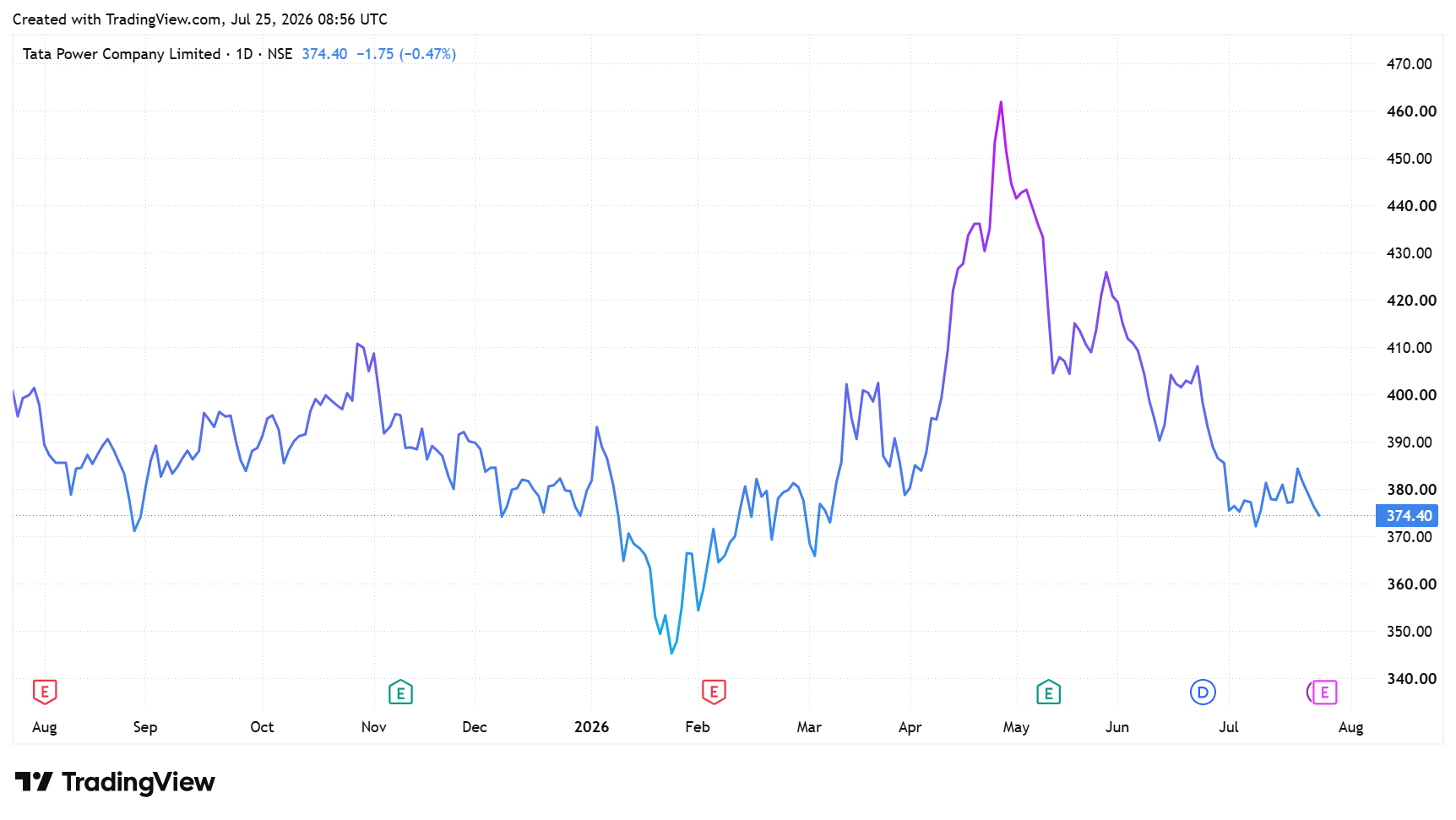
#1 Tata Power: Nationwide Infrastructure Scale Across 700+ Cities
Tata Power operates India’s premier electric vehicle (EV) charging network and positions itself as a leading electric mobility service provider. Its EV ecosystem spans homes, public spaces, workplaces, fleets, and electric bus charging solutions. The company’s EV charging footprint spans over 700 cities and towns across India.
The company has installed over 2,00,000 EV home chargers. It has also operationalised more than 5,800 public, semi-public and fleet charging points. Moreover, Tata Power has deployed 1,200+ electric bus charging points.
Tackling Range Anxiety: High-Speed Charging and the Mumbai Airport Megacharger Hub
To directly address range anxiety, the company has deployed over 1,160 fast-charging points across more than 254 key highway stretches. A major milestone in FY26 was the launch of India’s first co-branded Megacharger Hub, developed in partnership with Tata Passenger Electric Mobility.
Located strategically near Terminal 2 of the Chhatrapati Shivaji Maharaj International Airport in Mumbai, this high-capacity hub features 16 charging bays and eight fast DC chargers capable of delivering up to 120 kW. This setup allows multiple vehicles to charge simultaneously and significantly minimizes wait times for both private EV owners and fleet operators.
Next-Gen Innovation: Wireless Charging Patents and Battery Swapping Deals
Tata Power is also actively investing in Research and Development for next-generation charging. The company is advancing an 11 kW wireless EV charging technology that achieves over 90% DC-DC efficiency and tolerates vehicle misalignment. A patent is currently under evaluation.
Furthermore, its subsidiary Tata Power Delhi Distribution (TPDDL) signed a Memorandum of Understanding with Magna Yuma Private to develop EV battery swapping infrastructure across its licensed areas.
Monetization & Digital Scale: How 5.6 Lakh App Users Drove a 65% Surge in Public Revenue
Tata Power EZ Charge digital platform manages the customer charging experience. The platform
supports RFID-enabled cards and a unified app interface. In FY26, the platform surpassed 5.6 lakh registered users, up over 70% compared to the previous year.
Vision 2030: Expanding the Footprint to 7.5 Lakh Home Chargers
To ensure high reliability, Tata Power uses a round-the-clock Network Operations Centre that utilises predictive diagnostics, real-time monitoring, and proactive maintenance. This approach significantly reduced downtime and improved first-time charging success rates. It drove a 25% growth in charger utilization and a 65% increase in public charger revenue during FY26.
Tata Power EV business revenue rose to ₹192 crore in FY26, up from ₹168 crore in FY25. The specific EV charging solutions business revenue stood at ₹174.6 crore. Looking ahead to 2030, Tata Power has set aspirational targets to install over 7.5 lakh EV home chargers and 10,000+ public EV charging points across the country.
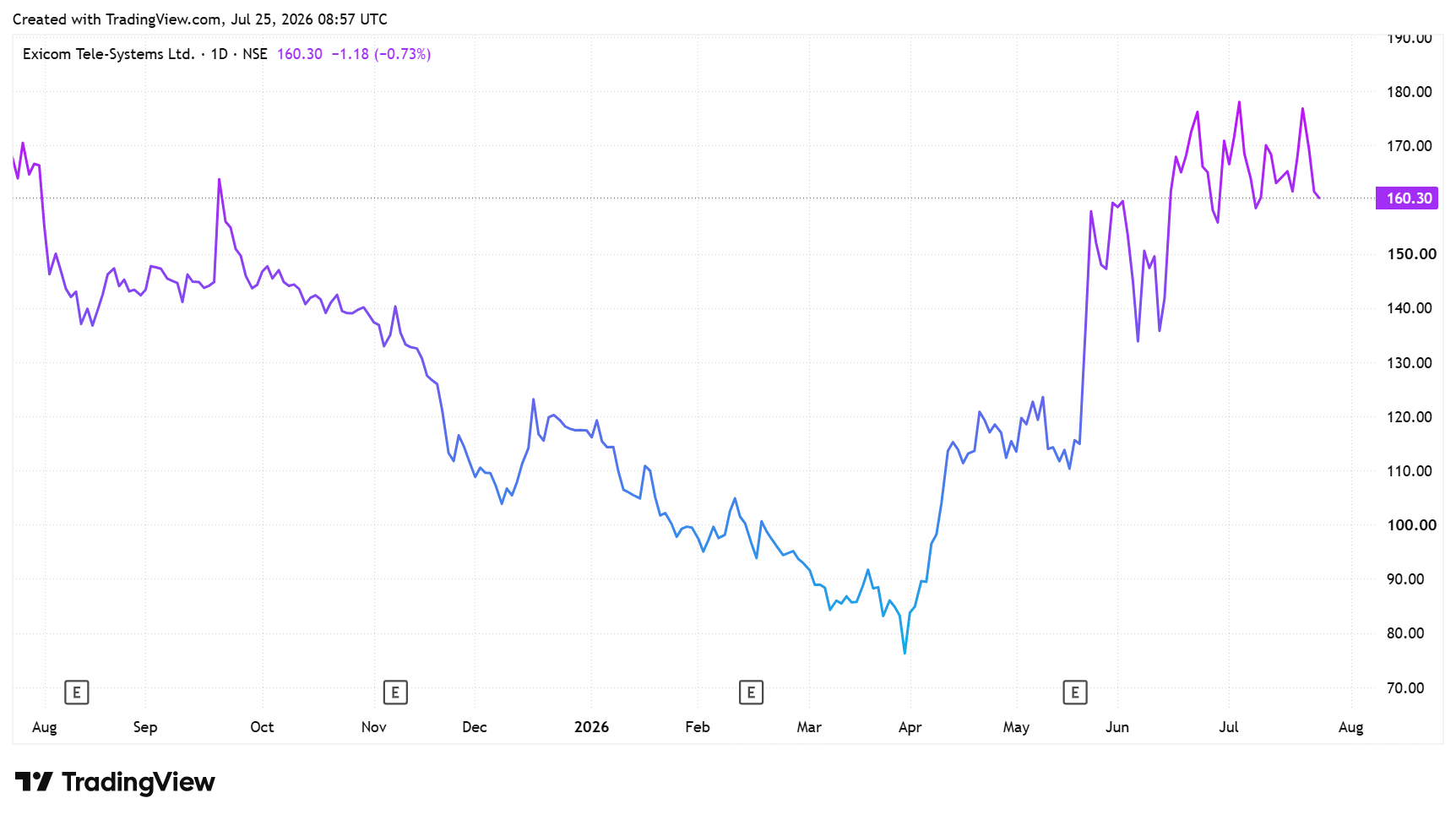
#2 Exicom Tele-Systems: Domestic Manufacturing Scale and Global Expansion
Exicom Tele-Systems is India’s #1 EV charger company, serving major Charge Point Operators, auto OEMs, and fleet operators. The company offers a highly comprehensive product range spanning from 3.3 kW to 600 kW power outputs to cover various end-use cases. This includes Home and On-Road chargers, Home, Workplace, and Mall chargers, and Destination, Highways, and Fleets.
Market Footprint: Comprehensive Product Portfolio and Industry Firsts
In Q4FY26, Exicom introduced several industry firsts and strategic wins. The company deployed the first liquid-cooled charger with India’s leading Charge Point Operator (CPO). It introduced the first AI-enabled Remote Management Platform for DC Charger Operations & Maintenance.
This allows unmanned chargers to maintain 99% uptime via advanced sensors. Furthermore, Exicom is also leading in deploying the Ring Topology-based DC Charger. This unique technology helps CPOs save on capital expenditures. Exicom also onboarded a leading CPO in South India with a potential for over 200 chargers and secured business from a leading e-truck company.
Financial Performance: EVSE Revenues Surge 72% to ₹509 Crore
Exicom’s EV Supply Equipment (EVSE) business is scaling rapidly. Consolidated EVSE revenue reached ₹509.9 crore in FY26, up 72% year-on-year. India accounts for 51.5% of EV charger revenue, followed by the UK & Europe (21.9%), Australia and New Zealand/Southeast Asia (16.3%), and the US (10.3%).
Manufacturing Expansion: Inside the ₹216 Crore Hyderabad Mega Plant
To support growth, Exicom has inaugurated India’s largest EV charger and battery-integrated plant in Hyderabad. Built with an investment of ₹216 crore, the facility is capable of producing over 1,00,000 AC chargers (planned scale-up to 2,00,000) and 4,000+ DC chargers annually.
Global Operations & BESS: Tritium Integration and Storage Pipeline
Exicom plans to shift the majority of its production from Gurgaon to Hyderabad to maximize synergy and operational efficiency. Tritium, Exicom’s foreign subsidiary, is gearing up to launch next-generation products in the summer of 2026. This could unlock approximately $30 million to $35 million in revenue opportunities each by FY28 following successful pilot programs.
Exicom is also expanding its presence in Battery Energy Storage Systems (BESS), targeting commercial and industrial applications to help clients combine battery storage with solar power for uninterrupted, clean energy.
Ultimately, as the number of vehicles on the road continues to scale, the demand for both portable home chargers and public fast chargers is expected to accelerate significantly. This, in turn, helps leading players like Exicom.
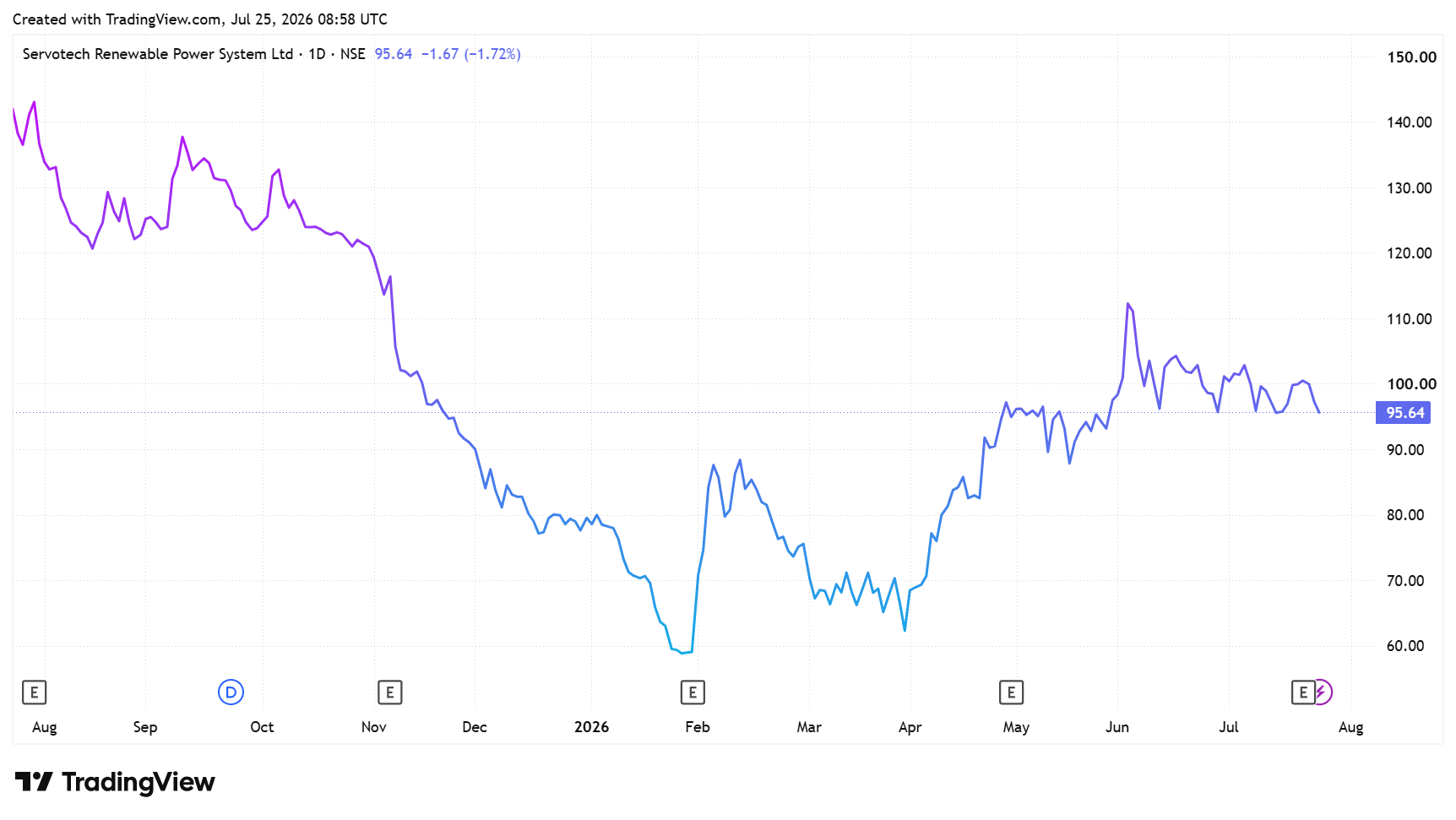
#3 Servotech Renewable Power System: Commercial Fleet Strategy and Q1FY27 Growth
Servotech Renewable Power provides comprehensive end-to-end clean energy solutions, which include the engineering of intelligent AC and DC EV chargers. The company aims to power India’s rapidly expanding electric mobility ecosystem and positions itself among the major players in the EV charging segment.
Core Operations: End-to-End EV Charging Infrastructure and BEE 5-Star Milestones
Servotech has a solar inverter and EV Charger plant in Sonipat, Haryana. The company manufactures reliable AC and DC charging solutions for various applications. A major recent milestone is securing a BEE 5-Star Rating for its 60 kW and 120 kW DC EV chargers, while the certification process for its 240 kW charger is currently underway.
Infrastructure Expansion: Heavy Commercial Fleets and Domestic/Global Subsidiaries
Furthermore, the company is already manufacturing and installing chargers tailored for heavy commercial vehicles, such as EV trucks. Through this, Servotech aims to capitalize on the planned phase-out of petrol and CNG three-wheelers in Delhi by increasing charger sales and rapidly expanding its EV infrastructure network.
Servotech is expanding its footprint in the EV charging space through two subsidiaries. Servotech EV Infra installs and expands a dedicated EV charging station network across multiple states in India. Servotech Renewable International focuses on expanding EV charging and renewable energy footprint in international markets.
Financial Performance: Revenue Up 57.9% to ₹215.8 Crore as Operating Profits Double
The company reported strong Q1FY27 financials and anticipates continued momentum driven by disciplined growth and expansion. The company’s revenue rose by 57.9% year-on-year to ₹215.8 crore. Operating profit almost doubled to ₹20.4 crore, up from ₹10.4 crore in Q1FY26, while margins expanded to 9.5%. Net profit grew by 76% to ₹8.1 crore.
Financial Comparison: P/E Valuations vs Return Ratios (ROE & ROCE)
Servotech stands out for its strong Return on Capital Employed (ROCE) and Return on Equity (ROE), followed by Tata Power. In terms of valuation, Tata Power trades at a premium to the industry median and almost in line with its historical 3-year median P/E. Servotech trades at a discount to the industry but at a premium to the historical median.
Particulars | Price-to-Earnings Multiple (X) | Return Ratios | |||
| Company | 3Y Median | Industry | ROE (%) | ROCE (%) | |
| Tata Power | 31.1 | 31.8 | 30.0 | 10.2 | 10.5 |
| Servotech | 57.7 | 98.7 | 29.5 | 12.8 | 12.8 |
| Source: Screener.in (As of 24 July 2026) | |||||
We have not included Exicom in the above table as it is currently loss-making.
The EV charging opportunity is no longer limited to installing chargers.
Tata Power is building a nationwide charging ecosystem with an expanding network and digital platform. Exicom is scaling manufacturing while strengthening its technology leadership and overseas presence. Servotech is targeting the fast-growing domestic infrastructure segment with product additions and expected electric CV adoption.
As India’s charging network expands over the coming years, these distinct business models could determine how each company captures the next phase of growth. Keep these companies in your watchlist to analyse how they capture the industry tailwind.
Disclaimer:
Note: Throughout this article, we have relied on data from http://www.Screener.in and the company’s investor presentation. Only in cases where the data were unavailable have we used an alternative, widely accepted source of information.
The purpose of this article is only to share interesting charts, data points, and thought-provoking opinions. It is NOT a recommendation. If you wish to consider an investment, you are strongly advised to consult your advisor. This article is strictly for educational purposes only.
About the Author: Madhvendra has been deeply immersed in the equity markets for over seven years, combining his passion for investing with his expertise in financial writing. With a knack for simplifying complex concepts, he enjoys sharing his honest perspectives on startups, listed Indian companies, and macroeconomic trends.
A dedicated reader and storyteller, Madhvendra thrives on uncovering insights that inspire his audience to deepen their understanding of the financial world.
Disclosure: The writer and his dependents do not hold the stocks discussed in this article.
The website managers, their employees (s), and contributors/writers/authors of articles have or may have an outstanding buy or sell position or holding in the securities, options on securities, or other related investments of issuers and/or companies discussed therein. The articles’ content and data interpretation are solely the personal views of the contributors/ writers/authors. Investors must make their own investment decisions based on their specific objectives, resources, and only after consulting such independent advisors as may be necessary.