



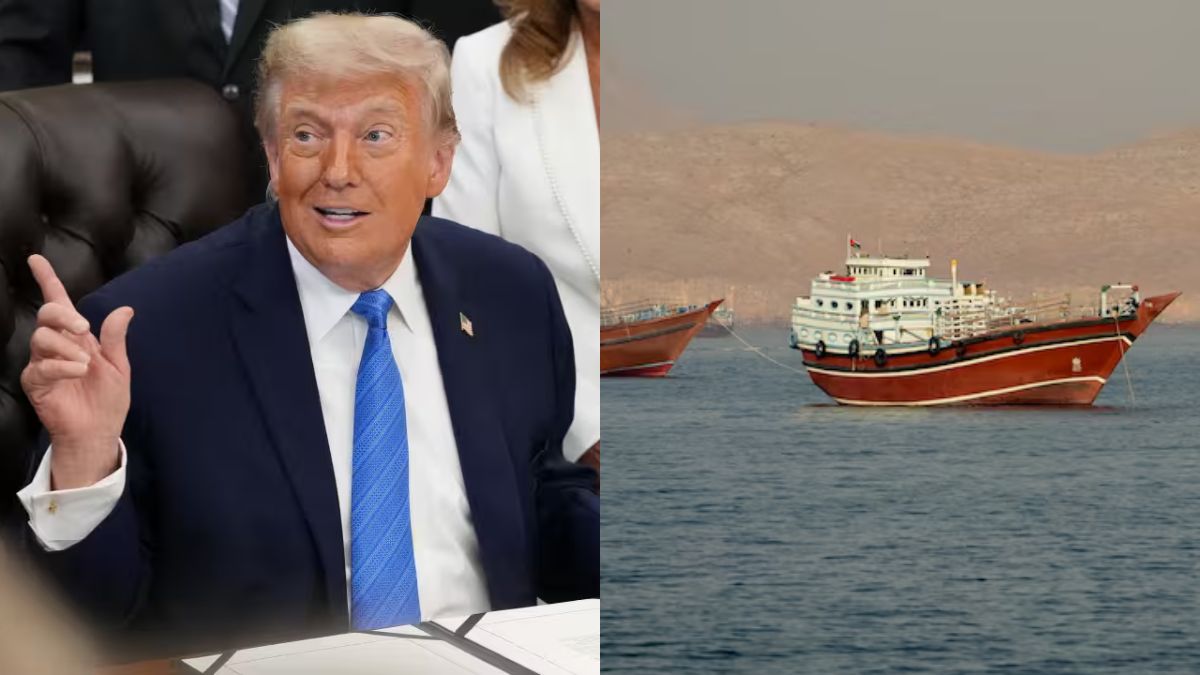
Here are the latest updates: June 26
- US forces did not report overnight strikes on Iran for the first time in nearly two weeks, while Iran also reported no fresh attacks or casualties.
- Trump met top advisers to discuss possible military escalation but said he was “not in a hurry” and that Washington was still talking to Tehran.
- The US and Iran remain locked in a cycle of attacks as tensions over the vital oil shipping route continue to disrupt global energy supplies.
- US forces disabled the tanker Lavine after its crew allegedly ignored at least four warnings and repeatedly tried to breach the American blockade in the Strait of Hormuz.
- Iran-backed Houthis claimed to have fired rockets and drones at energy facilities in Jazan and Yanbu, Saudi Arabia, in response to strikes on Houthi-held areas in Yemen.
- A Saudi-led coalition said it carried out attacks on Houthi military sites in Yemen’s Hodeidah Province, citing threats to commercial shipping in the Red Sea.
- The Saudi-owned NCC Masa suffered minor hull damage after being targeted in the Red Sea but continued its journey after the crew and vessel were declared safe.
- Brent crude rose more than 7% to $100.95 a barrel on Friday before easing to around $98. Oil prices are now nearly 40% higher since the war began.
- Trump is due to meet Israeli Prime Minister Benjamin Netanyahu on Tuesday, amid growing questions over the next phase of the US military campaign against Iran.
- US intelligence agencies reportedly believe Iran’s new Supreme Leader, Ayatollah Mojtaba Khamenei, is more open to pursuing a nuclear weapon than his predecessor, potentially strengthening the case for further US military action.
Bahrain reports air-raid alerts amid regional tensions
Air-raid warnings were activated in neighbouring Bahrain overnight, although there were no immediate reports of casualties or damage. Kuwait, which has faced repeated Iranian drone and ballistic missile attacks, did not report any new strikes.
US-Iran talks remain focused on Strait of Hormuz
Despite the pause in US air strikes, Washington and Tehran remain sharply divided over the Strait of Hormuz. The US maintains that the strait is an international waterway that should remain open to commercial and military traffic, while Iran has cited the earlier memorandum of understanding as a basis for its efforts to collect tolls from commercial ships.
US pauses attacks on Iran amid low-level contacts
The US military did not carry out air strikes on Iranian military targets on Friday night, marking the first such pause in two weeks. The halt comes as Washington and Tehran continue low-level contacts aimed at finding a way to restore a ceasefire and eventually end the war.
Houthis threaten to expand attacks
Houthi military spokesman Yahya Saree warned that the group could widen its operations depending on how the situation develops. “We will not hesitate to expand our operations and escalate our actions based on developments in the coming hours and days,” he said.
Houthis claim attacks on Saudi energy facilities
Iran-backed Houthi rebels said they targeted energy facilities in Jazan and Yanbu in Saudi Arabia. The group said the attacks were carried out in response to Saudi-led strikes on areas under Houthi control along Yemen’s Red Sea coast.
US says tanker will no longer sail to Iran
Captain Tim Hawkins, a US Central Command spokesman, said the tanker Lavine was no longer travelling to Iran after US forces disabled it. He said he was aware of reports that members of the ship's crew may have been injured or killed but could not confirm those reports.
US disables tanker trying to breach Hormuz blockade
US forces disabled a tanker named Lavine after its crew allegedly tried several times to break through the American blockade of the Strait of Hormuz. US Central Command said the crew ignored at least four warnings before the vessel was hit in its engine room.
US military prepares for possible escalation
US officials said American fighter jets and bombers have been moved into the region as the possibility of a wider military operation grows. Trump has not yet decided whether to launch a bigger offensive, while US forces remain prepared to act if ordered.
US war aims remain unmet as Iran holds key leverage
The war is nearing its fifth month, but the Trump administration has so far failed to achieve its main goals of removing Iran’s government or ending its nuclear programme. Iran has also effectively restricted traffic through the Strait of Hormuz, a vital route for global oil and gas shipments.
Trump says he is ‘not in a hurry’ to escalate
Trump said the US military was “locked and loaded” and ready to act, but added that he was still talking to Iran and was “not in a hurry” to order a bigger attack. The comments suggested that diplomacy remains an option despite preparations for possible escalation.
Trump meets top advisers over possible Iran escalation
President Donald Trump met senior advisers and cabinet officials on Friday to discuss whether to step up the US military assault on Iran. The meeting came after a fragile cease-fire and a memorandum of understanding aimed at bringing both sides back to talks collapsed.
US-Iran fighting pauses for a night as Trump weighs escalation
For the first time in nearly two weeks, the US did not announce any overnight strikes on Iran. Iran’s Health Ministry also said there were no fresh attacks or casualties, but tensions remained high as Trump considered whether to intensify the military campaign.