



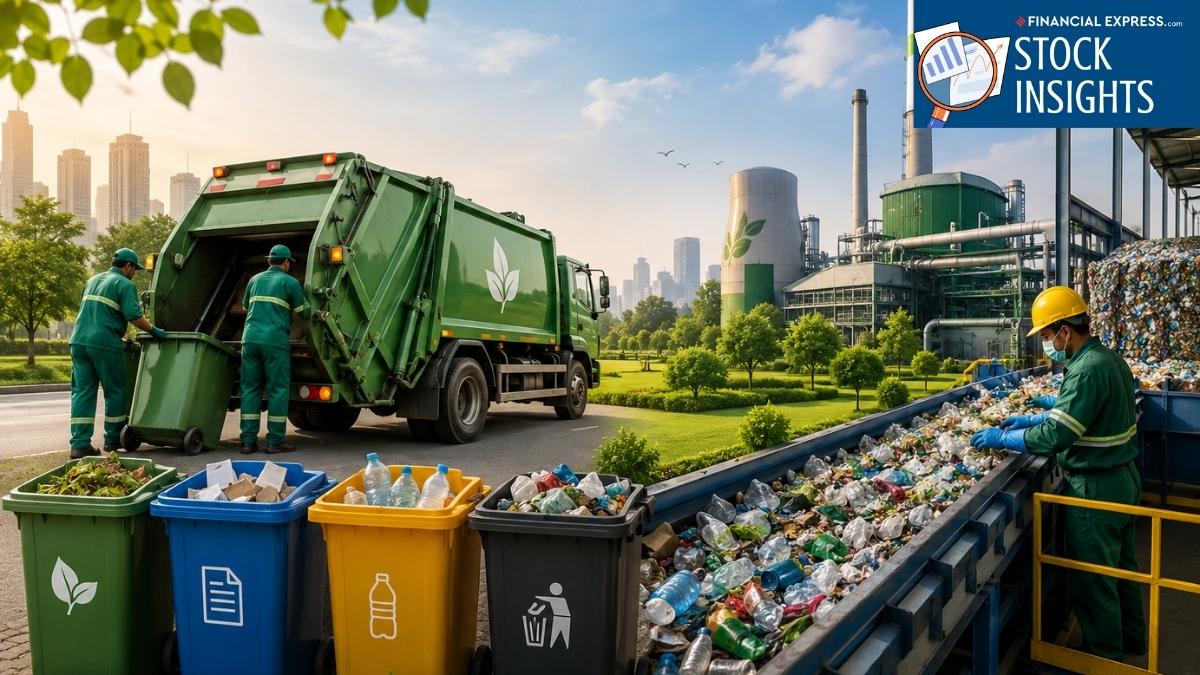
India is producing more waste than ever before. But until now, most of it has never been scientifically processed. A large share still ends up in open dumps, creating environmental concerns and putting pressure on urban infrastructure. That is beginning to change.
India’s Waste Crisis: Policy Drivers and Market Scale
A combination of rising urbanisation, stricter regulations, and increasing private sector participation is making waste management one of India’s fastest-evolving infrastructure themes. The recently notified Solid Waste Management Rules, 2026, which come into effect from April 1, 2026, mark another important step in this transition.
The new rules make four-way waste segregation mandatory, tighten compliance for bulk waste generators, encourage greater recycling and processing, and restrict landfill disposal. Together, these measures are expected to increase demand for waste collection, recycling, material recovery facilities, and waste-to-energy infrastructure.
The opportunity is reflected in the industry’s growth outlook. The Municipal Solid Waste (MSW) management sector is expected to double in size over the next five years. At a broader level, the India waste management market is projected to grow from ₹1.2 lakh crore in 2023 to ₹1.7 lakh crore by 2030.
Several structural factors continue to support this growth. Today, nearly 77% of India’s waste is still openly dumped, while only 18% is composted and 5% is recycled. This is well below global standards. Closing this gap will require significant investments in infrastructure. Green Energy Open Access regulations are also encouraging waste-to-energy projects.
Extended Producer Responsibility and the Swachh Bharat Mission continue to encourage cities to improve waste management through greater private sector participation. Against this backdrop, three companies are well positioned to benefit as India moves towards a more organised and circular waste management ecosystem.
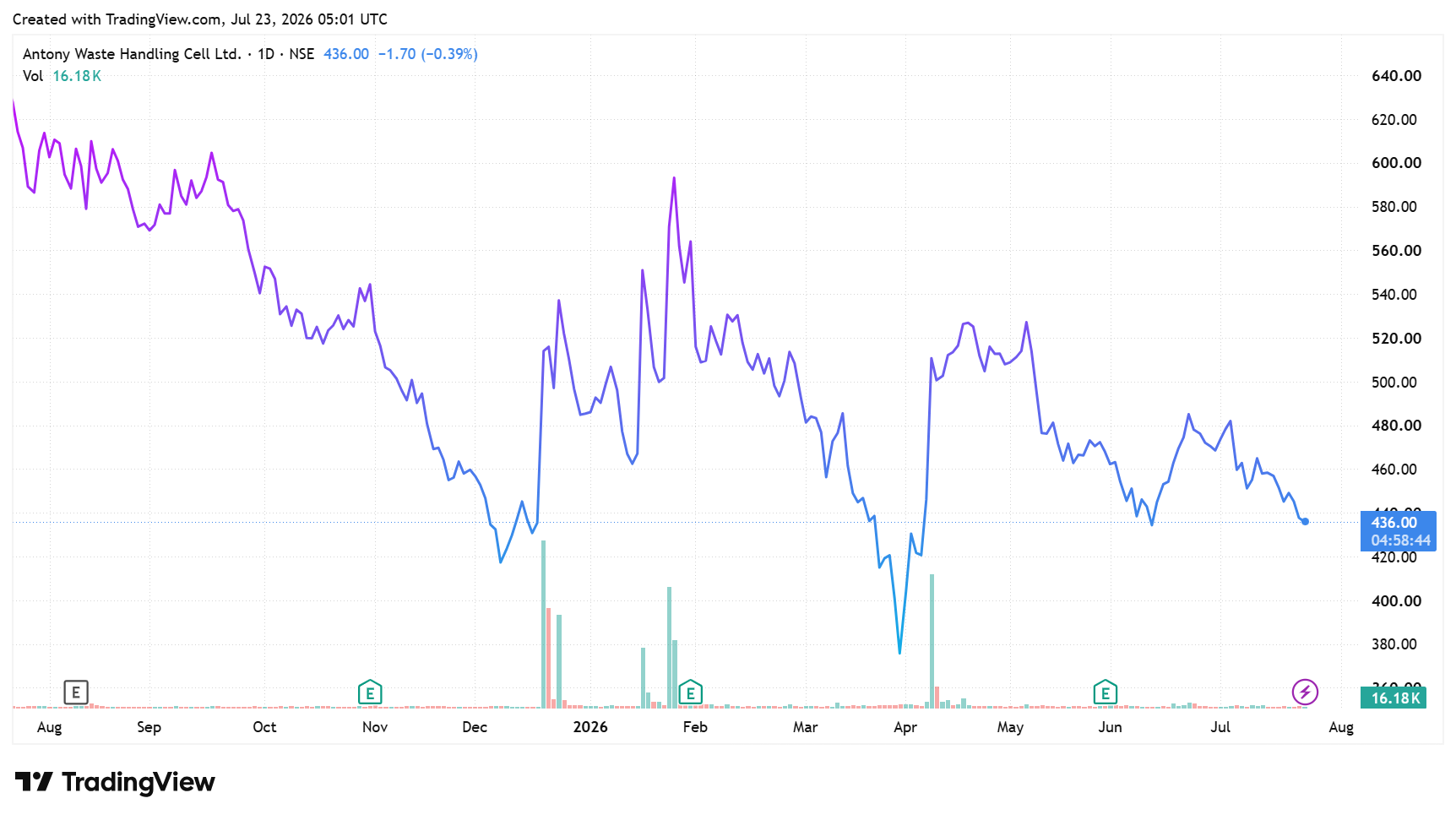
#1 Antony Waste Handling: Municipal Dominance Anchored by ₹18,000 Crore Order Pipeline
Antony Waste continues to provide end-to-end solid waste management solutions. As of FY26, the company has a presence in 10 states and has worked with 25+ municipal corporations and industrial groups since its inception.
Scale, Kanjurmarg Anchor, and B2B Diversification
The company facilitates the circular economy through key initiatives like Resource Recovery and Refuse Derived Fuel, Bio-Mining, Waste-to-Energy, and construction and demolition recycling. The Kanjurmarg facility remains the crown jewel of Antony Waste’s operations. It is one of the largest single-location waste processing plants in Asia.
It currently handles approximately 6,000 tonnes per day (TPD) and can scale up to 7,500 TPD. This facility processes about 90% of the waste generated in Mumbai and operates under a 25-year concession period running from 2010-2036. The company reported record financials in FY26, crossing the ₹1,000 crore revenue for the first time ever.
Financial Snapshot: Record Revenue Offset by Depreciation Pressure
Total operating revenue grew by 9% year-on-year to ₹920.0 crore in FY26, while total income stood at ₹1,084.1 crore (up 13% YoY). The company managed 15% higher waste during the year. EBITDA increased by 7% to ₹236.3 crore with margins at 21.8%. Net profit, however, fell 8.9% to ₹92 crore due to higher depreciation costs.
The company’s strategic shift towards high-margin processing of municipal solid waste (MSW) is progressing rapidly. In FY26, MSW processing volumes grew 19% to 3.6 MT, while revenues stood at ₹273.7 crore. MSW processing now represents approximately 25% of total revenue.
The reclamation of old dump sites is driving this growth. The company sees the reclamation of old dump sites in Tier 1 and Tier 2 cities as a major growth runway. Additionally, the company reported record sales of 177,000 tons of RDF to cement companies as a sustainable fuel option.
Strategic Expansion: B2B “Click2Clean” and ₹18,000 Crore Order Book
To de-risk its municipal-heavy portfolio, the company launched a new B2B business line called “Click2Clean”. This segment focuses on serving corporate clients (like Asian Paints and P.N. Gadgil) with pest-control, recyclables, and deep housekeeping services.
The company has also entered the Extended Producer Responsibility (EPR) business. It monetized 20% of its allotted EPR credits during the first year of its PCMC WTE operations. Antony is adopting a wait-and-watch mode regarding its entry into the vehicle and tyre recycling market.
Looking ahead, the company closed FY26 with a record all-time high order book of ₹18,000 crores, offering strong long-term revenue visibility. The order book is split approximately 60% towards processing and 40% towards Collection & Transportation. Management plans to grow at a 15% to 20% revenue CAGR over the next 5 years.
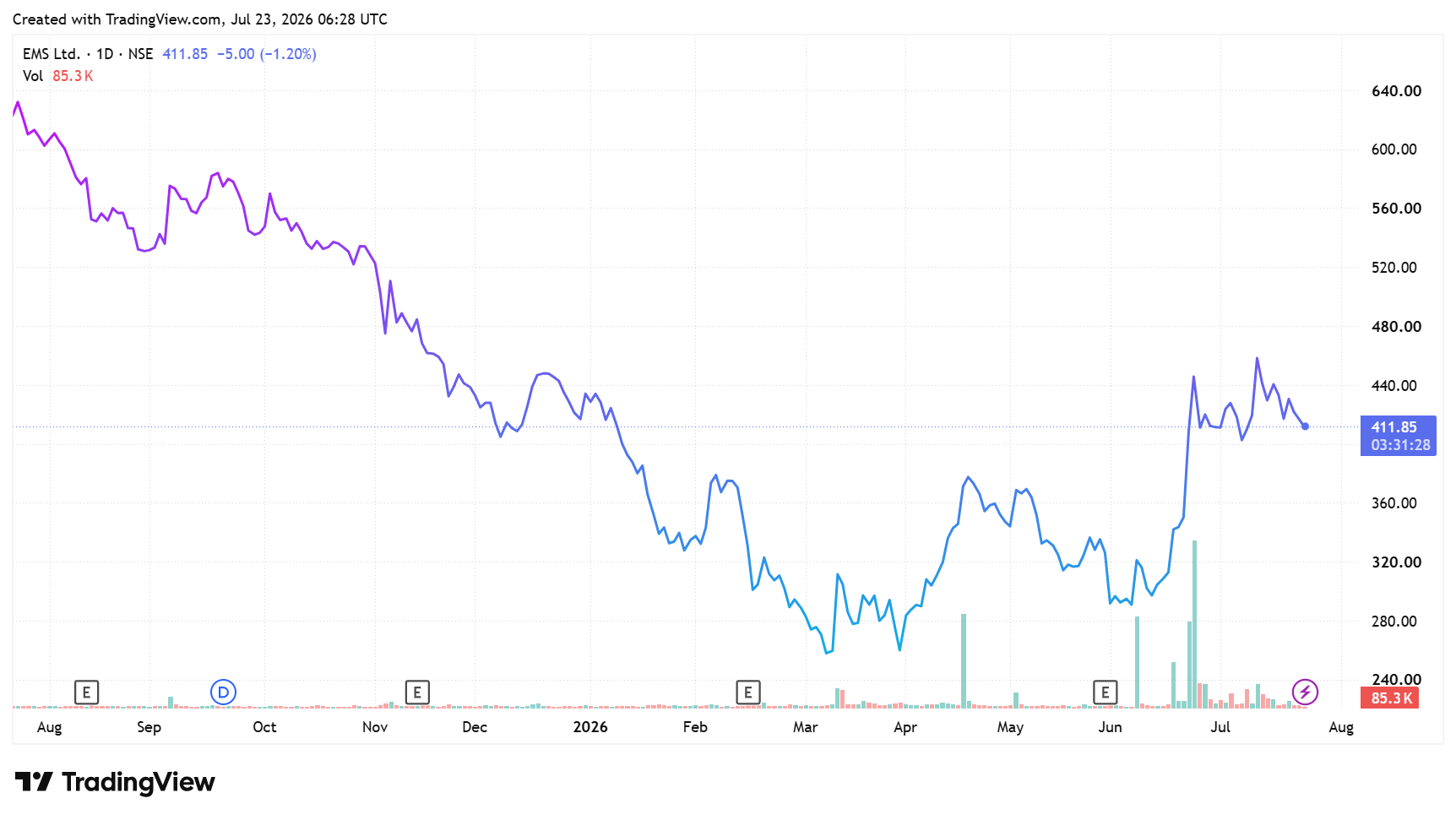
#2 EMS: Sewerage Play Eyeing Post-FY26 Margin Recovery
EMS is a leading waste management firm providing comprehensive sewerage and wastewater treatment solutions. It executes turnkey projects in water, wastewater collection, treatment, and disposal. It generates around 75% of its business from water and wastewater services, and over 70% of its total revenues from water and sewerage projects.
Core Focus: Turnkey Wastewater Solutions and Niche Municipal Edge
The core business involves providing services and solutions for: Sewage Treatment Plants along with sewerage network schemes, Water Treatment Plants, Common Effluent Treatment Plants, tertiary treatment plants, and the operation and maintenance of these projects. EMS also executes Hybrid Annuity Model Projects.
EMS focuses on Central Government-funded schemes, such as the Atal Mission for Rejuvenation and Urban Transformation (AMRUT) and Namami Gange (NMCG), as well as schemes funded by the Japan International Cooperation Agency (JICA) and the Asian Development Bank (ADB). EMS states establishing over 500 new wastewater treatment plants by 2027 as a major driver.
Further, management noted that the labor-intensive nature of comprehensive sewerage work has caused many large competitor firms to exit that specific niche. Competitors are now only bidding for the construction of Sewage Treatment Plants, which gives EMS a competitive advantage in winning end-to-end municipal sewerage contracts.
FY26 Performance Lag vs FY27 Guidance and ₹1,837 Crore Order Book
EMS reported muted financial performance in FY26. Revenue fell by 24.1% year-on-year to ₹733 crore. Unbilled Work-in-Progress and weather disruptions caused weak order book execution. Operating profit fell by 44.9% to ₹140 crore while margins fell 700 bps to 19%. Net profit almost halved to ₹91 crore, down from ₹184 crore in FY25.
Despite the temporary setback in FY26, the company’s unexecuted order book remains robust, standing at ₹1,837 crore as of 31 March 2026. Additionally, EMS secured a new ₹209 crore order from UP Jal Nigam in Varanasi shortly after the quarter ended.
It is bidding on ₹2,500 to ₹3,000 crore worth of tenders currently in the pipeline, particularly for the Delhi Jal Board and projects in Maharashtra. Management expects to secure new orders in excess of ₹1,500 crore in the current year.
Management provided strong guidance for a recovery in FY27. EMS aims to reach revenue of around ₹1,000 crore in FY27. The company expects EBITDA margin to recover to approximately 25% in FY27. Management is confident of achieving 20-25% CAGR through 2030.
Order Pipeline Expansion: Scaling Beyond Core States into Kolkata
To capitalize on these opportunities, EMS continues to expand its geographic footprint beyond its traditional strongholds of Uttar Pradesh, Uttarakhand, Rajasthan, Maharashtra, and Bihar. Most notably, the company recently expanded into Kolkata by securing a ₹782 crore water supply order from the Kolkata Municipal Corporation.
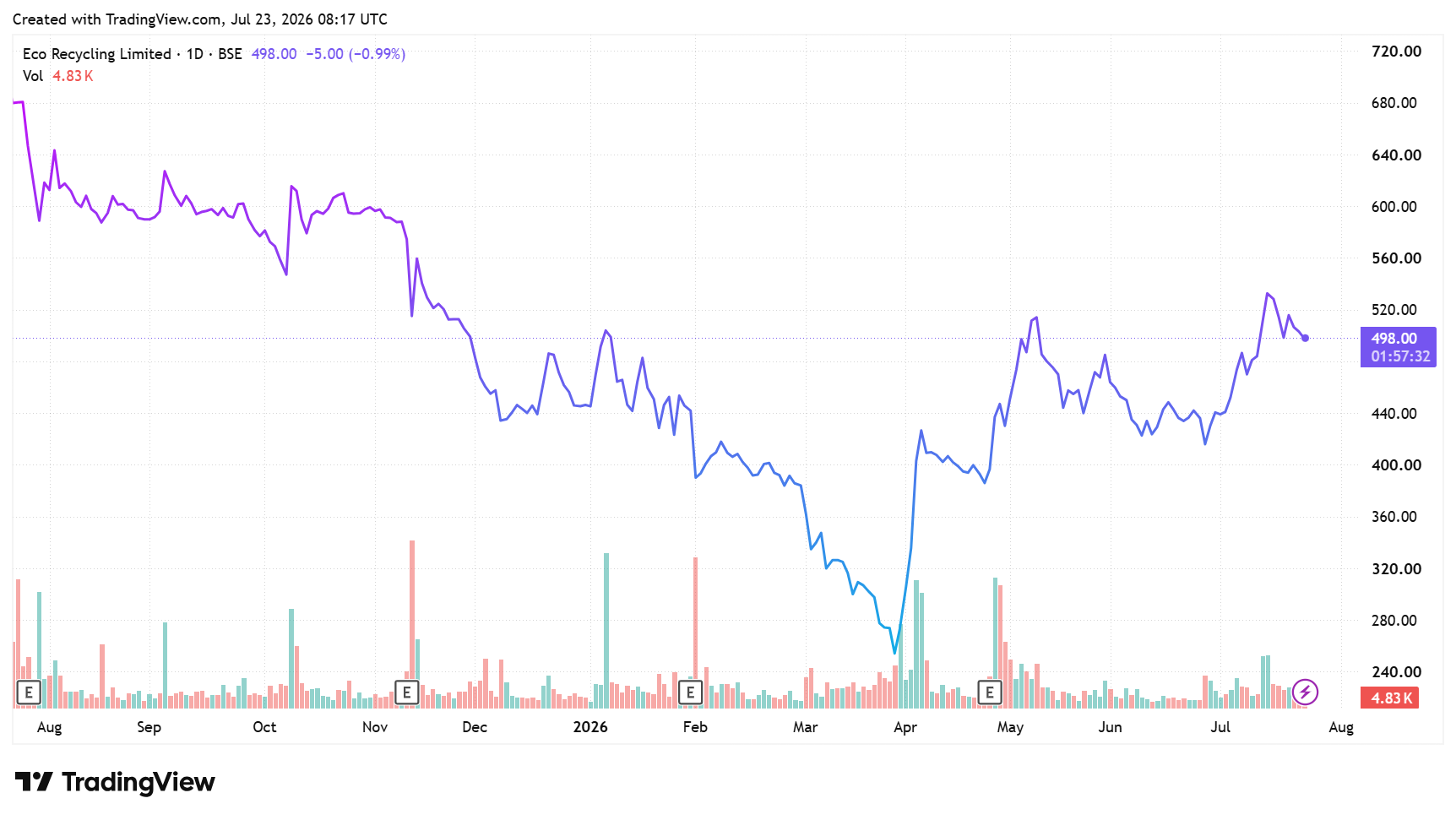
#3 Eco Recycling: High-Margin Play on Mandatory EPR and Li-Ion Recycling
ECO Recycling drives the circular economy through its comprehensive “360° Circular Portfolio”. It focuses on end-to-end e-waste management and extending the life of electronic products.
E-Waste & Li-ion Battery Processing: Expanding Capacity to 31,200 MTPA
The company operates a recycling facility in Vasai, Palghar district, spanning 65,000 sq. ft. Eco Recycling has successfully expanded its total processing capacity to an impressive 31,200 metric tons per annum (MTPA). This includes a 6,000 MTPA capacity specifically for lithium-ion battery recycling and black mass production.
The company is concentrating on higher-value products to enhance margins. This includes recovering precious metals (gold, silver, palladium) and extracting critical minerals like cobalt, nickel, and manganese from lithium-ion batteries. This aligns with India’s Critical Mineral Mission to reduce import dependency and the mandatory EPR compliance regime.
Strong Balance Sheet: 63% EBITDA Margin with Zero Debt
Financially, revenue grew by 14% year-on-year to ₹52.8 crore. EBITDA stood flat at ₹33.3 crore with margins at 63.1%. Net profit dipped 2% to ₹22.9 crore. The company is debt-free and generated ₹12.9 crore in cash from operating activities.
Looking ahead, Eco Recycling is well-positioned to capitalize on structural shifts in the industry. India is currently the 4th largest e-waste generator in the world. E-waste generation is expected to grow from 6.2 MT in 2024 to 14 MT by 2030. Currently, 78% of this waste is handled by the inefficient and unsafe informal sector, leaving only 22% to formal recyclers.
Structural Drivers: Monetising the Informal-to-Formal E-Waste Shift Under EPR
This informal dominance results in high value leakage. Roughly 42% of extractable value is lost to inefficiency. However, under the EPR framework, producers and brand owners are mandated to meet escalating recycling targets, rising from 60% today to 80% by 2029. If producers fail, they face heavy Environmental Compensation fines.
As producers rely on formal recyclers like Eco Recycling to process waste and generate EPR certificates, these regulations are creating a growing market. As a first-mover with certified capacity and high material recovery rates (95%-97%), the company could benefit from India’s transition to a formal, near-zero-loss circular economy.
Financial Comparison: P/E Valuations vs Return Ratios (ROE & ROCE)
Eco Recycling stands out for its strong Return on Capital Employed (ROCE) and Return on Equity (ROE), followed by EMS and Antony Waste. In terms of valuation, EMS trades at a premium to the industry median and to its historical 3-year median P/E. Antony Waste trades at a discount to both the industry and historical medians.
Meanwhile, Eco Recycling is trading at a lower price than its legacy media, but at a significant premium to the industry median.
Particulars | Price-to-Earnings Multiple (X) | Return Ratios | ||
| Company | 3Y Median | ROE (%) | ROCE (%) | |
| EMS | 25.1 | 19.1 | 8.9 | 12.5 |
| Antony Waste | 16.3 | 21.0 | 10.8 | 11.2 |
| Eco Recycling | 41.4 | 52.8 | 23.3 | 30.0 |
| Industry | 25.1 | NA | 15.0 | 21.3 |
| Source: Screener.in (As of 22 July 2026) | ||||
To sum up, the Solid Waste Management Rules, 2026 are likely to accelerate demand across different parts of the waste management value chain. Antony Waste could benefit from higher municipal waste processing. EMS may gain as urban local bodies invest more in environmental infrastructure alongside water and sewerage networks.
Meanwhile, Eco Recycling stands to benefit from stronger waste segregation and the continued formalisation of India’s recycling ecosystem under EPR-led regulations. Keep these companies in your watchlist to analyse how they capture the industry tailwind.
Disclaimer:
Note: Throughout this article, we have relied on data from http://www.Screener.in and the company’s investor presentation. Only in cases where the data were unavailable have we used an alternative, widely accepted source of information.
The purpose of this article is only to share interesting charts, data points, and thought-provoking opinions. It is NOT a recommendation. If you wish to consider an investment, you are strongly advised to consult your advisor. This article is strictly for educational purposes only.
About the Author: Madhvendra has been deeply immersed in the equity markets for over seven years, combining his passion for investing with his expertise in financial writing. With a knack for simplifying complex concepts, he enjoys sharing his honest perspectives on startups, listed Indian companies, and macroeconomic trends.
A dedicated reader and storyteller, Madhvendra thrives on uncovering insights that inspire his audience to deepen their understanding of the financial world.
Disclosure: The writer and his dependents do not hold the stocks discussed in this article.
The website managers, their employees (s), and contributors/writers/authors of articles have or may have an outstanding buy or sell position or holding in the securities, options on securities, or other related investments of issuers and/or companies discussed therein. The articles’ content and data interpretation are solely the personal views of the contributors/ writers/authors. Investors must make their own investment decisions based on their specific objectives, resources, and only after consulting such independent advisors as may be necessary.