



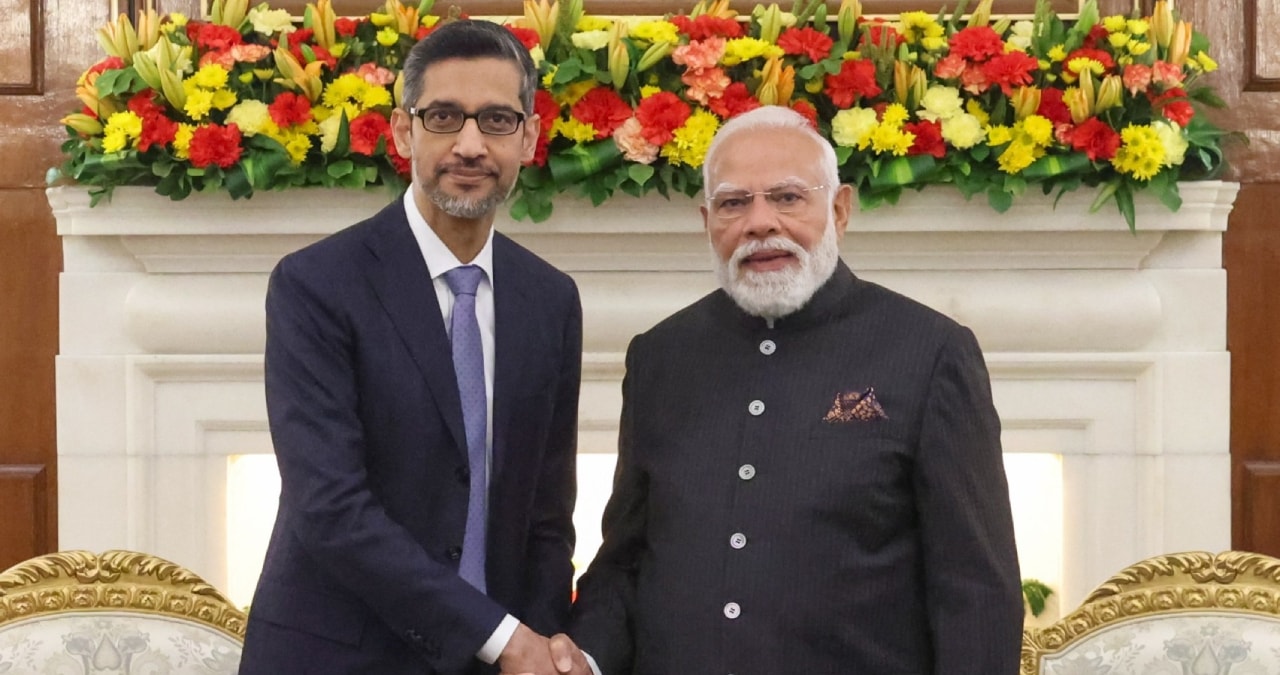
In his address at the India AI Impact Summit, Google CEO Sundar Pichai warned against allowing the digital divide to transform into an “AI divide,” calling for urgent investments in compute infrastructure and global connectivity. Speaking at the AI Summit, Sundar Pichai outlined Google’s ambitious $15 billion America-India Connect initiative, announced just a day prior, as a key step toward bridging this gap. Digital divide, which refers to the gap between people who have access to technology and those who don’t. To solve this difficulty, he said the following things.
AI Infrastructure needed
Sundar Pichai also stressed that equitable AI access to people worldwide demands more than just ambitious goals. It requires tangible infrastructure. Speaking on this, he said, “We’re also building a vast network of subsea fibre optic cables, including four new systems between the US and India,” he said, highlighting the initiative’s focus on a new subsea gateway in Visakhapatnam (Vizag). This network will connect to Singapore, South Africa, and Australia via three additional paths, dramatically boosting data transfer speeds for AI workloads between the two nations.
AI is creating new career paths
Sundar Pichai also addressed AI’s profound economic ripple effects. He said, “AI will undeniably reshape the workforce, automating some roles, evolving others, and creating entirely new careers.”. He also drew on the example of professional YouTube creators, a profession unimaginable 20 years ago, now supporting millions worldwide. This evolution underscores the need for proactive skilling programs to harness AI’s potential without leaving workers behind.
#WATCH | Delhi: At the #IndiaAIImpactSummit2026, CEO of Google and Alphabet, Sundar Pichai says, "We cannot allow the digital divide to become an AI divide. That means investing in compute infrastructure and connectivity… We're also building a vast network of subsea fibre optic… pic.twitter.com/c5x0aJCqU8
— ANI (@ANI) February 19, 2026
India-US partnership pivotal for reducing connectivity gaps
Google’s move aligns with India’s push to become an AI powerhouse, amid growing US-India tech ties under President Donald Trump’s administration. The initiative promises to work on cloud services, enabling faster AI model training and deployment for Indian developers and enterprises. Critics, however, question whether private investments alone can address rural connectivity gaps.
Sundar Pichai’s vision by prioritising infrastructure and adaptation argues that nations like India can leapfrog challenges and lead in the AI era. The summit, attended by policymakers and tech leaders, buzzed with discussions on ethical AI governance to support reducing the AI Divide.