




Want to catch up with everything from the world of AI this week? Welcome to your weekly AI download, where we go through all the major AI developments in the first week of June 2026.
This week marked the moment AI officially transitioned from a hyper-hyped software sector into a permanent macroeconomic powerhouse. Led by Anthropic’s blockbuster $965 billion confidential IPO filing and the surprising revelation that Claude now authors over 80% of its own codebase, the AI industry has now shown how it can affect the global economy.
While Anthropic has been rewriting the rules of the world economy, the rest of the sector is witnessing friction between rapid commercial deployment and systemic oversight. OpenAI quietly altered the terms of human-computer interaction by rolling out its autonomous, background-synthesising Dreaming V3 memory architecture, while Nvidia stressed the on-device AI processing infrastructure with its RTX Spark “PC Superchip.”
It hasn’t been all positive for AI, though. The US government stepped in with a proposed framework to govern AI at the frontier level, with the Great American AI Act – a mega 269-page framework that aims to freeze state-level regulations and fundamentally change how frontier models are governed at the federal level. Similar developments occurred in India too. The NYT chairman also took a stand against AI firms scraping journalistic content for training their AI models. Even Anthropic
All that and more! Hence, without further ado, let’s take a deep dive into everything that happened in the world of AI this week.
1. Anthropic calls for ‘Pause’ on advanced AI development
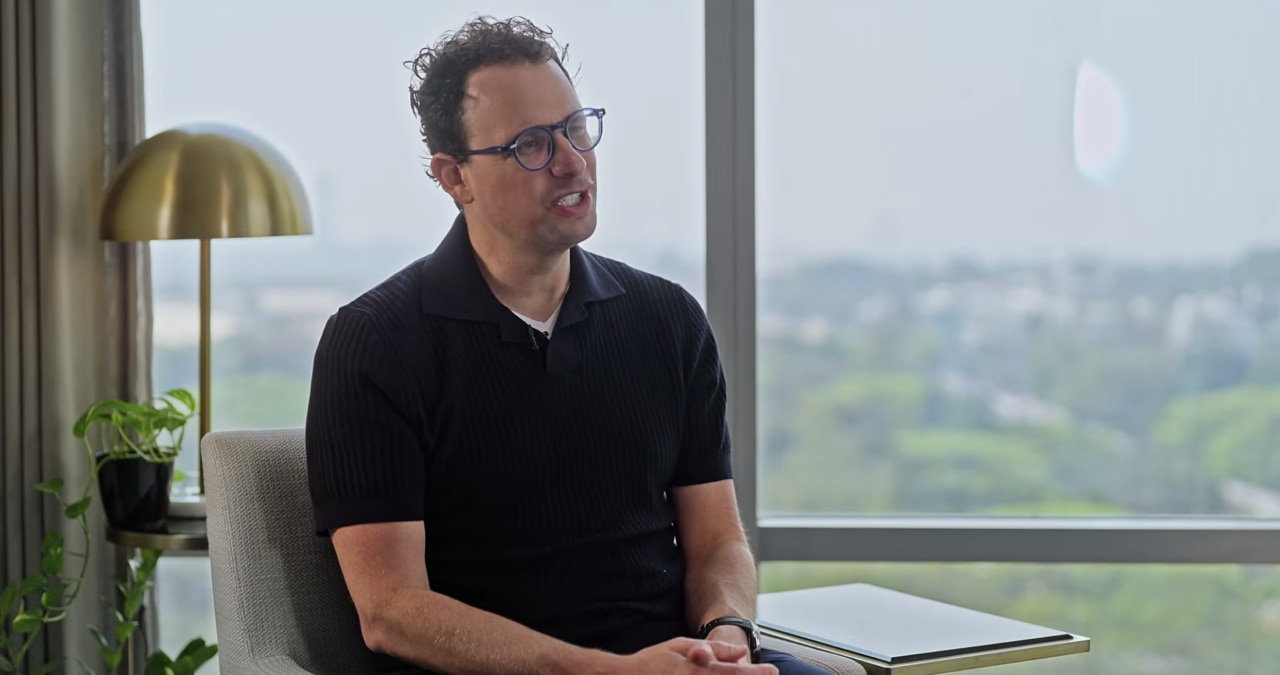
Capping off its historic week, Anthropic sparked intense debate by floating the idea of a worldwide “temporary pause” on frontier AI development. The idea is to allow safety frameworks to catch up with breakneck commercial progress.
In a detailed report authored by co-founder Jack Clark and research head Marina Favaro, the company warned that as models rapidly head toward “recursive self-improvement”, the risk of humanity permanently losing control over the technology grows exponentially.
To prevent this, Anthropic announced plans to bring together policymakers, civil society, and industry rivals to map out a verifiable and globally coordinated slowdown mechanism. The company emphasised that a unified framework is critical because an isolated pause by a single lab would simply pressure others to race ahead, allowing the “least cautious” actors to take the lead in secret.
2. Anthropic files for IPO at a $965B valuation
On June 1, Anthropic officially confirmed it had confidentially submitted a draft registration statement on Form S-1 to the SEC for a proposed IPO of its common stock. The filing comes after its massive $65 billion Series H funding round at a $965 billion post-money valuation from the previous week, with an annualised revenue run-rate that recently crossed $47 billion. The growth was fueled by explosive enterprise adoption of Claude for coding and agentic workflows.
3. OpenAI rolls out ‘Dreaming V3’ memory architecture
While Anthropic took the lead with its IPO filing, OpenAI did something different. The AI firm launched its most significant memory upgrade since the original ChatGPT rollout in 2024. The new ‘Dreaming V3’ architecture has begun reaching Plus and Pro users in the US and is expected to extend to free users within weeks.
As part of the key change, ‘Dreaming V3’ runs a background process after conversations end, automatically synthesising preferences, constraints, ongoing projects, and time-sensitive context while also knowing when that context has expired. This negates the wait for users to explicitly save memories. OpenAI says it has reduced compute requirements for this process by roughly 5x and that is what makes it financially viable to offer it to free users.
4. The Great American AI Act

A 269-page discussion draft of the Great American Artificial Intelligence Act was unveiled on June 4 by Representatives Jay Obernolte (R-CA) and Lori Trahan (D-MA). This is referred to as the most comprehensive federal AI framework Congress has ever put forward. The Act talks about a three-year preemption of all state AI laws related to frontier model development, which would freeze California’s AI bills and Colorado’s AI Act (set to take effect on June 30) at the federal level.
Large AI companies (those with over $500 million in annual revenue) would be required to publish Frontier AI Frameworks, report critical safety incidents to the government, and allow auditors to verify cybersecurity plans. The bill also introduces criminal penalties for using AI to impersonate government officials.
5. Nvidia announces RTX Spark as the “PC Superchip”
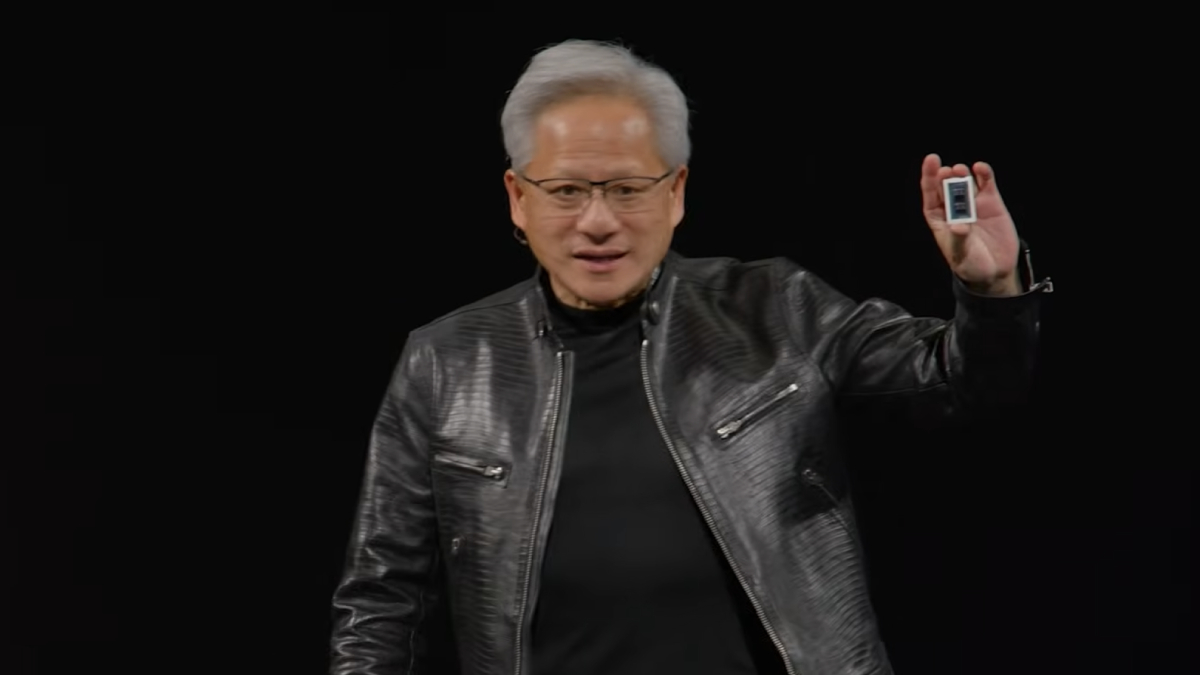
While the industry was dedicated to developments on AI, Nvidia made an effort to make it run locally. Unveiled at Computex 2026 in Taipei, NVIDIA’s RTX Spark is a new chip architecture designed to shift more AI processing from the cloud to the PC.
It combines a high-performance CPU, GPU, AI accelerators, and unified memory into a single integrated package that can run advanced AI models directly on a laptop. Major PC manufacturers including Dell, HP, Lenovo, Asus, and Microsoft are expected to adopt the platform, targeted at creators, AI developers, and gamers. Laptops running the RTX Spark chip are expected to launch in autumn 2026.
6. Claude is writing over 80% of its own code

Other than the IPO filing, Anthropic had something considerably mind-boggling to share – its Claude chatbot can now write over 80 per cent of its own code! Anthropic says that this progress in coding itself is a recursive self-improvement factor, thereby showing how AI can sustain itself as far as infrastructure in concerned.
7. India gets access to Anthropic Project Glasswing
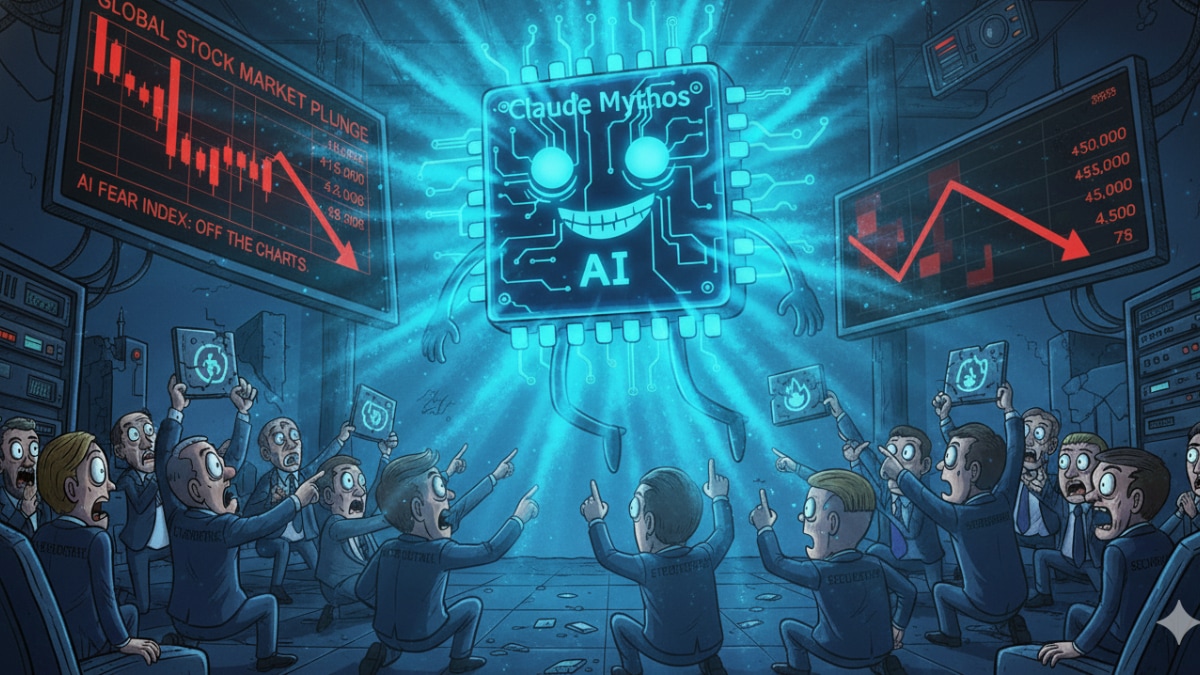
On June 2, Anthropic announced an expansion of Project Glasswing — its frontier AI security initiative focused on defending against advanced cyber threats. As part of the update, India is now on the list of 15 countries that get access to Claude Mythos for addressing cybersecurity issues prior to Anthropic making the model public. India’s inclusion in Project Glasswing could help the national banks and other key infrastructure organisations to address the unknown bugs and issues that human developer teams haven’t discovered so far.
8. Microsoft shows it can do AI without OpenAI
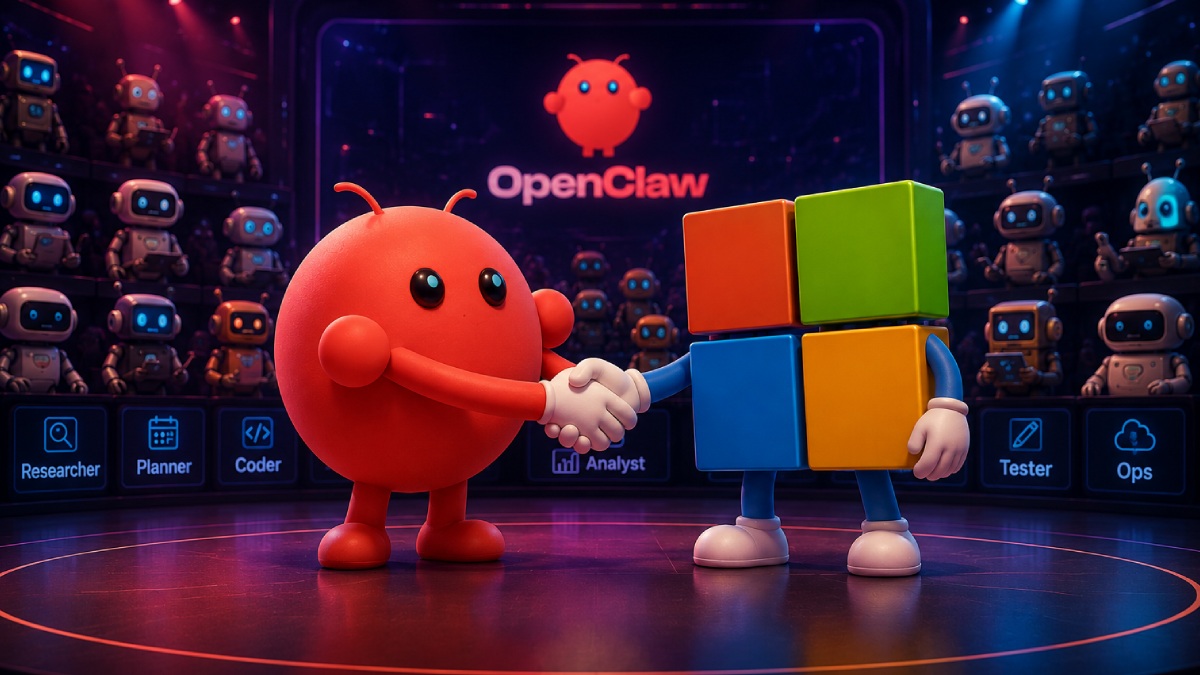
Microsoft used its Build 2026 developer conference to showcase what it can do as far as AI is concerned. The star of the show was Microsoft Scout, a new, “always-on” autonomous personal agent built on the open-source OpenClaw framework and the company’s new Work IQ engine. Positioned as a hands-free ‘Autopilot’ rather than a passive chatbot, Scout operates quietly in the background to manage schedules, automate deep file directory operations, and manage meetings across Microsoft 365 apps.
Beneath the software layer, Microsoft also revealed its MAI model family – a suite of seven proprietary in-house AI models backed by MAI-Thinking-1 (and its sibling, MAI-Code-1-Flash). Clocking in at a highly efficient 35 billion active parameters, this represents Microsoft’s first native reasoning model built to directly challenge OpenAI and Anthropic. This could also drive down token costs for enterprise-scale deployment.
9. Alphabet’s record $84.75 billion capital raise for AI
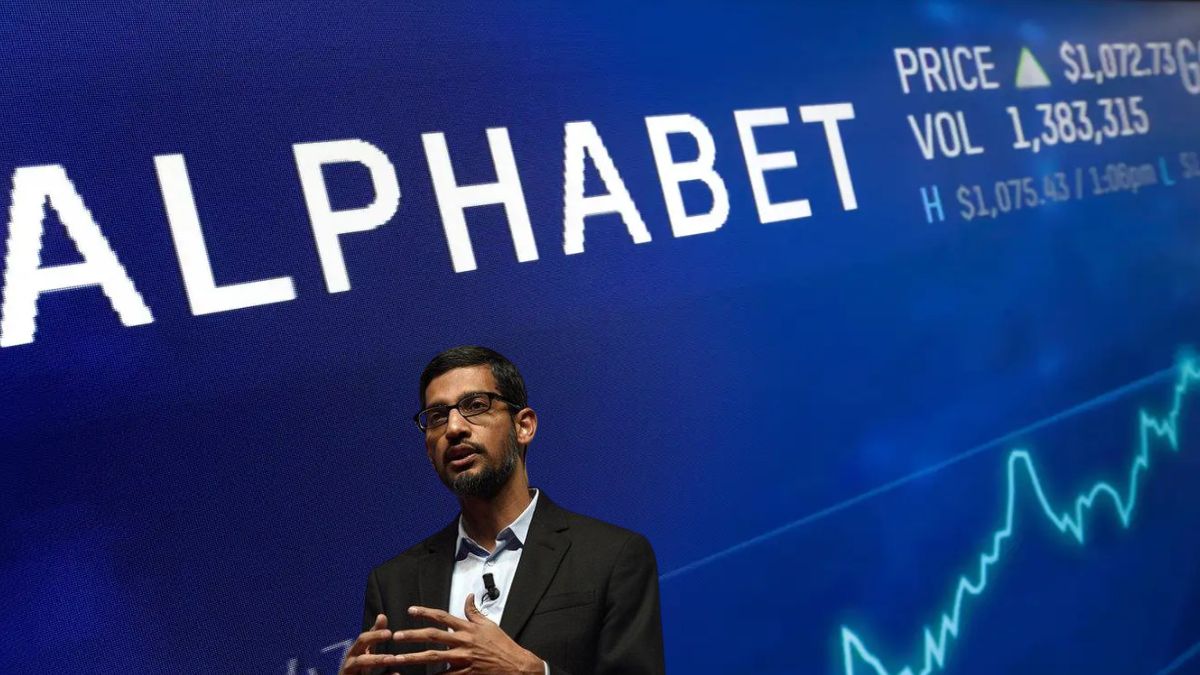
Google’s parent company, Alphabet, executed the largest equity capital markets transaction in history, upsizing a mammoth stock offering to $84.75 billion. Driven by what CEO Sundar Pichai described as enterprise and consumer demand for Gemini AI, the historic fundraise is designed to aggressively supercharge Google’s global data center footprint and AI compute infrastructure. The deal was anchored by a $10 billion private placement from Greg Abel’s Berkshire Hathaway. Alphabet is now pushing its 2026 capital expenditure guidance to an unprecedented $180 billion to $190 billion range.
10. India’s Supreme Court drafts AI framework

The Supreme Court of India’s recently released draft, titled the “Regulations for Use of Artificial Intelligence (AI) in Courts, 2026,” establishes a landmark governance framework – it prioritises human judicial oversight while embracing technological efficiency. The framework mandates full disclosure of AI-assisted legal filings and strictly prohibits the use of algorithms in high-stakes tasks, such as sentencing, bail assessments, or predicting recidivism. The essence of the framework ensures that AI remains a tool for administrative support, not a substitute for human intellect.
11. AI CEOs call for federal bio-risk controls

Industry stalwarts like Sam Altman, Dario Amodei, Demis Hassabis, and Mustafa Suleyman issued a joint open letter to the US Congress, urging immediate legislative action on biosecurity. The AI leaders warn that as AI systems rapidly advance, they risk eroding the technical knowledge barriers that have historically prevented bad actors from developing biological weapons. To mitigate this threat, they are calling for a federal mandate requiring all providers of synthetic DNA and RNA to implement rigorous order screening, customer identity verification, and comprehensive recordkeeping. All those who signed the letter aim to replace voluntary, inconsistent industry practices with a binding national framework to ensure that the transformative benefits of synthetic biology are not overshadowed by the potential for catastrophic misuse.
12. Sulzberger sounds alarm on AI ‘Theft’
At the 77th WAN-IFRA World News Media Congress in Marseille on June 1, New York Times Chairman A.G. Sulzberger delivered a harsh critique of the AI industry, labelling the unauthorised scraping of journalistic content a “brazen theft of intellectual property.” He warned that the current technological shift represents a looming “tsunami” rather than a mere ripple, and urged news organisations to abandon the ‘naivety’ of the early digital era.
Sulzberger called for urgent and collective action to defend the integrity of the media against what he described as an ‘unprecedented and parasitic appropriation’ of news assets.