




Every year, over 1.47 million students appear for the JEE Main examination. According to the exam results announced by IIT Kanpur, 54,378 students qualified JEE Advanced in 2025 — competing for roughly 17,760 IIT seats.
The ones who don’t make the cut largely regroup and aim at the next best option, before eventually funnelling into the same set of companies, the same MBA programmes, the same ladders and networks — competing harder at each rung for essentially the same destination.
This is not a failure of ambition. It is, if anything, an excess of it — pointed in the same direction as nearly everyone else’s. And according to one of the most successful investors of the past two decades, that is precisely the problem.

Peter Thiel — co-founder of PayPal, first outside investor in Facebook, architect of Palantir — built his entire fortune on a single conviction.
It began not in a boardroom, but in a Stanford classroom, where Thiel first articulated it to a group of students: that competition is not the engine of success. It is the engine of mediocrity.
Those lectures were later compiled into his 2014 book Zero to One, co-written with Blake Masters, in which he wrote: “All happy companies are different: each one earns a monopoly by solving a unique problem. All failed companies are the same: they failed to escape competition.”
The trap hiding in plain sight
The problem with competition, as Thiel sees it, is not that it is difficult. It is that it is a distraction. When a business — or a person — is locked into competition, the entire focus shifts from creation to comparison. Energy that could go toward building something genuinely new is spent tracking rivals and matching moves.
He illustrated this with a deliberately mundane example. As Thiel wrote in Zero to One: “The problem with a competitive business goes beyond lack of profits. Imagine you’re running one of those restaurants in Mountain View.” Further adding, “If you want to compete like crazy, just open a restaurant in Chicago. You’ll have plenty of competition and razor-thin margins to show for it.”

Another example to real drive home Thiel’s point is an economic distinction that most founders instinctively ignore: the difference between creating value and capturing value. As he wrote in his September 2014 Wall Street Journal essay adapted from the book, American airline companies serve millions of passengers and create hundreds of billions of dollars of value each year.
Yet in 2012, when the average airfare each way was $178, the airlines made only 37 cents per passenger trip. Compare them to Google, which creates less value but captures far more. Google brought in $50 billion in 2012 (versus $160 billion for the airlines), but it kept 21% of those revenues as profits — more than 100 times the airline industry’s profit margin that year.
The difference, Thiel argues, is that Google operates with near-monopoly power in internet search — a product so dominant in its category that it effectively sets its own terms. “Whereas a competitive firm must sell at the market price,” he wrote, “a monopoly owns its market, so it can set its own prices.”
This is not simply a business insight. It is a philosophy of how value is created — and for whom.
Why we compete when we shouldn’t
Understanding Thiel’s aversion to competition requires looking beyond strategy to the intellectual foundations of his thinking. At Stanford in the late 1980s, he studied under René Girard, the French philosopher whose theory of mimetic desire became a through-line in Thiel’s worldview.
Girard’s central claim was that human desire is not self-generated — it is borrowed. “Man is the creature who does not know what to desire, and he turns to others in order to make up his mind. We desire what others desire because we imitate their desires.”
People do not pursue goals because those goals are intrinsically valuable. They pursue them because they see others pursuing them — and that visibility alone is enough to make something feel worth having. The presence of competition becomes its own signal: if everyone is fighting over this, it must be worth fighting for.

Nowhere is this more visible than in India’s startup ecosystem, where, according to Inc42’s Indian Tech Startup Funding Report 2024, fintech accounted for over $2.5 billion in funding the previosu year, making it the highest-funded sector by value.
Much of that capital flowed into businesses solving variations of the same problem. The issue was rarely execution. It was that the decision to enter was itself mimetic: capital was flowing there, so it looked like the place to be.
Thiel has been explicit about how Girard shaped his thinking. “Thinking about how disturbingly herdlike people become in so many different contexts — mimetic theory forces you to think about that. As an investor-entrepreneur, I’ve always tried to be contrarian, to go against the crowd, to identify opportunities in places where people are not looking.”
The contrarian question
At the core of Thiel’s framework is a question he says he asks every person he considers hiring: “What important truth do very few people agree with you on?”
A good answer requires identifying something that is both genuinely unpopular and genuinely true — not a safe provocation, but a real divergence from consensus. The business equivalent, as he frames it in Zero to One, is: “What valuable company is nobody building?”
The reason these questions cut so deep is that consensus concentrates competition. When enough people agree that a certain path leads somewhere, everyone walks it — and the crowding destroys the very advantages that made the path attractive in the first place.
“The next Bill Gates will not start an operating system,” Thiel wrote. “The next Larry Page won’t start a search engine. The next Mark Zuckerberg won’t start a social network. If you are copying these guys, you aren’t learning from them.”
The same principle applies well beyond Silicon Valley. The most interesting career trajectories — in any field — tend to belong to people who identified something worth doing before others noticed it was worth doing, rather than those who simply executed better within an already crowded space.
Start small. Go deep. Own something.
Thiel’s practical prescription follows directly from his diagnosis. The antidote to competition is not scale — it is specificity. Every enduring business, he argues, begins by completely dominating a small market before expanding outward.
India has produced perhaps the most striking recent example of this principle in action. When Reliance Jio launched in September 2016, it did not compete with Airtel and Vodafone on their own terms — better network quality, marginally cheaper plans.
According to research published by the Institute for Strategy and Competitiveness at Harvard Business School, Jio changed the basis of competition entirely, offering free lifetime voice calls in an industry that derived 75% of its revenue from voice.
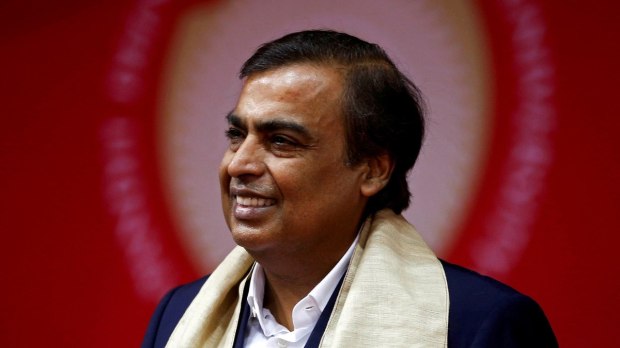
Within six months of launch, as per the same report, India became the highest mobile data consumer in the world. Data prices, according to industry data, fell by approximately 90 – 95 per cent. The competitors did not just lose market share — they were forced to adapt to an entirely new market reality.
That is what a zero-to-one move looks like at scale. Not a better version of what already existed, but a redefinition of what the category could be.
The 10x rule — Thiel’s insistence that a product must be not marginally but dramatically better than existing alternatives — applies as much to how individuals invest their energy as it does to technology. Small improvements in a crowded space is, almost by definition, forgettable.
The people and organisations that endure tend to be the ones who stopped asking how to do the existing thing better and started asking whether there was a different thing worth doing entirely.
The limits of the argument
Thiel’s framework is persuasive, but it warrants scrutiny. The freedom to identify an uncrowded path and pursue it is not equally available to everyone. For many people, the competitive systems Thiel dismisses — entrance examinations, established career ladders, well-worn industry paths — are not traps so much as reliable routes to stability in contexts where the cost of an unconventional bet is simply too high.

There is also the uncomfortable flip side of monopoly itself. The same market dominance that Thiel celebrates as a sign of genuine value creation can, over time, reduce the incentive to keep innovating.
Several of the technology monopolies he would recognise as zero-to-one achievements have since been criticised — by regulators, economists, academics and their own users — for leveraging their position in ways that make it harder for the next genuinely new idea to emerge.
Progress that actually means something
The title of Thiel’s book names a distinction that stretches beyond startup strategy. Going from zero to one means creating something that did not exist before. Going from one to n — copying what already works, entering markets that are already defined — is horizontal progress. It replicates and redistributes. It does not create.
“Every breakthrough moves us from zero to one,” he wrote. “Doing what we already know how to do takes the world from 1 to n.”
Most competition, by this measure, is horizontal. It sharpens execution and rewards discipline, but it does not fundamentally change the landscape. Genuine progress — in a career, creative pursuit or a business — tends to require a different question: not how to do the existing thing better than the person standing nearby, but what is worth doing that nobody is doing yet.
That question is harder and slower to produce visible results. But it is the one that tends to lead somewhere that belongs specifically and entirely to whoever asked it first.
“Monopoly,” Thiel wrote, “is the condition of every successful business” — not as a statement about market power, but about differentiation. The most durable thing anyone can build is something so distinctly its own that the question of competition becomes, for all practical purposes, beside the point.