



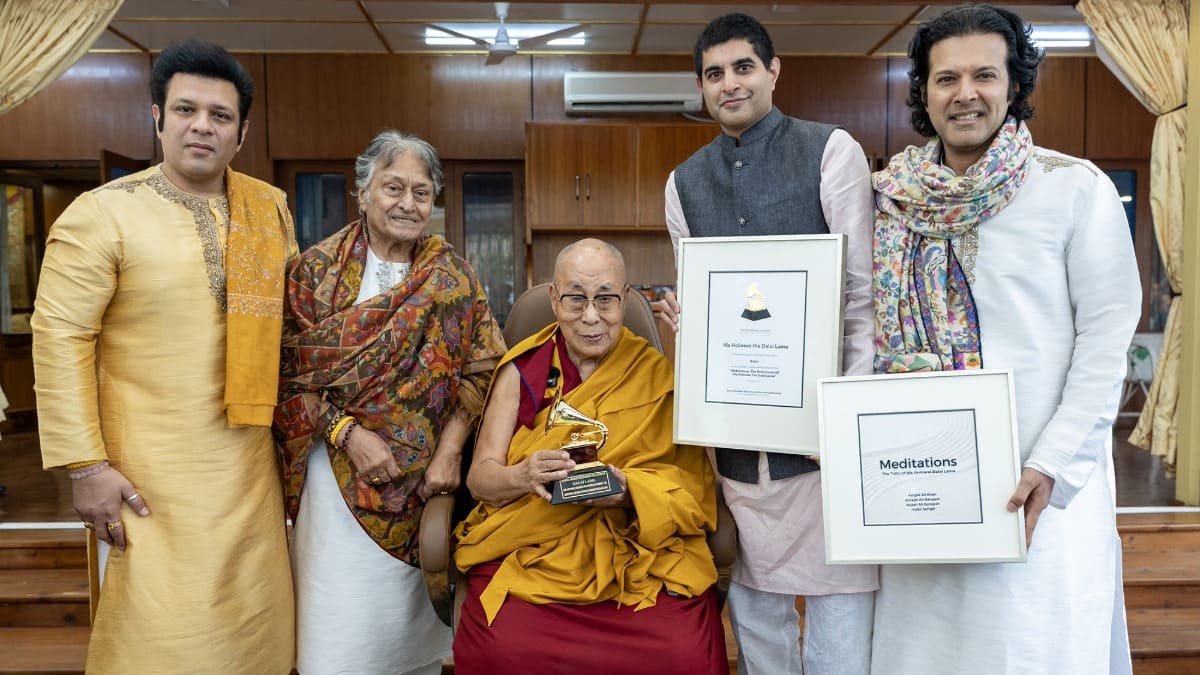
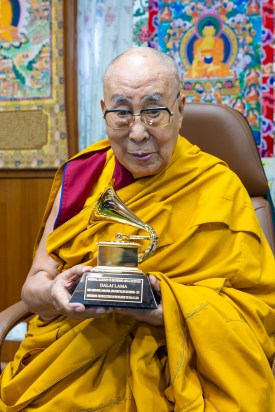
Tibetan spiritual leader, Tenzin Gyatso, the 14th Dalai Lama, recently received his first Grammy award at his residence in Dharamshala. Announced earlier this year in February, his spoken-word album ‘Meditations: The Reflections of His Holiness the Dalai Lama’ won the award for best audiobook.
Presented by Indian classical music legend Ustad Amjad Ali Khan, the shining trophy in gold was more than just recognition. While the Dalai Lama is one of the most recognised faces globally, the recognition sealed his presence in pop culture and modern-day relegations of media.
At the same time, it also talks a lot about the consumer – the listeners of today. The Grammy Awards have been honouring the best of the best in music and have become the benchmark of musical success, but the addition of the 14th Dalai Lama is a testament to the evolving meaning of spiritualism.
Inside ‘Meditations’
Dalai Lama’s audiobook is a unique production of traditional spiritualism paired with an immersive experience guided by the sounds of Ustad Amjad Ali Khan and his sons’ works. The 10-track package is a 90-year-worth of a masterclass which preaches modern-day mindfulness.
At its core, ‘Meditations’ is an urgent but personal appeal for global oneness. It doesn’t go deep into Buddhist teachings academically; the Dalai Lama‘s notes are more than just sermons. Making it accessible in small bites of information, the audiobook brings the values to the audience in a way like no other. The sarod-laden dialogue adds weight to the words with the soulful strings and even has some guest appearances.
It has been produced by several-time Grammy award winner Kabir Sehgal, who brought together a medley of stars like Maggie Rogers, Rufus Wainwright, and Andra Day. The team brings together the Dalai Lama’s spiritual teaching, adds a texture to tracks, and Western auditory aesthetics.
The ten tracks are named – Heart, Oneness, Harmony, Kindness, Water, Mind, Health, Peace, Essence, and Journey. Essentially, it stands out only because it is grounded. It is a testament to the true spiritualism and how its concepts may be a hope for global harmony and facing the realities of 2026 – climate change, modern loneliness, and more.
In comments, the Dalai Lama further mentioned that the award was not a personal win, but a recognition of a ‘shared universal responsibility’ for well-being. In an attempt to change the meaning of ‘self-care ‘, which is now limited to skincare, comfort food, and retail therapy, to name a few, the book shows a collective meaning of wellness.