



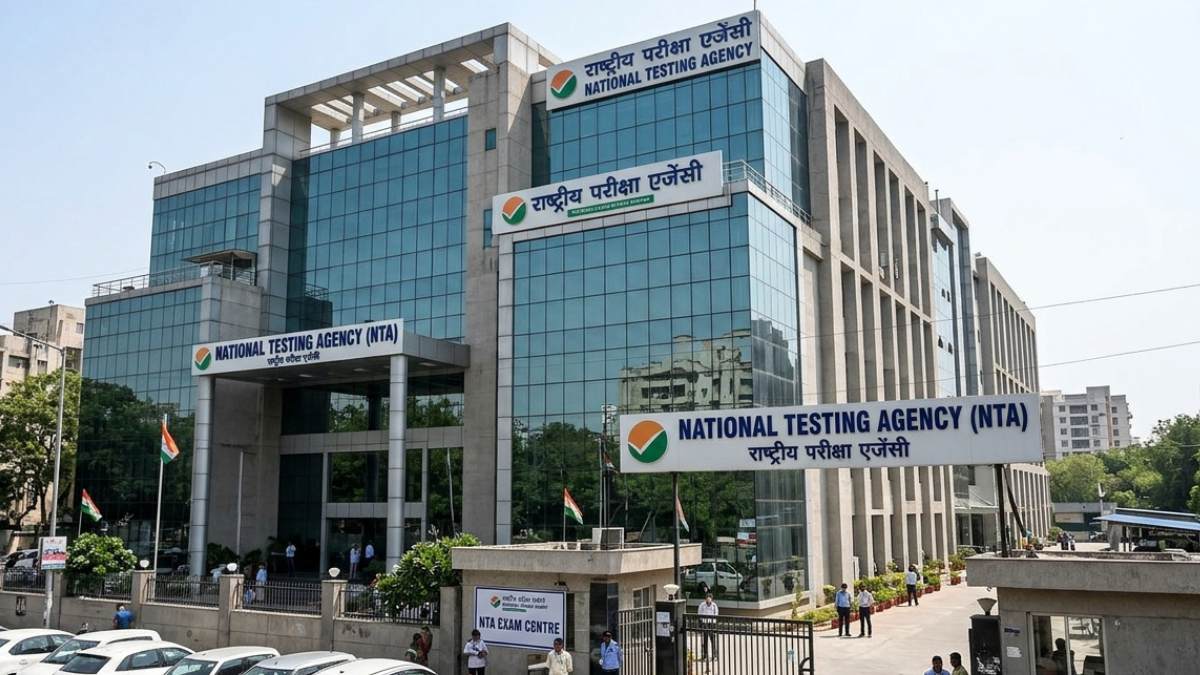
Weeks after the NEET-UG 2026 paper leak exposed weaknesses in the examination process, the National Testing Agency (NTA) is considering a major overhaul of how question papers are prepared. The proposed changes aim to reduce human involvement and prevent any individual from having access to the complete question paper.
The new model, currently being discussed within the government for future exams, is based on what officials describe as a “zero-trust architecture.” Under this system, the focus will be on secure processes rather than relying on trusted individuals, according to a report by The Indian Express.
One of the key proposals is to separate question-setting from specific examinations. Subject experts asked to prepare questions would no longer be informed whether their questions are meant for NEET, JEE, or any other NTA-conducted exam, the report mentioned.
Instead, all questions would be added to a large central question bank. Final question papers would then be generated from this repository, reducing the number of people who know the contents of the actual paper.
The move comes after the Central Bureau of Investigation (CBI) probe into the NEET-UG 2026 paper leak, which has led to the arrest of 13 people so far, including translators and subject experts accused of leaking different sections of the exam.
Leak suspected during confidential paper-setting stage
The arrests suggest that the leak may have occurred during the first phase of confidential operations (CONOPs) – the highly restricted paper-setting and translation process introduced after the controversy surrounding NEET-UG 2024, IE reported citing officials.
The alleged involvement of translators linked to the Physics, Chemistry and Biology sections has prompted authorities to review the long-standing practice of allowing experts access to complete sections of a paper.
“If the paper is compromised, then it is not a pen-and-paper problem. It is a problem of system design and structure. We are trying to reduce human interface. There has to be a zero-trust architecture,” a senior government official told the news outlet.
Large question bank being considered
The proposed system would significantly change the role of subject experts. Rather than preparing questions for a specific exam, they would contribute questions to a common repository without knowing where those questions would eventually be used, as per IE.
“The domain expert should be examination-agnostic. He should not know whether the question is being set for NEET, JEE or any other examination. The objective is to ensure that no single individual has visibility of the final paper,” the official told IE.
The NTA is also exploring the creation of a massive question bank containing thousands of questions across subjects. Technology-assisted systems would then select questions while maintaining the required difficulty level and subject balance.
“We can have a bank of 10,000 questions. The final paper can be built from that bank. Technology can help determine difficulty levels and question distribution. The idea is to minimise the number of eyes through which the paper passes,” the official added.
AI may play bigger role in translations
Translation procedures, which also came under scrutiny during the investigation, could see major changes as part of the overhaul.
The NTA had earlier informed the Supreme Court that it planned to use artificial intelligence for nearly 85 per cent of the translation work, while human experts would handle review and validation.
Officials said the agency is now looking at integrating this approach into the broader redesign of the examination system.
“AI can do the first translation. The human translator’s role should be limited to checking whether the meaning has been correctly conveyed. Even then, we want to ensure that translators are not necessarily aware of the specific examination for which the material is being prepared. They should be validating questions, not handling complete question papers,” IE quoted the official as saying.
Officials clarified that the goal is not to replace human translators but to reduce the amount of time they spend handling sensitive material and limit their access to the final paper. The broader objective is to ensure that no single individual has complete visibility of the examination paper at any stage of the process.
Changes being discussed ahead of future exams
The proposed reforms are being discussed as the NTA prepares for the NEET-UG re-test scheduled for June 21. Officials said some immediate measures have already been implemented, including the appointment of a fresh set of subject experts.
Discussions are also underway to strengthen the transportation and storage of printed question papers after they leave the paper-setting stage.
“Some of the people arrested had been associated with the system for years,” the official told IE. “That is precisely why the system itself has to trust individuals less and processes more. There is an old question, “if the bodyguards themselves become the threat, who protects you?”
The proposed reforms come in the wake of the NEET-UG 2026 paper leak case, which triggered a major investigation into the examination process. The CBI has so far arrested several people, including translators and subject experts, for allegedly leaking different sections of the question paper.
The case raised concerns about the level of access given to individuals involved in preparing examination papers and prompted the NTA and the government to review the entire system.