



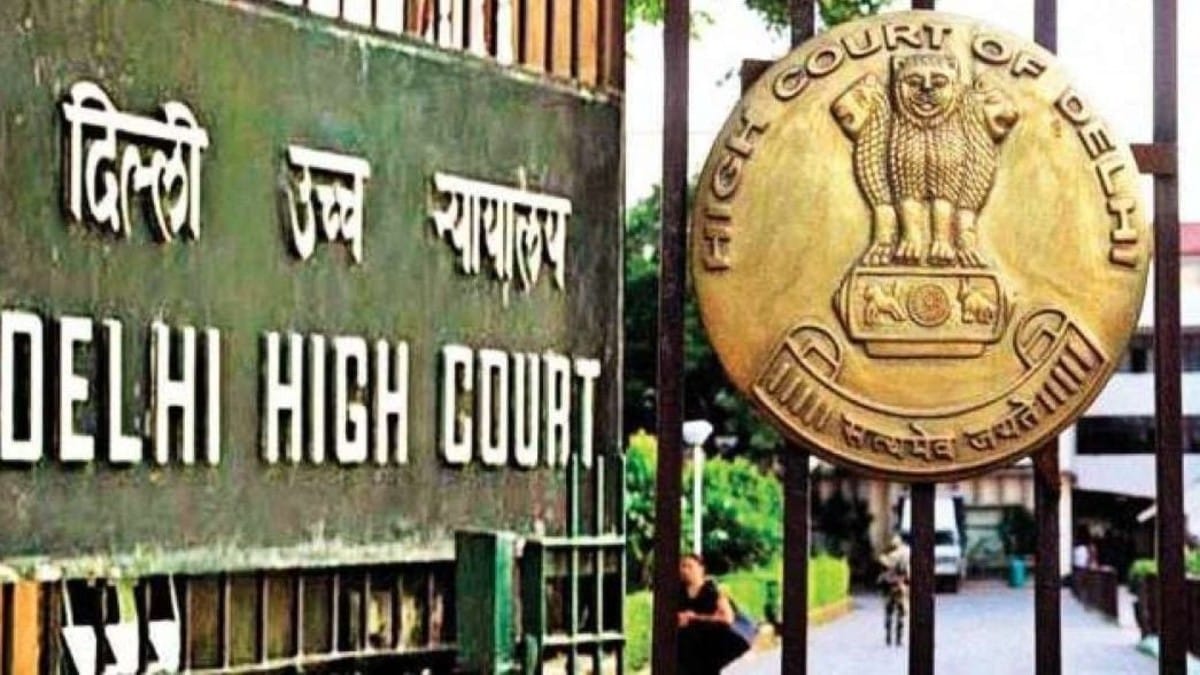
The Delhi High Court has delivered a major judgment against Google in a case that could change how online keyword advertising works in India.
A few days ago, Justice Mini Pushkarna ruled that Google violated the trademark rights of sanitaryware company Hindware by allowing rival brands to buy the keyword “HINDWARE” on Google Ads without the company’s permission. According to the court statement, this amounted to trademark infringement and unfair commercial practice.
The judgment came in two connected commercial suits filed by Hindware Limited against Google LLC and Google India Private Limited. The court permanently restrained Google from allowing the use of Hindware’s trademark as advertising keywords and ordered the company to pay ₹30 lakh in damages along with litigation costs.
The legal fight had been going on for more than a decade.
Delhi High Court says Google’s AdWords policy violated trademark
The case started after Hindware discovered in 2013 and 2014 that rival sanitaryware companies were using the keyword “HINDWARE” in Google’s AdWords Programme. At that time, the company was operating as HSIL Limited.
Hindware found that Cera Sanitaryware Limited and its web developer Omkara Infoweb Private Limited had bought the keyword through Google Ads. This meant that when users searched for the word on Google, advertisements linked to the abovementioned firms appeared at the top of the search results.
The firms later settled the matter with Hindware during the court proceedings. However, Google chose to contest the case till the end, leading to a full trial and detailed judgment.
What Google’s AdWords programme does
According to the court documents, under this system, advertisers can pay Google to reserve certain keywords. When internet users search for those words, sponsored advertisements appear at the top of Google’s Search Engine Results Page (SERP).
Google follows a Pay-Per-Click model, which means advertisers only pay when someone clicks on their advertisement.
When many companies bid for the same keyword, Google runs a real-time auction. The company that bids higher and scores better on relevance usually gets the top advertisement spot.
Importantly, the court observed that Google’s India policy does not stop advertisers from using another company’s trademark as a keyword. The judgment pointed out that Google follows stricter rules in the European Union but not in India.
Google’s objections rejected
Google argued that the Delhi High Court did not have jurisdiction because Hindware’s registered office is in Kolkata. The court rejected this argument.
Justice Pushkarna said Google’s advertisements and website are accessible throughout India, including Delhi. Since the advertisements were visible in Delhi, part of the cause of action arose there, giving the Delhi High Court jurisdiction under the Code of Civil Procedure and the Trade Marks Act.
The judgment added that the tech giant itself allowed the trademark to be used for bidding, conducted the auctions, entered into advertising agreements and earned money from the process.
The court said: “Use of the mark of the plaintiff by Google for the purposes of bidding and auctioning of the registered trademark of the plaintiff for use as a keyword in furtherance of its AdWords Programme, itself suffices as an independent cause of action against Google.”
The court noted that the company violated Section 29(8) of the Trade Marks Act, 1999.
The court stressed that “HINDWARE” is not a generic word but a coined trademark with strong brand recognition. It also noted that Hindware had already been recognised as a well-known trademark by the Delhi High Court in 2017.
Google says keywords are invisible
Google denied trademark infringement and challenged the case on several grounds.
The tech giant argued that keywords work only as invisible backend triggers and are never actually seen by internet users. Because of this, Google said keyword use should not be treated as trademark use.
Google also argued that advertisers themselves choose the keywords and create the advertisement text, while Google only provides the platform for advertising.
Apart from this, Google challenged the maintainability of the suits by raising questions about territorial jurisdiction, board authorisation and the absence of advertisers in certain parts of the proceedings.
Google also relied heavily on Section 79 of the Information Technology Act, which gives legal protection to intermediaries for third-party content if they play a neutral and technical role.
But Justice Pushkarna rejected this defence. The Court said Google was not simply acting as a passive intermediary because it was actively involved in how the AdWords system functioned.
Court says keyword use is trademark use
On the main trademark issue, the Court agreed with Hindware’s arguments.
Justice Pushkarna held that using “HINDWARE” as a keyword amounted to “use in advertising” under Section 29(6) of the Trade Marks Act, even if users could not directly see the keyword inside the advertisement text.
The Court accepted Hindware’s claim that Google commercially benefited from selling and suggesting trademarked terms to competitors without permission.
“Google suggests, offers and sells words, including, trademark terms, as keywords to advertisers. This active offering and selling of trademark terms to advertisers is not mere internal use of the trademark term, and is clearly a commercial use,” the Court observed.
The judgment further said: “Thus, use of trademark as keywords also amounts to use by Google, wherein, Google derives a distinct advantage by use of trademarks as keywords.”
After ruling against Google, the Delhi High Court permanently restrained the company from using the marks “HINDWARE”, “HINDWARE SANITARYWARE”, “HINDWARE SANITARY”, “HINDWARE SANITARYWARE INDIA” or any combination of those names in its advertising programme.
The Court also awarded nominal damages to Hindware. Justice Pushkarna granted ₹15 lakh in each of the two suits, taking the total compensation to ₹30 lakh. Google has been directed to pay the amount within eight weeks.