



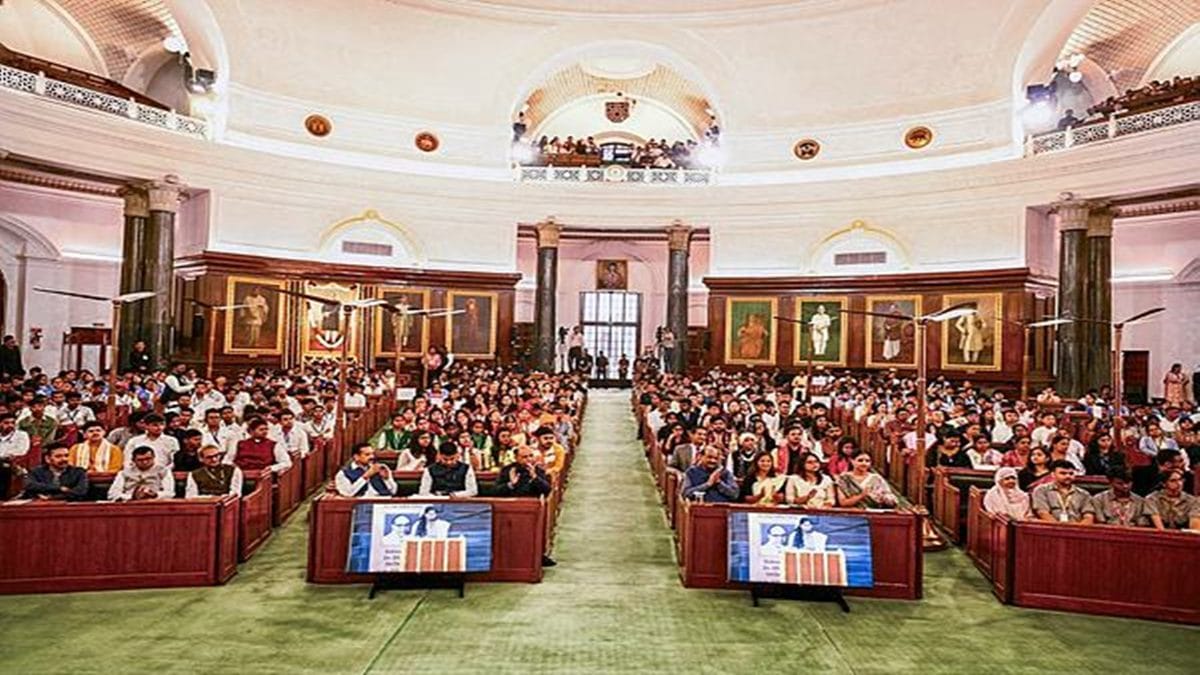
Congress leaders have sharply criticised the Constitution (131st Amendment) Bill, 2026, which proposes increasing Lok Sabha seats to 850 amid plans to implement women’s reservation from 2029 polls. They argue the move unfairly penalises southern states for population control efforts, skewing federal balance toward populous northern states. A special three-day Parliament session starting April 16 (Thursday) intensifies the debate.
Chidambaram’s fiery denunciation
P Chidambaram labelled the bill a mischievous, diabolical move to radically alter the federal balance. He highlighted how Tamil Nadu’s seats would seem to rise from 39 to 58 initially but drop to 46 post-delimitation, while Uttar Pradesh surges from 80 to roughly 140. “All the Southern States that have currently a representation of 24.3 per cent will find their representation reduced to 20.7 per cent. This must be OPPOSED,” he posted on X.
The apprehensions I had voiced in the last week have proved right
When the strength of the Lok Sabha is increased by 50% from 543 to 815, the strength of TN will seemingly increase from 39 to 58. But this is an illusion. When delimitation takes place, it will reduce to 46
Uttar…
— P. Chidambaram (@PChidambaram_IN) April 15, 2026
Jairam Ramesh accuses centre of deceit
Jairam Ramesh accused the government of deliberate deceit over question of delimitation, claiming the bill contradicts promises to protect southern states. “The Prime Minister is a so-called Leader whose only distinguishing feature is his unmatched ability to be a misleader. The southern states will lose their strength in the Lok Sabha and so will smaller states in northwest India and states in the east,” he wrote on X. He decried the lack of uniform seat increases as promised.
Manish Tewari warns of federal tilt
Manish Tewari raised alarms over violating “one person, one vote, one value” under Article 81, predicting a skew if based on 2011 Census data for 850 seats. “Kerala will get about 23 seats up from 20. UP will go upto 142 seats from the current 80. The Federal balance will get further skewed to the advantage of the Heartland states,” he posted on X. He called the bills “portentous in their implications.”
Karti Chidambaram echoes injustice
Karti P Chidambaram called the bill grossly unfair and said it will disenfranchise the states which have implemented population control, with Tamil Nadu among the hardest hit. He criticised the timing, linking it to the rushed women’s quota implementation without addressing demographic inequities. This aligns with opposition fears of proportional seat losses for responsible states.
Government defends women’s quota push
Parliamentary Affairs Minister Kiren Rijiju emphasised unity on women’s reservation, noting no party opposed the Nari Shakti Vandan Adhiniyam in 2023. “We have waited for 40 years, we can’t afford to wait for another year or another decade. It will be extremely painful if we further delay women’s reservation process,” he stated. Prime Minister Narendra Modi urged consensus, calling it “the sentiment of the nation” for 2029 rollout.
Opposition parties plan a meeting at Mallikarjun Kharge’s residence to strategise, viewing women’s quota, delimitation and seat hikes as ‘deliberately mixed up’ issues. Leaders like Telangana CM Revanth Reddy demand pro-rata increases, but Article 81 ties seats to population. Critics fear rushed passage before the 2027 census undermines fairness.