



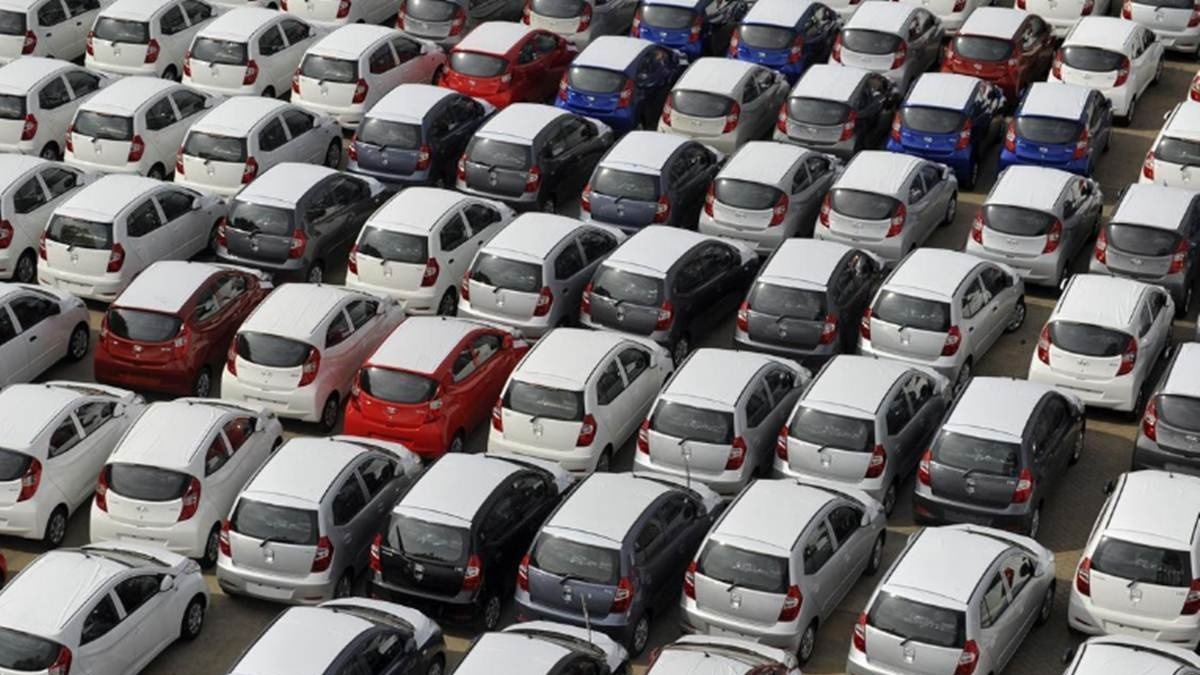
Automobile dispatches from factories to dealerships declined 23.50% year-on-year to 13,28,027 units across categories in February as the sector continues to be under pressure with chip shortage and high ownership cost, the Society of Indian Automobile Manufacturers (Siam) said on Friday.
Sector analysts said the ongoing Russia-Ukraine war would further dent the prospects of recovery of the sector as supply chains would face more disruptions.
Rajesh Menon, director general, Siam said, “Continuing supply side challenges like semiconductor shortages, increase in cost due to new regulations, higher commodity prices, higher logistics cost etc have impacted overall sales in the auto industry. Industry is closely watching the possible impact of the ongoing conflict in Ukraine, as global supply chains could come under stress.”
Passenger vehicle sales fell 6.54% year-on-year to 2,62,984 units in February. Within the segment, sales of passenger cars and vans declined 13.89% y-o-y and 21.95% y-o-y, respectively. However, utility vehicle sales increased 5.05% y-o-y.
The depressed demand in the two-wheeler segment owing to high ownership costs continued, with the dispatches falling 27.25% to 10,37,994 units.
If the prevailing situation continues, as is the indication, the industry would take a much longer time to recover, as per experts. In the PV segment, as demand continues to be strong, the waiting period for certain popular models is getting longer.
S&P Global mobility director Suraj Ghosh said the auto industry is going through an odd phase, wherein new launches and pricier cars are seeing revived demand while entry segment vehicles, be it passenger vehicles or two-wheelers, are facing a decline.
Even the three-wheeler segment failed to take off, with sales slipping 2.23% y-o-y to 27,039 units in February.
“The Russian region produces nearly 26% of aluminium and 50% of nickel globally, apart from the high share of some rare earth metals like palladium. If this war continues, we should expect a steep increase in the input prices. The industry barely started to recover from Covid and does not have the capacity to absorb this hit. Most OEMs are likely to pass this increase in input costs to consumers through price increase, which will have an adverse impact on demand,” Rajat Mahajan, partner, Deloitte India, said.
Ghosh said the uncertain global environment may cause more harm, even if temporarily, as it could hit capital and commodity markets and disturb the supply chain of automotive raw materials and finished goods.