



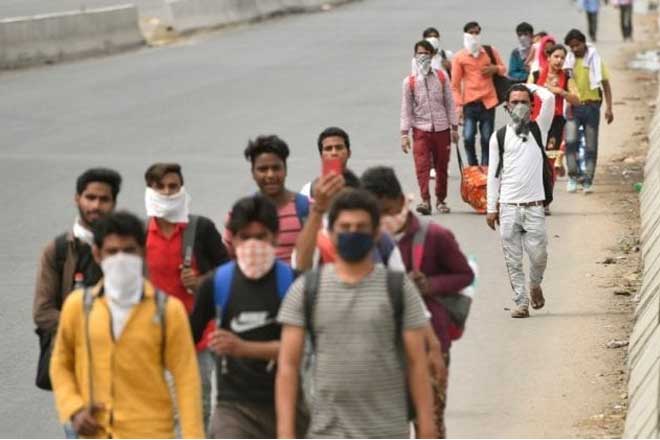
Prime Minister Narendra Modi on Saturday launched a rural public works scheme —Garib Kalyan Rojgar Abhiyaan — aimed at providing livelihood opportunities to lakhs of migrant workers who returned to their native villages during the Covid-19 lockdown period. With the formal launch of the scheme, from Telihar village in Khagaria district of Bihar via video conferencing, as many as 67 lakh workers in 116 districts spread across six states are expected to be engaged in remunerative employment for over four months. The scheme involves government expenditure of a massive Rs 50,000 crore, without much additional budgetary cost, as most of the funds are to be pooled in from outlays for 25 existing schemes.
The idea is to use the scheme to pre-empt a rural distress and at the same time expedite rural public works and asset creation. The funds will be used to build gram panchayat bhawans, anganwadi centres, national highways, railway facilities and for water conservation projects. The public works to be taken up include rural houses, drinking water-and-sanitation and rural roads.
Launching the mission-mode scheme, Modi lauded the contribution of people from villages in fighting the pandemic.
“Our rural governance systems and field level workers such as Asha workers who built public awareness in rural areas have played a very important role in (fighting Covid-19).” The Prime Minister said the government would ensure no one in villages would need to depend on borrowings during this crisis period. According to him, the Abhiyaan would stand in good stead for women’s self-help groups.
“The way corona has been fought in the villages of India, it has taught a big lesson to the cities. Whether someone acknowledges your work or not, I hail your contribution in fighting coronavirus,” he said. The Abhiyan is estimated to cover about two-third of such migrant workers in UP, Bihar, Madhya Pradesh, Rajasthan, Jharkhand and Odisha. It would benefit migrant workers who returned to the rural areas via the special Shramik special trains and other means, with tens of thousands getting home on foot.
At the same time, given its acute fiscal constraints, the government is apparently keen that these additional needs are being met mostly via fast-tracking of certain expenditure and a wholesale re-prioritisation. Additional budgetary costs, if any, are being minimised. Apart from budgetary funds, resources form afforestation (CAMPA) fund and district mineral funds could also be put to use to some extent for the mission-mode project.