



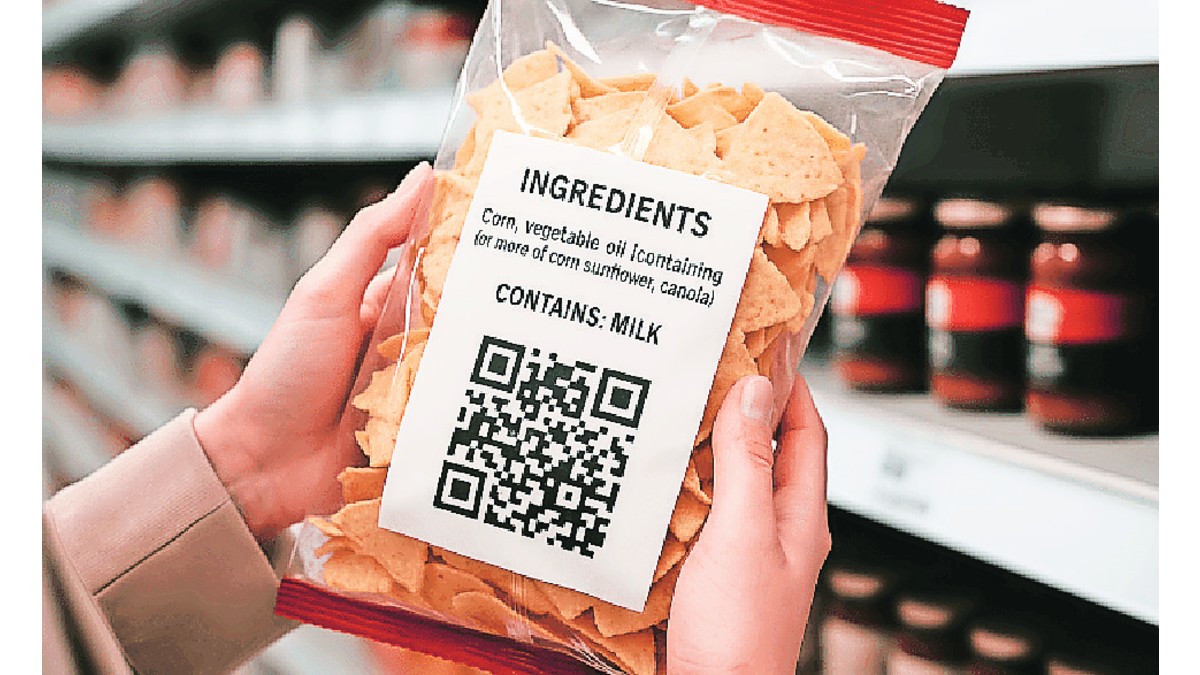
In the bustling aisles of our local supermarkets, food labels serve as silent salesman – giving vital details of what lies within the packaging. They detail nutritional content (calories, fat, sugar, nutrients), list ingredients, highlight allergens and even ensure safety through storage instructions. However, food label creation is a slow, complex, and often tedious manual process that can take weeks or even months due to the need for precision and regulatory compliance. It is not just about designing a label, but ensuring it meets strict legal standards, which, if missed, can result in product recalls and significant financial loss.
FoLSol 2.0 Leap
Mumbai-based LabelBlind is making the task simpler for food and beverage organisations. It has come up with an AI-powered, digitised labelling solution, called FoLSol, that helps food businesses, ranging from startups to large enterprises, be regulatory-compliant and build consumer trust. “Our AI-powered SaaS platform handles the entire lifecycle, from nutrition analysis to print-ready labels,” said Rashida Vapiwala, founder and CEO, LabelBlind. “We automate the two of the most time-consuming and error-prone areas: generating 100% compliant labels in minutes by crunching regulations, ingredients, and nutrition data across 22 export markets, and validating artworks against 50+ checks in under three minutes, down from hours of manual work. This saves brands time, cuts errors, and speeds up global launches,” she stressed.
LabelBlind works with leading FMCG and QSR brands including Bikano, Everest Spices, Amul, Theobroma. According to Vapiwala, food labels convey information about the product’s identity and contents, and on how to handle, prepare and consume it safely. With the increase in global trade and a shift away from the traditional face-to-face food producer and buyer relationship, there is a greater need to create food labels that are clear and can be trusted.
Vapiwala points out that food companies worldwide are facing a rapidly evolving regulatory environment. The Food Safety and Standards Authority of India (FSSAI), the apex food regulator under the ministry of health and family welfare, is tightening rules. There are wildly different rules in the US, Canada, EU, UK, GCC and Australia. Labels change constantly with new ingredients, reformulations, supply shifts, and market entries, but manual processes are slow, fragmented, and error-prone, especially for brands with large SKU portfolios and multi-country expansion plans.
Manual labelling involves R&D, nutrition science, quality control, marketing regulatory teams, designers and printers. However, AI changes everything with speed, accuracy, consistency across teams and borders, scalability for hundreds of SKUs, and instant regulatory updates. “FoLSol delivers these advantages by generating 100% compliant labels with nutrition tables, allergens, and health tags; validating artworks in three minutes with clause-wise flags; digitising workflows end-to-end; and covering 22 global markets to minimise export risks,” Vapiwala said.
2026 Roadmap
LabelBlind’s future strategy is anchored in global expansion and deepening its regulatory intelligence capabilities. The company is enhancing its multi-country labelling engine, currently supporting India + 21 global markets, and expanding coverage across the Middle East, US & Canada, UK & EU, Australia-New Zealand and Southeast Asia. On the technology front, it is building next-level compliance intelligence, including AI-based claims validation for misleading or ambiguous claims across Indian and global standards. “Our long-term vision is to become the world’s most trusted AI-led regulatory backbone for food businesses, while making India the most trusted food exporter through smart, seamless compliance,” she summarised.