



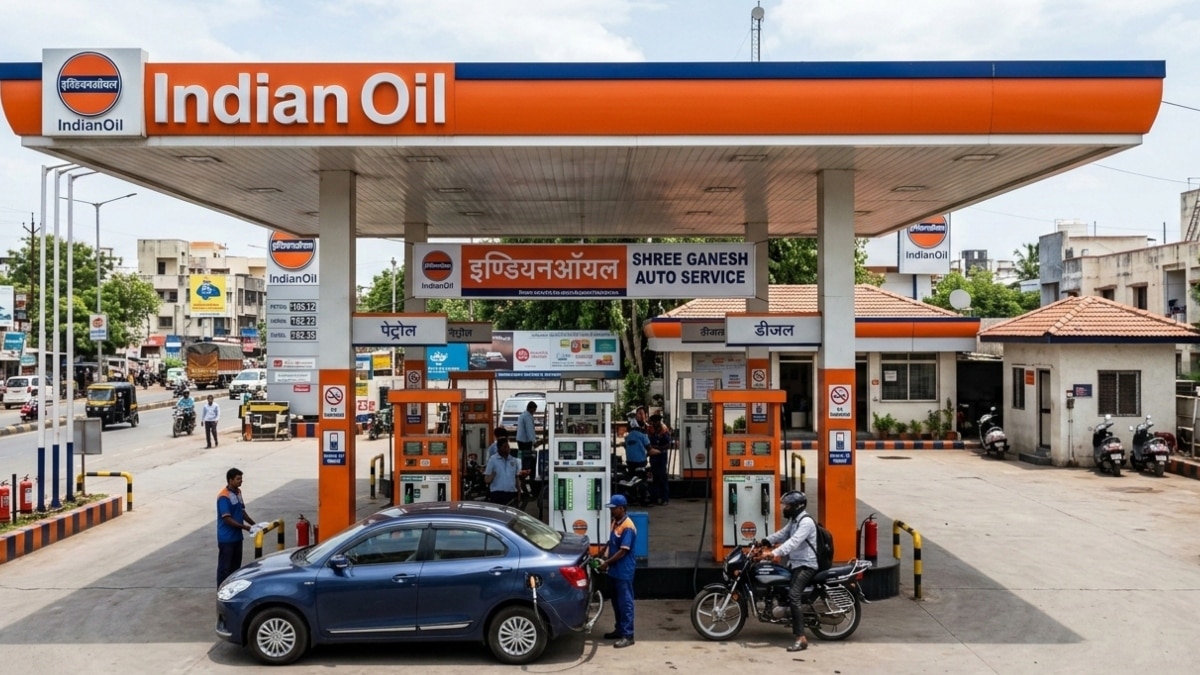
Despite global crude oil prices breaching the $100-per-barrel threshold on March 9, retail petrol and diesel prices in India are expected to remain steady for now as India has access to enough crude oil from alternative suppliers, including Russia, news agency PTI reported citing government officials.
After a short period of aggressive gains, Brent Crude took a sharp U-turn on March 10, sliding 5% to settle below the $90 mark. Authorities are closely monitoring the volatile international oil market amid tensions linked to the ongoing conflict involving Trump, while also working to ensure that fuel supplies across the country remain stable and uninterrupted, the news agency reported.
Petrol, Diesel price today across major India cities
| City | Petrol Price | Diesel Price |
| Hyderabad | ₹107.46 | ₹95.70 |
| Patna | ₹106.11 | ₹91.77 |
| Kolkata | ₹105.41 | ₹92.02 |
| Jaipur | ₹104.72 | ₹90.21 |
| Pune | ₹104.03 | ₹90.49 |
| Bhubaneswar | ₹103.54 | ₹94.76 |
| Mumbai | ₹103.50 | ₹90.03 |
| Bangalore | ₹102.92 | ₹90.99 |
| Chennai | ₹100.80 | ₹92.39 |
| Gurgaon | ₹95.44 | ₹87.90 |
| New Delhi | ₹94.77 | ₹87.67 |
| Noida | ₹94.77 | ₹87.89 |
| Lucknow | ₹94.73 | ₹87.81 |
| Ahmedabad | ₹94.48 | ₹90.16 |
| Chandigarh | ₹94.30 | ₹82.45 |
Brent crude price today
The price of Brent crude, which is the global benchmark, dropped on March 10, the prices fell sharply to below $90, after markets reacted to comments by US President Donald Trump, who told CBS News that he believes the war is “very complete.”
However, Brent crude briefly jumped to $119.50 per barrel on March 9. This was the highest level since the period following Russia’s invasion of Ukraine in 2022. West Texas Intermediate (WTI), the US benchmark, also rose to $119.48 per barrel at one point on Monday.
During the day, Brent crude briefly moved above $100 per barrel before settling near $99, while WTI crude was trading around $96.
Why are oil prices going down today?
The main reason for the fall in oil prices is a change in the political outlook around the conflict. Trump recently suggested that the military operation against Iran is progressing faster than expected and that the war is close to completion. This has led traders to believe that the conflict may not last as long as earlier feared, which has reduced the war premium in oil prices.
At the same time, finance ministers of the G7 countries said they are ready to release oil from their Strategic Petroleum Reserves if required. The possibility of releasing emergency oil stockpiles usually helps calm the market because it signals that governments can step in if supply disruptions become severe, according to a report by Investing.com.
Key factors behind petrol and diesel prices in India
Petrol and diesel prices in India have remained unchanged since May 2022, when the central government and several states reduced taxes on fuel.
Oil marketing companies update fuel prices every day at 6 am based on global crude oil prices. However, even though fuel prices are linked to international markets, they are also influenced by government taxes, pricing policies and unofficial controls.
Global crude prices play an important role in determining fuel rates because petrol and diesel are made from crude oil. India imports a large portion of its crude requirements, which means the value of the rupee against the US dollar also affects fuel costs. When the rupee weakens, fuel prices usually increase.
Impact of the Israel-US war with Iran on global oil prices
The war involving the US, Israel and Iran has affected global oil markets in several ways. One of the biggest concerns has been disruptions near the Strait of Hormuz and attacks on Iranian energy facilities. Oil prices began rising sharply after US-Israeli military strikes on Iran started in late February.
Within less than two weeks, oil prices increased by nearly 50 per cent. Brent crude climbed from around $70 per barrel before the conflict to a peak of $119.50 on March 9.
Israeli and US strikes have targeted oil depots in Tehran, including the Shahran depot. At the same time, Iranian-linked attacks have reportedly hit refineries and desalination plants in Bahrain, Saudi Arabia and Qatar.
Several major oil producers such as Iraq, Kuwait and the United Arab Emirates have also been forced to reduce production because their storage tanks are full and exports have been disrupted while the Strait of Hormuz remains blocked.