



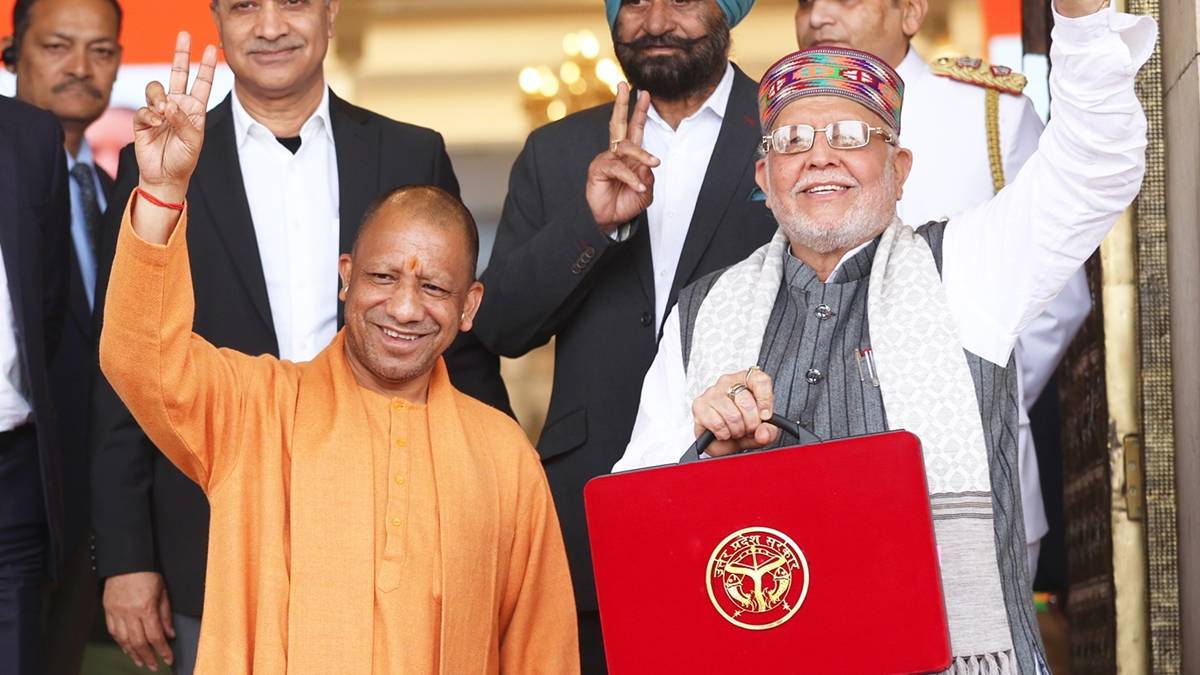
With a Rs 65,926 crore allocation for the energy sector in its FY26 Budget — up 8% from last year — Uttar Pradesh has sharpened its focus on grid reinforcement and clean energy rollout, more than doubling funding for additional energy sources to Rs 2,104 crore even as it keeps the fiscal deficit capped at 3%.
In an interview with Financial Express, state finance minister Suresh Khanna said the Budget signals a shift toward infrastructure-led energy transition, anchored in physical network expansion rather than target-driven announcements.
The state has undertaken extensive grid strengthening over the past three years. Between April 2022 and December 2025, it constructed or augmented 2,410 new 33/11 kV substations, installed over 20,900 distribution transformers and enhanced the capacity of more than 85,000 transformers.
Grid upgrades lift supply hours
“These investments form the backbone required to manage higher loads, including renewable integration,” Khanna said. “We are reinforcing the system in advance.”
Improved infrastructure has translated into higher supply hours. As of December 2025, average power availability stands at around 19 hours in rural areas, nearly 22 hours at tehsil headquarters and 24 hours at district headquarters. The strengthened grid is expected to support rising demand from agriculture, industry and data centres.
On the renewable side, the Rs 2,104 crore allocation for additional energy sources marks a more than 100% increase from the previous year. The focus is on decentralised and urban solar expansion. Ayodhya, Mathura and 17 municipal corporations are being developed as solar cities. Rooftop solar, rural solar street lighting and distributed renewable energy systems are being scaled up across districts.
Utility-scale solar parks with battery energy storage systems are being planned in the Bundelkhand region, indicating a move toward firming renewable supply. “Clean growth will come from assets on the ground,” Khanna said, adding that renewable expansion is being aligned with distribution infrastructure improvements.
Agriculture continues to be a central pillar of the clean energy strategy. The Budget has provided Rs 1,500 crore for PM-KUSUM. The state is implementing individual pump solarisation and feeder-level solarisation of around 1,700 MW. Since April 2022, over 2.41 lakh private tubewell connections have been issued.
“Reliable supply combined with decentralised solar improves farm-level energy security and reduces long-term subsidy pressure,” Khanna said.
Emerging technologies are also finding space in the Budget through institutional support. Two Centres of Excellence for green hydrogen are being established — one at HBTI Kanpur in collaboration with IIT Kanpur and another at MMTU Gorakhpur with IIT BHU — aimed at building capabilities in hydrogen technologies and related ecosystems.
UP ramps up CBG, keeps capex focus
Bioenergy is another focus area. Under the Uttar Pradesh Bio Energy Policy 2022, 36 compressed biogas (CBG) plants have already been set up in the state, the highest in the country. With continued allocation under additional energy sources, the state is seeking to expand CBG production in rural and semi-rural belts, leveraging agricultural residue.
The energy push sits within a broader fiscal framework aimed at balancing expansion with discipline. Capital expenditure in the FY26 Budget stands at 19.5%, reflecting an infrastructure-heavy approach to growth.
The total Budget outlay is pegged at Rs 9,12,696.35 crore, a 12.2% increase over the previous year. At the same time, the fiscal deficit has been capped at 3%, in line with the 16th Central Finance Commission recommendations applicable until 2030-31.
Khanna said the strategy is to crowd in private participation by ensuring grid readiness and policy continuity rather than relying on open-ended subsidies.
By combining large-scale grid reinforcement, decentralised solar expansion, bioenergy scaling and hydrogen ecosystem development within a fiscally contained framework, Uttar Pradesh is positioning itself to support rising power demand while accelerating its clean energy transition.