



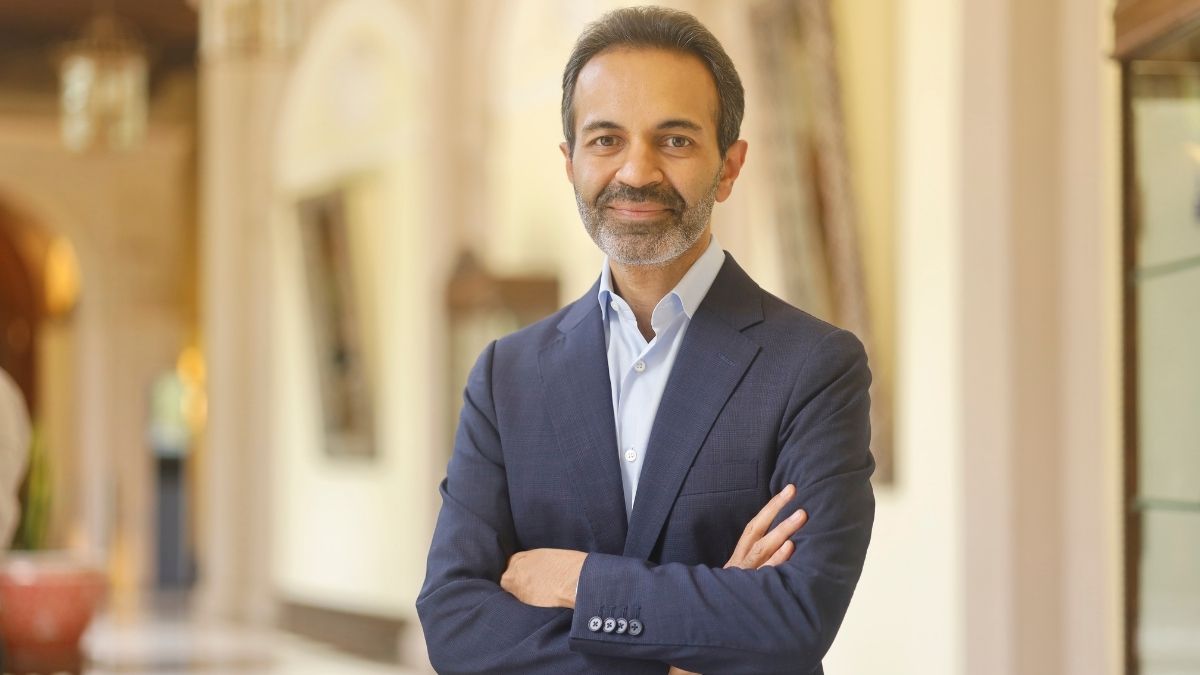
Ashok Leyland posted its highest fourth-quarter and full-year revenue, net profit and Ebitda in FY26. Chairman Dheeraj Hinduja tells Narayanan V that the recent fuel price hike and ongoing geopolitical tensions are unlikely to impact domestic and international commercial vehicle (CV) demand while also sharing the company’s plans for battery pack manufacturing and alternate fuels. Edited Excerpts:
What contributed to record performance in FY26?
Ashok Leyland recorded its highest-ever CV volumes in FY26, which were 13% higher than the previous year and 12% above the earlier peak seen in FY19. Our domestic MHCV truck volumes rose 15% to 1,05,905 units. In domestic buses, we continued to maintain market leadership. Our export volumes also grew 19% year-on-year to 18,082 units, while domestic LCV sales achieved record volumes of 74,322 units.
In addition, our non-CV businesses such as aftermarket, engines and defence also posted healthy growth. The company ended the financial year with a strong cash position, net of dividend, CapEx and investments in subsidiaries. This was also our 13th consecutive quarter of double-digit EBITDA margins. The domestic commercial vehicle industry also grew in double digits, driven by strong consumption demand.
Can domestic demand sustain despite the fuel price hikes?
So far, only about a ₹7 hike has happened and we are still seeing very strong demand on the ground. This could have some impact on the GST rate cut-led demand and the replacement demand that happened earlier. At the same time, ongoing activity in construction, mining and infrastructure continues to provide momentum to our sector. The 10% GST rate reduction improved customer and operator profitability to a large extent. Because of that, operators are now able to withstand even a ₹4-5 increase in diesel prices. We do not think this will affect operator profitability in a significant way.
How has the Gulf conflict impacted your operations?
Operations at our Ras Al Khaimah facility had a slight slowdown for about three to four weeks, but activity has picked up once again and production is moving to higher levels. International markets may continue to see some uncertainty, but things appear to be settling down. Our core international markets remain the GCC, Africa and SAARC regions, while we are also increasingly entering ASEAN markets. Apart from a brief period of disruption in the Middle East, demand has been coming back strongly. We dealt with even more severe supply-chain disruptions during Covid and learned how to cope with such situations. So we remain optimistic, while staying agile enough to respond to changes in the global environment.
Switch Mobility has turned profitable in FY26. What is the road ahead?
Switch India recorded 238% growth in e-bus volumes during FY26 and ended the year as the market leader in the e-bus segment. Switch has several new products under development and during this financial year itself, you will see many new bus models and lighter models as well. Internationally, we fulfilled an order for Mauritius last year and have received orders from Bhutan and Seychelles, with potential for further growth. We are also seeing rising demand from African markets. So apart from growth in India, we believe international sales will also contribute meaningfully during the course of this year.
What is the status of your hydrogen-powered truck programme?
We already have hydrogen buses running in collaboration with NTPC and we continue to work on hydrogen vehicles. However, if you ask about the demand position, in our view it is still at a very early stage because it remains an expensive alternative. At least for the next five to six years, we do not see full-scale demand for hydrogen vehicles. Internally, however, we are preparing ourselves so that whenever customers require hydrogen vehicles, we are in a position to supply them. That has always been Ashok Leyland’s policy to fulfil customer requirements not just in terms of vehicle segments, but also in terms of the fuel technologies they prefer.
What is the update on your battery pack manufacturing plans?
We have taken a major step with the groundbreaking for a greenfield battery pack manufacturing facility in Pillaipakkam, Tamil Nadu. Initially, it will serve our captive requirements.We also believe there will be demand from external customers that we may be able to cater to from this facility. Eventually, we will also consider entering cell manufacturing, though we have not set a timeline for that yet. Much of it will depend on the pace of growth and how quickly we are able to scale up the battery pack business.