



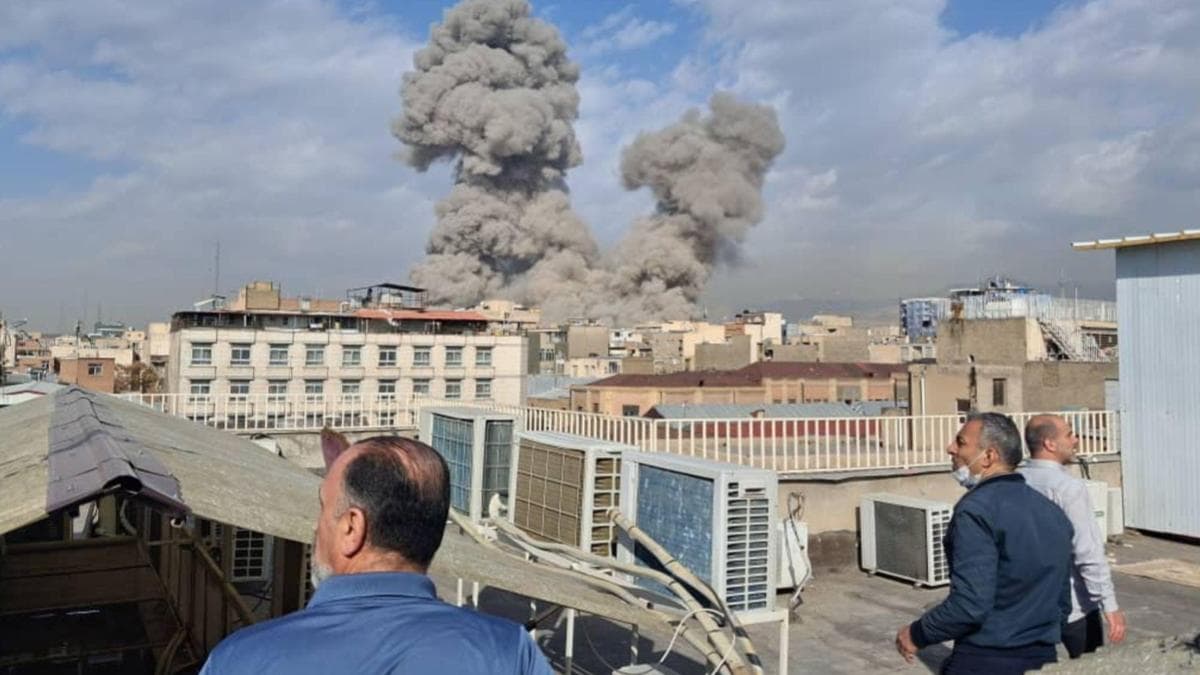
The United States and Israel’s strike on Iranian targets on February 28 has injected fresh volatility into an already fragile West Asian security landscape. The escalation has raised immediate concerns for global energy markets and India’s oil security. While the military dimension of the escalation is still unfolding, the economic battlefield is already visible in the Strait of Hormuz, the world’s most critical oil chokepoint.
For India, the stakes are unusually high as nearly half of the country’s crude imports now pass through the narrow waterway that separates Iran from Oman and the UAE. Any disruption, even temporary, could ripple through India’s economy via higher fuel costs, currency pressure and fiscal strain.
India’s energy lifeline
The Strait of Hormuz carries roughly one-fifth of global oil trade. For India, its importance has grown in recent months. Data from Kpler showed that about 50% of India’s monthly oil imports transited the strait in January-February 2026, up from around 40% in late 2025.
In volume terms, India is currently importing about 2.6 million barrels per day (bpd) through the route, primarily from Iraq, Saudi Arabia, the UAE and Kuwait.
“A disruption at the Strait of Hormuz would have immediate and significant implications for both India and global oil markets,” Moneycontrol quoted Sumit Ritolia, lead research analyst at Kpler, as saying. Beyond crude imports, India also exports refined products through the same corridor, with shipments averaging 74,000 bpd so far this year, Kpler data showed.
The vulnerability has increased partly because India reduced its dependence on discounted Russian crude in recent months and rebalanced toward traditional Middle Eastern suppliers.
Oil market: War premium effect
Even without physical disruption, markets react quickly to geopolitical risk. Crude prices have already firmed by about 10% since the US began positioning military assets in the region. This reflects what analysts describe as a “headline-driven risk premium”.
Equirus Securities estimated that if Iran’s 3.3 million bpd of production is disrupted, prices could rise by 9-15%, pushing crude from a base of $70 per barrel to roughly $76-81.
However, energy markets rarely move in a straight line during crises. The larger risk lies in Hormuz itself. Even the possibility of partial disruption could embed a $20-40 per barrel geopolitical premium, reopening a pathway toward $95-110 per barrel, the Equirus Securities report stated.
The logic is simple i.e. that the oil markets fear chokepoints more than lost barrels. A single tanker incident, mining activity or naval standoff can disrupt insurance, freight and shipping schedules long before actual supply falls.
4 reasons how this will impact India’s interests
Higher crude prices affect India through multiple channels. The country imports more than 85% of its crude requirement, so any sustained rise in global oil prices significantly increases the import bill and widens the current account deficit.
Elevated oil costs also raise demand for dollars, which typically puts downward pressure on the rupee. The impact then filters into domestic inflation, as costlier fuel drives up transportation, logistics and eventually food prices.
At the same time, public finances could come under strain, with the government facing pressure to cut fuel taxes or expand subsidies to cushion consumers and limit the inflationary shock.
Analysts warn that shipping costs and insurance premiums would also rise if the Gulf becomes a high-risk zone. Even if supplies are rerouted from Africa, Europe or the Asia-Pacific, longer transit times would tighten short-term availability.
Strategic responses underway
According to Monycontrol, New Delhi is already moving to cushion potential shocks. According to industry sources quoted by Moneycontrol, India is accelerating purchases from alternative suppliers outside the Gulf and is strengthening long-term term contracts to ensure supply continuity. The report further stated that the country is also preparing to draw from its strategic petroleum reserves (SPR) if needed.
If Middle Eastern supplies become constrained, India may also be forced to increase purchases of Russian crude again, despite ongoing Western scrutiny of such trade.