



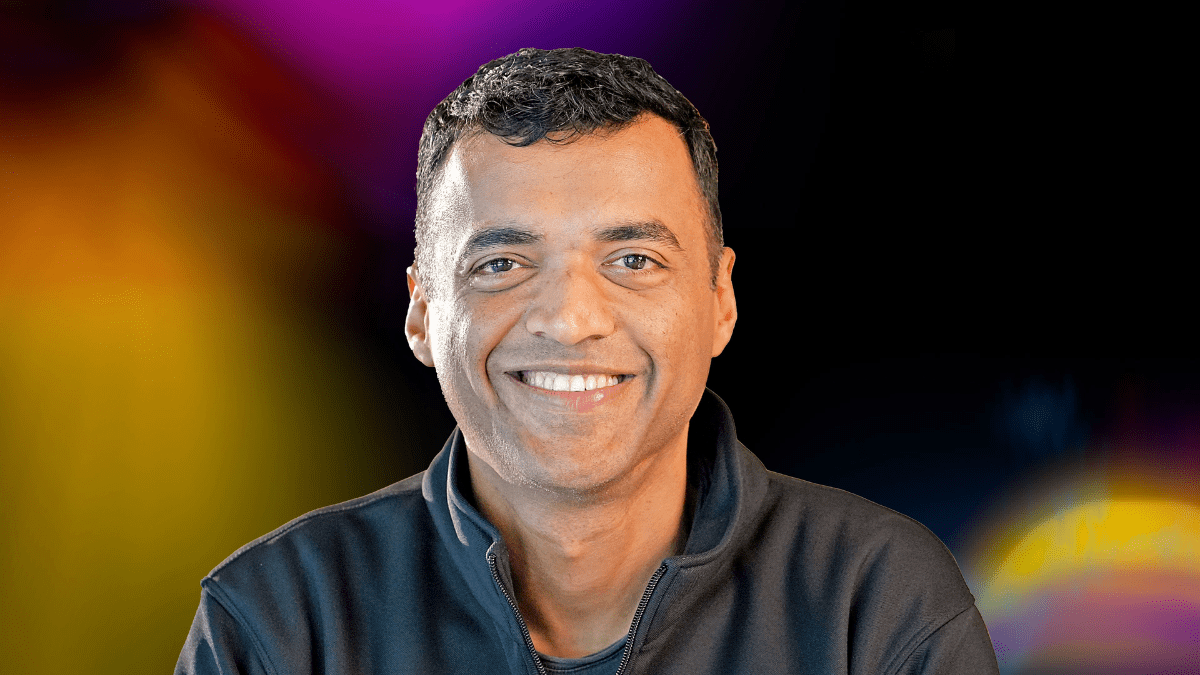
What started as a mystery device on the side of a founder’s head has, in just three months, has become one of India’s most-watched early-stage bets. On Friday, Deepinder Goyal announced that Temple, his neurotech wearable startup, has closed a $54 million friends-and-family funding round at a post-money valuation of approximately $190 million. Hours earlier, he had posted a sweeping hiring call for the company, one that comes with an unusual condition: applicants must have body fat below 16% (for men) and 26% (for women), or commit to getting there within 3 months on probation..
In November 2025, Goyal was photographed at a Feeding India event standing next to Blinkit CEO Albinder Dhindsa. Most people looked at the picture twice, not because of who was in it, but because of what was stuck near Goyal’s right temple. A small, metallic, clip-like device. Nobody knew what it was. The internet did what it does: it speculated wildly.
$190 Million Reality
The device got its formal introduction in early January, when Goyal appeared on Raj Shamani’s Figuring Out podcast wearing it. Clips went viral across Instagram and YouTube. Goyal explained it was called Temple, an experimental wearable designed to measure cerebral blood flow in real time, developed under his personal research initiative, Continue Research, into which he had invested $25 million of his own money. The underlying idea was what he called the “Gravity Ageing Hypothesis” — the theory that because humans spend most of their lives upright, gravity chronically reduces blood flow to the brain, potentially accelerating neurological ageing.
Not everyone was impressed. An AIIMS radiologist publicly called the device a “toy” with “zero scientific standing,” citing the absence of clinical validation. The medical community remained divided: some found the cerebral blood flow angle genuinely interesting as a biomarker, while others questioned whether a skin-mounted sensor could accurately measure deep-brain circulation. Goyal held his ground, positioning Temple as a research instrument first and a consumer product second.
The corporate context around Temple shifted significantly on January 21, when Goyal announced he was stepping down as Group CEO of Eternal — the parent company of Zomato and Blinkit — effective February 1. In his shareholder letter, he cited a desire to pursue “ideas that involve significantly higher-risk exploration and experimentation” — the kind that don’t fit inside a listed public company. Blinkit founder Albinder Dhindsa took over as Group CEO. Temple, widely understood to be the primary driver of his exit, was the clearest signal of where Goyal’s attention was headed next.
Just days before Friday’s announcements, Temple had teased that a consumer waitlist was opening soon, describing itself as “the most important wearable ever made.”
On the fundraise, Goyal noted that every investor is either a personal friend or an early-stage Zomato backer, committed regardless of whether Temple ever commercialises. More strikingly, over 30 Temple employees participated at par valuation, no discount, out of their own pockets. “That’s the kind of belief you can’t buy,” he wrote on X.
Culture or Controversy?
The hiring post, which came first, revealed the technical ambition behind the product — roles spanning analog engineering, embedded AI, brain-computer interfaces, neural decoding, deep learning for physiological metrics, computer vision for facial microexpressions, and neuroimaging ML. Product managers who can work through Figma without needing a designer also made the list.
As for the body fat requirement — Goyal was unapologetic. “We want to be those people, not just serve them,” he wrote. Applications are to be sent to build@temple.com.