



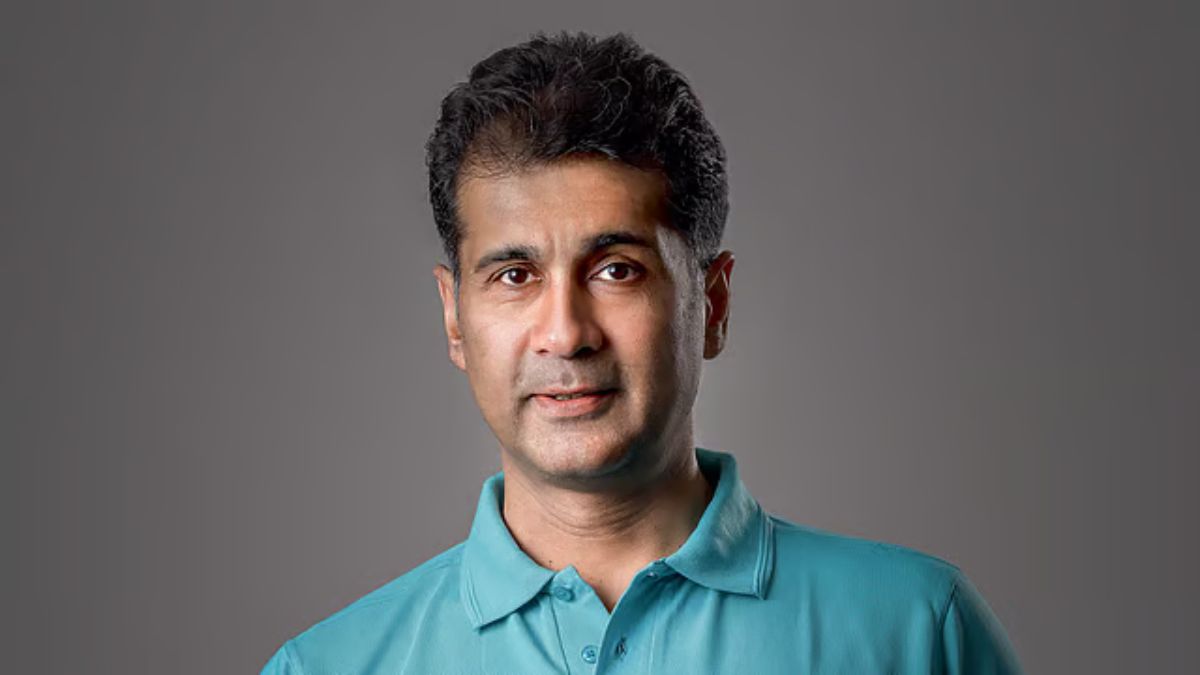
As the Bajaj Group celebrates its centenary, Rajiv Bajaj, the managing director and CEO of Bajaj Auto, remarked that the business has thrived by learning to adapt. This was demonstrated by Bajaj Auto on multiple occasions, including the recent transition to electric vehicles.
He recalled that a few years ago there was considerable debate in the country about whether startups or legacy companies would lead the EV race. While startups were generating significant buzz, legacy companies were often overlooked.
Bajaj took a bet on BET’ (Bajaj Auto, Enfield, and TVS Motors), and now these companies are reclaiming their dominance in the market over the startups. He noted that Bajaj Auto is projected to have half of its domestic sales come from electric vehicles in the near future. “It is not the strongest or the most intelligent who will survive, but those who adapt,” he said.
To navigate the evolving landscape, the company is embracing Adaptive Intelligence rather than just Artificial Intelligence, viewing the latter as a subset of the former. Bajaj explained that AI represents just one step in the ongoing transformation journey that companies undergo every few years.
Bajaj highlighted that Bajaj Auto has demonstrated its capacity to adapt on three occasions: first, when it transitioned from scooters to motorcycles; second, when it expanded from domestic to global markets; and third, when it shifted from internal combustion engines (ICE) to electric vehicles.
Speaking at the Bajaj Auto annual general meeting, he pointed out that the Pulsar brand has grown into an ₹11,000 crore entity, with exports to 108 countries, where it holds a top position in many markets. Electric vehicles now account for 30% of the company’s domestic revenue, making Bajaj Auto the largest combined manufacturer of electric two- and three-wheelers. The Chetak electric vehicle has turned EBITDA positive.
The company has achieved and sustained a 20% EBITDA margin for several quarters—not solely pursuing specific targets but because of its pricing power and unwavering focus on its objectives. Bajaj stated that they intend to be either number one or number two in all the markets they operate in.
To further adapt to a changing world and foster agility, the company is restructuring internally. This includes implementing a flatter management hierarchy with only four levels.
Additionally, they have made a significant shift in performance management, moving away from the bell curve model to encouraging employees to be the best version of themselves. Bajaj believes there is a sculpture within every rock, and it is the responsibility of HR and management to reveal that potential. They are currently identifying high-performing individuals with the potential to rise and become future leaders.