



The Indian economy demonstrated resilience in FY26 amidst high US tariffs and geopolitical developments, with estimates indicating a robust real Gross Domestic Product (GDP) growth of 7.6%, according to official advance estimates. Upward revisions of growth estimates for FY26 and FY27 by major rating agencies boosted confidence.
This performance strengthened India’s position as the fastest-growing major economy globally, driven primarily by strong domestic demand—particularly healthy private consumption and sustained government capital expenditure—and supportive policy measures. External challenges from US tariffs tested the economy’s mettle, and the West Asia war posed stiffer challenges as the year drew to a close.
Real GDP growth estimate
The National Statistical Office’s Second Advance Estimate pegged real GDP growth at 7.6% for FY26. Fitch Ratings recently raised its forecast to 7.5%, citing resilient consumer spending and infrastructure push despite a slight slowdown in early 2026.
Domestic demand remained the cornerstone, with private final consumption expenditure holding steady as a key driver, supported by rural recovery from favourable monsoons and Goods and Services Tax (GST) rate rationalization in September 2025.
Sectoral contributions were broad-based, economists said. Inflation stayed largely benign for much of the year, with headline CPI averaging low levels amid subdued food prices, though pressures began building toward the end of FY26 due to global energy developments.
Fiscal consolidation remained on track, aided by buoyant tax revenues and credit rating upgrades, including S&P’s move to BBB, reflecting stronger macroeconomic fundamentals.
Global uncertainity
The year was marked by significant global uncertainties. US reciprocal tariffs, starting at 25% and escalating to 50% on many goods, impacted export-oriented sectors such as textiles, gems and jewellery, leather, and engineering goods.
While an interim US-India trade framework provided some relief by moderating duties in select areas, the overall drag on merchandise exports was notable. Rating agencies estimated a modest growth impact of 0.3-0.5 percentage points from trade disruptions, though services exports and domestic buffers helped cushion the blow.
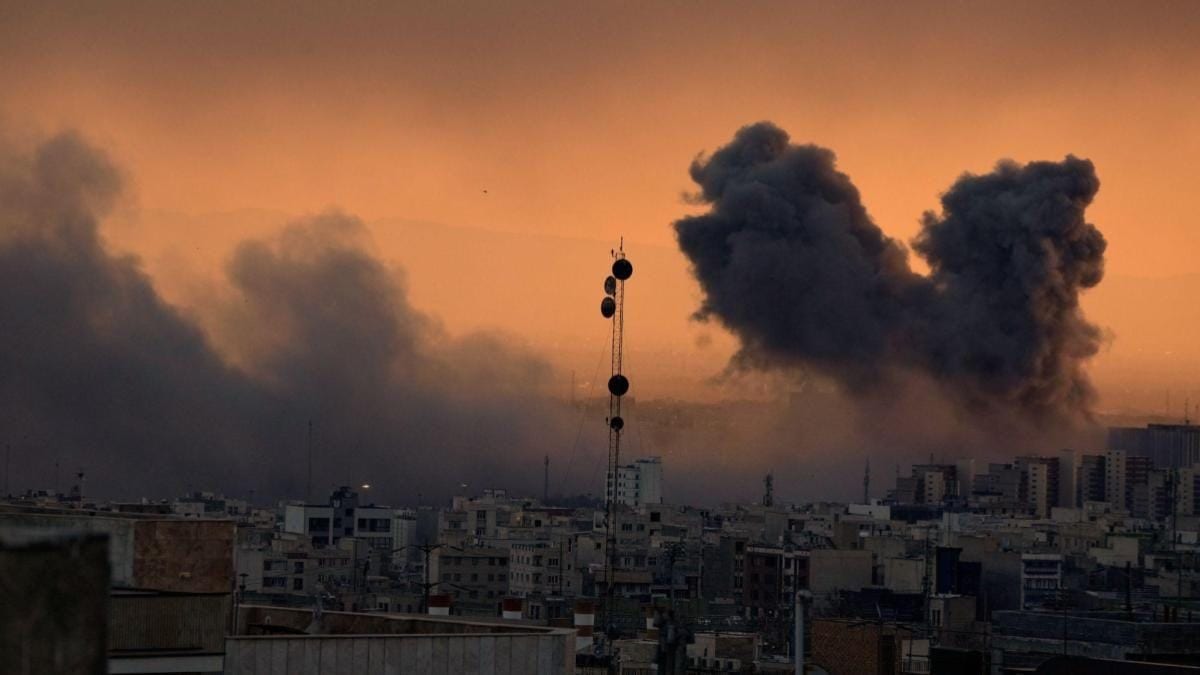
Compounding the pressure was the escalation of conflict in West Asia, particularly involving Iran, which disrupted energy supplies and pushed up global crude oil prices. This late-year development raised concerns over input costs, logistics, and inflationary spillovers.
Economists highlighted risks to the current account deficit, corporate margins in energy-intensive sectors, and overall sentiment. Guara Sengupta, Chief Economist at IDFC First Bank, said the West Asia crisis is unlikely to have any notable impact on the FY26 GDP growth numbers but it will be felt in FY27 Q1.
Looking ahead to FY27, rating agencies and banks project a moderation in real GDP growth to the 6.5-7.1% range. ICRA has forecast 6.5%, lower than the previous estimate of 7.1%, citing elevated energy prices, potential supply disruptions from West Asia, and a wider current account deficit as key dampeners, even as lower GST rates, policy rate cuts, and farm sector support bolster consumption.
Fitch anticipates around 6.7% GDP growth in FY27. Crisil offers a relatively optimistic 7.1%, citing resilient private consumption and a mild pickup in private capex. Meanwhile, the Ministry of Finance recently cautioned “considerable downside” risks to the FY27 GDP growth estimate amidst the West Asia conflict. The government projected FY27 GDP growth estimate to a range of 7% to 7.4% on February 27.
The West Asia conflict also poses a risk to the current account deficit. A $10 per barrel rise in crude could widen the current account deficit by 0.3-0.4% of GDP, per ICRA estimates. If crude oil prices remain at $90 per barrel in FY27, the CAD is estimated at 2.6% of GDP, Sengupta said.
Prolonged West Asia tensions could sustain high oil prices, potentially adding to inflation and subsidy burdens, additionally unresolved trade uncertainties may hurt MSMEs and exports.
“In case there is a short-term impact on production activity due to supply disruptions in FY27 Q1, then full-year FY27 GDP could be 7.0%. This estimate assumes normalization in supplies in FY27 H2 and a likely fall in crude oil prices,” IDFC First Bank said in its report.