



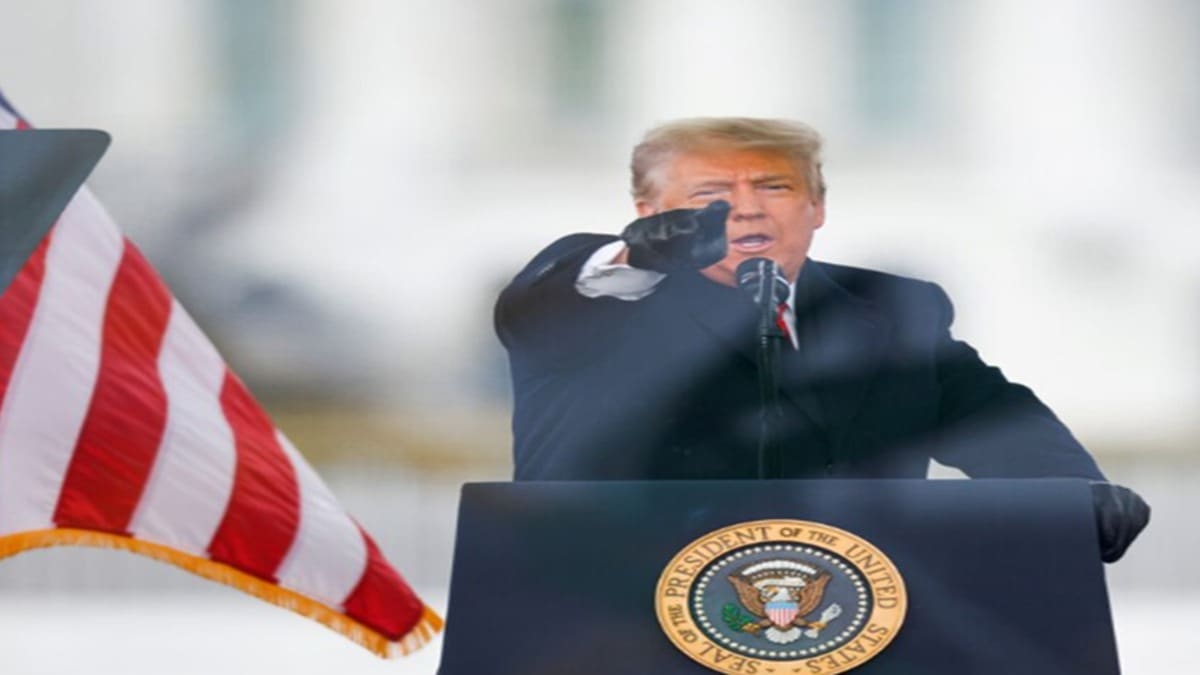
The Supreme Court will debate on April 1 whether President Trump’s executive order to remove birthright citizenship meets constitutional and legal requirements.
The debate around birthright citizenship has deep cultural roots in America. Bruce Springsteen’s classic 1980s song ‘Born In The U.S.A.’ emphasizes citizenship rights for people who fought in conflicts for America. Another successful US Billboard song, James Brown’s ‘Living in America,’ which was prominently featured in the film Rocky IV, fueled patriotic enthusiasm among individuals born in the United States. Yet today, simply being born in the United States may no longer be enough to qualify for citizenship.
Also Read: Will Trump show up at the Supreme Court for Wednesday’s birthright citizenship hearing?
On January 20, 2025, President Trump signed an executive order titled ‘Protecting the Meaning and Value of American Citizenship,’ which states that American citizenship can only be conferred to children whose parents have US citizenship or a US Green Card.
What does the 14th Amendment say?
Following the passage of Trump’s executive order on birthright citizenship, many states filed lawsuits alleging that it violated the Fourteenth Amendment to the United States Constitution.
Here’s what the Fourteenth Amendment of the U.S. Constitution says on Citizenship – The Fourteenth Amendment of the U.S. Constitution guarantees citizenship to all children born in the United States, regardless of race, color, or ancestry. The Fourteenth Amendment’s Citizenship Clause states,” all persons born or naturalized in the United States, and subject to the jurisdiction thereof, are citizens of the United States.”
However, Solicitor General D. John Sauer, in Supreme Court filings, contended that the 14th Amendment was intended to provide citizenship to freed slaves and their descendants, excluding children of undocumented or temporarily present parents.
He stated that the view that the Constitution guarantees citizenship by birth has been incorrectly interpreted for over a century, and the president is now attempting to remedy that “misreading.”
Who does Trump’s order actually affect?
Trump’s Executive Order prevents children of unlawfully or temporarily present mothers from acquiring U.S. citizenship unless the father is a Lawful Permanent Resident or U.S. citizen. That means, Trump’s executive order on birthright citizenship will ensure that parents on valid non-immigrant visas, including H-1B ( worker visa) and F-1 visas ( student visa), can apply for dependent visas for their newborn children.
Does Trump expect to win?
Is it going to be a negative outcome for Trump in the birthright citizenship case? The president recently condemned the Supreme Court following a decision that invalidated certain levies, criticizing two of the conservative justices he appointed as “bad for the country.” Trump perhaps anticipates a negative outcome in the birthright citizenship case, expressing on Truth Social that the Supreme Court “will find a way to come to the wrong conclusion.”
What happens if SCOTUS rules in Trump’s favour?
In case SCOTUS rules in favour of Trump, US authorities like DHS and USCIS have their implementation plan ready. The Social Security Administration also has its implementation plan in place. Currently, for a Social Security Number, the applicant can prove US citizenship by producing a birth certificate indicating a birthplace in the United States. However, once Trump’s EO goes into effect, proving US citizenship by showing the birth certificate may not be enough.
To comply with the EO, SSA will require evidence that such a person’s mother and/or father is a U.S. citizen or in an eligible immigration status at the time of the person’s birth.
In short, proving who your parents are and what their immigration status was will become a key part of establishing your own citizenship.
Disclaimer: This article is for general informational purposes only and does not constitute legal, immigration, or tax advice. Immigration laws and government policies are subject to frequent change without notice. While we strive to provide accurate updates, readers are strongly advised to verify the latest requirements with the official embassy, consulate, or government portal of the respective country. Financial Express is not responsible for any decisions made based on this information. For personalized guidance, please consult a qualified immigration attorney or a certified professional advisor.