



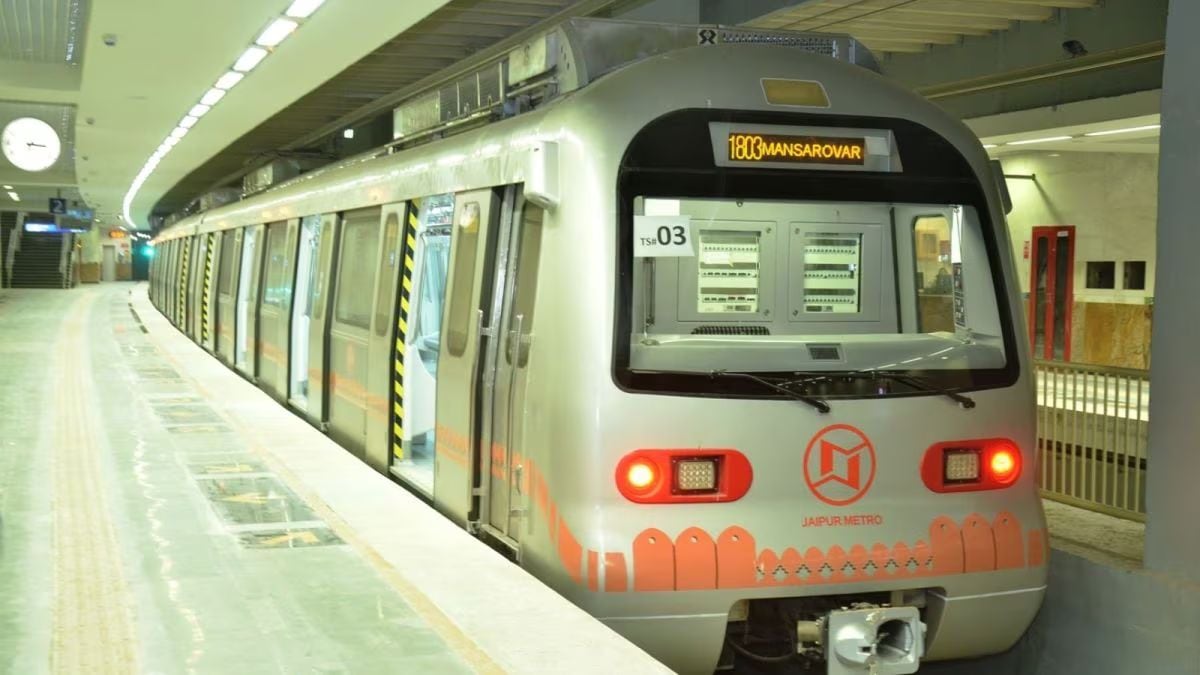
In a notable development that’s expected to boost mobility in the capital of Rajasthan, the Union Cabinet has officially approved the Jaipur Metro Phase 2 project. With a total investment of Rs 13,038 crore, this expansion aims to slash rising traffic congestion and growing pollution in the pink city.
Phase 2 is designed as a massive North-South corridor spanning 41 kilometres. Once operational, it will connect Prahladpura to Todi Mod, making the daily commute much smoother for thousands of residents.
The phase 2 expansion project will contain 36 stations in total, 34 of which will be elevated, while 2 will be built underground to navigate high-traffic areas. The route will cover vital hubs including Sitapura Industrial Area, VKIA, Jaipur Airport, Tonk Road, SMS Hospital, and Vidhyadhar Nagar.
The development was announced by PM Modi on his official X page. In the post, PM Modi had said that initiation of the Jaipur Metro Phase-2 project is a significant step towards unlocking sustainable urban growth for the capital.
“It will expand connectivity, reduce congestion and enhance Ease of Living,” PM Modi added.
Cpacity of the new corridor
What does this mean for the average commuter? Beyond just new tracks, the project focuses on a “unified network.”
Phase 2 will feature a direct interchange with the existing Phase 1 at Khasa Kothi. The plan includes underground stations specifically for the Jaipur Airport area, making air travel much more accessible via public transport.
While the current Phase 1 (Mansarovar to Badi Chaupar) handles about 60,000 riders daily across 11.64 km, Phase 2 will significantly multiply the network’s reach.
Behind the Scenes: Funding & Execution
The project will be executed by Rajasthan Metro Rail Corporation Limited (RMRCL), a joint venture between the Central and State governments.
The government highlighted that the project has an Economic Internal Rate of Return (EIRR) of over 14%, signalling that it is highly viable and socio-economically beneficial.
This expansion aligns with the Rajasthan TOD (Transit Oriented Development) Policy-2025, focusing on reducing carbon emissions and creating a sustainable urban environment.
Once completed, this project is expected to significantly reduce the travel time between the industrial hubs of Sitapura and the residential blocks of Vidhyadhar Nagar, potentially saving daily commuters up to 40-50 minutes during peak hours