



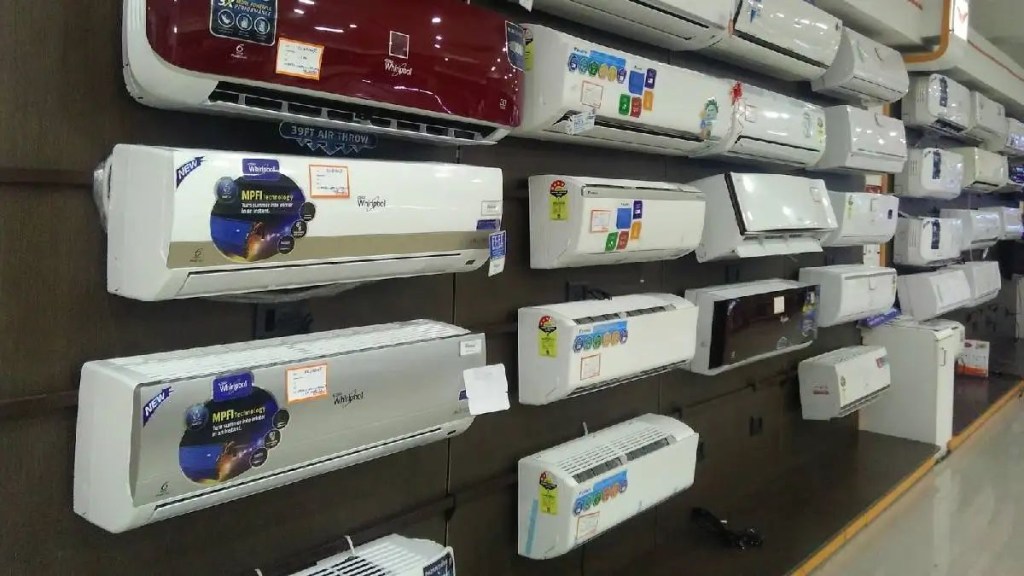
An early and sharper winter has reshaped India’s white goods market, pushing consumers towards heaters, geysers and air purifiers while leaving manufacturers saddled with excess inventories of air conditioners and refrigerators—just weeks before tighter energy efficiency norms kicked in from January 1, 2026.
Sales of heating appliances jumped nearly 40% in December 2025 from a year earlier, according to multiple manufacturers. Demand for air purifiers rose 30% year-on-year, electronic retailer Croma said, with Delhi-NCR accounting for nearly three-fourths of its purifier sales.
Geyser sales in India
Geyser sales grew 12-15% in the December quarter, while room heaters posted 15-18% growth, aided by colder-than-usual conditions across north India. Local traders reported a 40-50% surge in late-December sales, with markets such as Chandni Chowk expecting Rs 20-25 lakh in seasonal revenue from heating products alone.
This consumer pivot came at the cost of cooling appliances. Air-conditioner and refrigerator sales were hit at a time when manufacturers had anticipated pre-buying ahead of revised Bureau of Energy Efficiency (BEE) norms, which effectively downgrade existing star ratings and raise prices of new models.
“Nearly 15 days of inventory remained unsold till Christmas across most northern wholesalers as the early winter discouraged advance purchases of cooling products,” a senior executive at Blue Star said. Consumers instead prioritised heaters, geysers and air purifiers, cannibalising AC and refrigerator demand across Delhi, Haryana, Punjab and Uttar Pradesh, the executive said.
Inventory clearance
The slowdown forced manufacturers and retailers into last-minute inventory clearance. A significant portion of older, pre-norm stock remained unsold until the final week of December, prompting companies to explore bulk tie-ups with commercial buyers and quick-commerce platforms to liquidate inventory.
The impact is showing up in annual numbers. Most air-conditioner makers are expected to report a 10-15% decline in 2025 sales over last year, after a relatively mild summer and unseasonal rains reduced peak-season demand.
Under the new Bureau of Energy Efficiency norms, 2025-model 5-star ACs are now reclassified as 4-star units, while 3-star models drop to 2-star. Meeting the higher benchmarks requires costlier components, pushing AC prices up by 5-10% and refrigerator prices by 3-5% from January.
Blue Star’s Managing Director B Thiagarajan said that a 2025 5-star unit becomes a 4-star post-change, with new models costing 10% more to meet efficiency requirements. Godrej’s Kamal Nandi saw a 5-7% price hikes for ACs, while Voltas’ Jayant Balan highlighted the shifting consumer behaviour toward pre-buying and early purchases to mitigate expected price rises. Daikin’s Kanwal Jeet Jawa affirmed industry support for the new efficiency norms despite price rises approaching pre-GST levels.
Inventory normalisation has now become the central challenge for white goods makers in the December quarter. While companies had planned production and channel pipelines around steady liquidation of older stock, the early winter disrupted those assumptions, leaving excess inventory and tightening dealer capital.
Godrej emphasised driving sales through attractive pricing on old stock by trade partners while maintaining controlled channel pipelines without liquidation pressure. Blue Star’s management saw potential flat industry growth at best for the year, prioritising inventory normalisation amid dealer capital constraints. Havells had planned to regulate production tied to liquidation rates, expecting normalisation by quarter-end. However, that has not been the case so far.
For the industry, the unexpected cold spell has underscored a growing vulnerability: when weather, regulation and consumer behaviour collide, demand forecasting can unravel quickly—and the costs show up first on the balance sheet.