



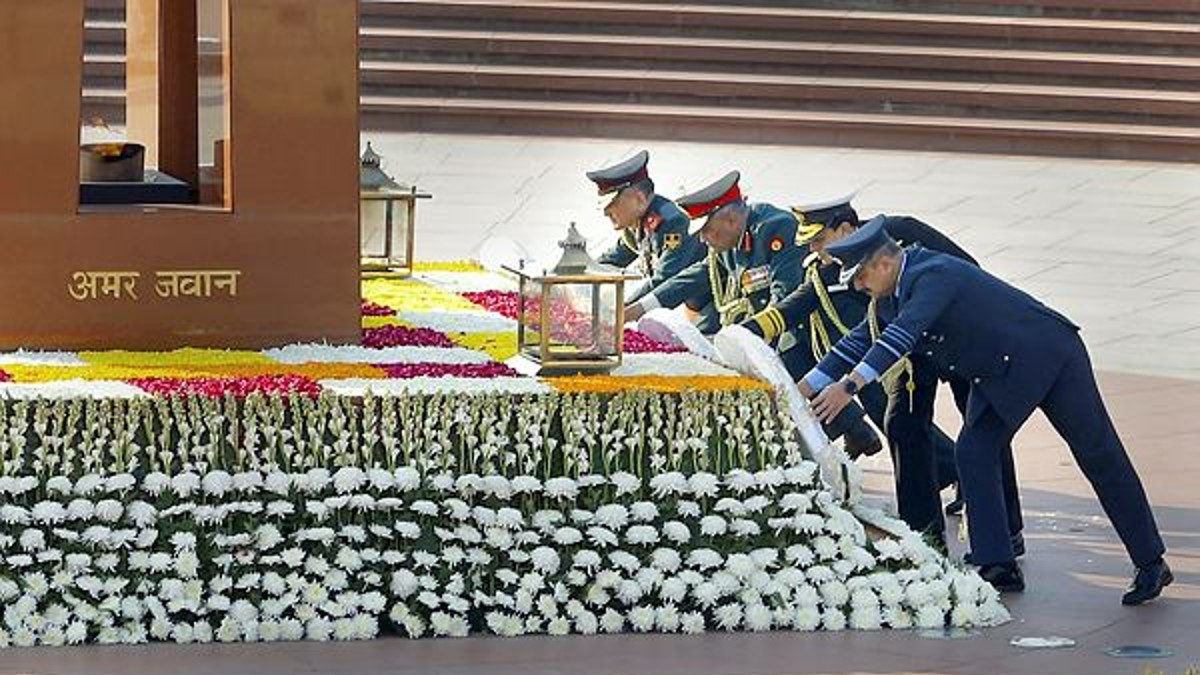
Each year December 16 is commemorated as Vijay Diwas or Victory Day. This day marks the end of the 13 days 1971 Indo-Pak war and Liberation of Bangladesh. Victory was declared by India on this day following the signing of Instrument of Surrender.
Historical Background to what led to the war
As reported earlier, following the partition of India in 1947 at the end of the British Raj – India and Pakistan – two countries were formed and East Pakistan was part of the latter. There was a geographical disconnect between then East Pakistan – now Bangladesh and West Pakistan (the present Pakistan).
Besides the geographical disconnect between the two, in terms of administration East Pakistan was overlooked, and then there was a cultural conflict.
It all started in late 1960s when leaders such as Sheikh Mujibur Rahman (known as the founder of Bangladesh and the father of Prime Minister Sheikh Hasina) had started protesting against these policies and he played a very important role in the formation of Awami League and soon demanding freedom and greater autonomy. Out of 162 seats the League won 160 seats in the 1970 elections in East Pakistan and did not win any in West Pakistan. However the clear majority that Mujib had in the House to become the Prime Minister was not recognised on March 25, 1971 and the military of Pakistan started a crackdown that ended in a mass slaughter of Bengalis.
Each year, March 26 is celebrated as Independence Day in Bangladesh.
Role of India in 1971 War
India had already extended its support for the League previously and without direct intervention on May 15 `Operation Jackpot’ was launched. And this operation was about arming, supplying, recruitment, training, and giving advice to Mukti Bahini fighters who were already engaged in guerrilla warfare against the Pakistan military.
On December 3, 1971, Pakistan Air Force launched pre-emptive strikes towards Western India and this included – Sirsa, Agra, Amritsar, Pathankot, Srinagar, Avantipura, and Ambala. And on December 4, India formally declared war on Pakistan. This was a short war which was intense and fought on both Eastern and Western front.
Field Marshal Sam Manekshaw of India was the most important figure in this war and it was planning and strategy which helped in securing one of the quickest victories in recent military history.
Based on the information available in the public domain, on December 6, 1971, India had formally recognized Bangladesh as an independent nation and two days later, an attack was launched on Karachi by the Indian Navy. Between December 12-16 Indian Forces pushed through all the way to Dhaka and ended the war with total victory.
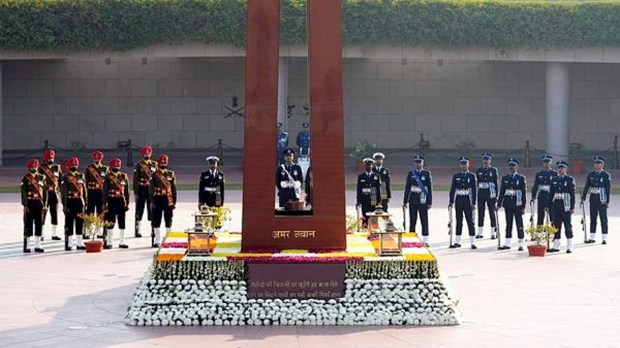
Fire and Fury Corps celebrates Vijay Diwas
Today, homage was paid to the brave hearts that made supreme sacrifice in the line of duty during the 1971 War. On behalf of all the ranks of the formation, Lt Gen Anindya Sengupta, AVSM, YSM, General Officer Commanding, Fire and Fury Corps laid a wreath at the Leh War Memorial. A large number of troops from Leh Garrison and senior military officers were present during the wreath laying.
Nation First
Lt Gen Anindya Sengupta on this solemn occasion called upon all ranks of Fire and Fury Corps to continue to dedicate themselves in the service of the nation.
Udhampur, Northern Command
At the Udhampur Military station, Lt Gen Upendra Dwivedi, GOC-in-C Northern Command today (December 16, 2022) dedicated the day in remembrance of the supreme sacrifice by the Indian Armed Forces in the 1971 War.
He paid tributes to the soldiers who made the supreme sacrifice and also laid a wreath on behalf of all the ranks of Northern Command. Later he addressed all ranks, and highlighted the dogged determination, indomitable courage, and unflagging zeal which were exhibited by all ranks during various operations.
Those who were present during the ceremony included officers, veterans and serving soldiers.