



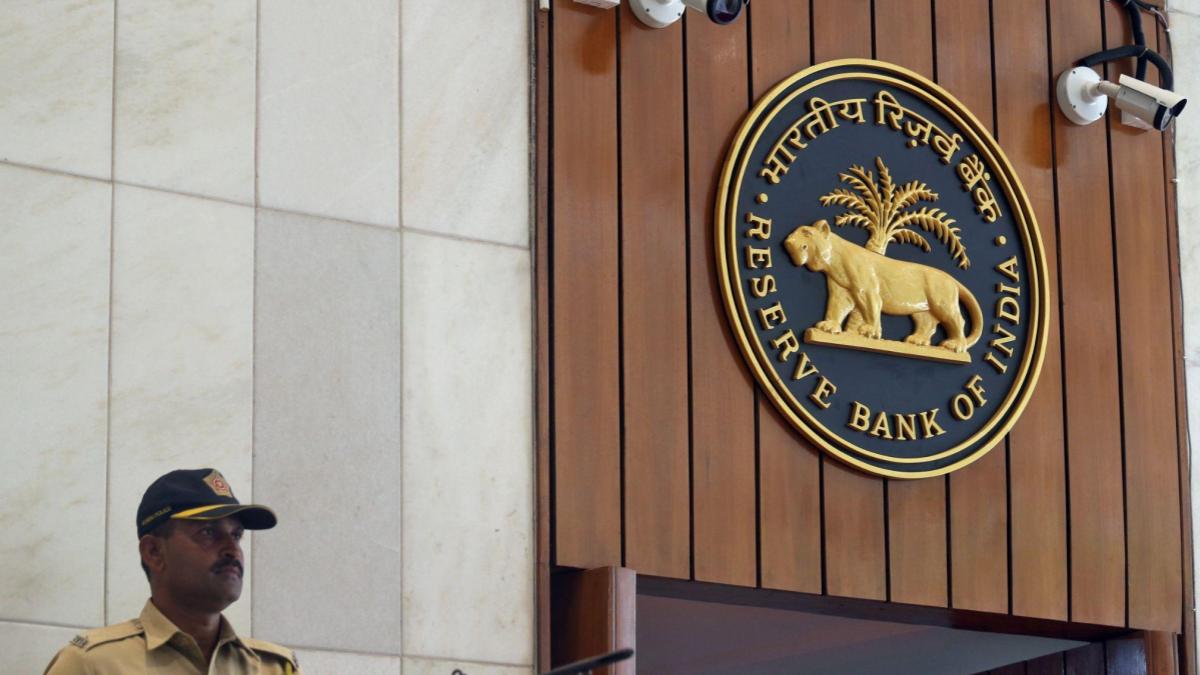
The Reserve Bank of India has proposed changes to its scale-based regulation framework for NBFCs, anchoring classification to asset size. The regulations are focused on the functional space of these firms & the size-based layering in no way negates the same, writes Sebastian Morris
l What are the proposed changes?
THE RESERVE BANK of India (RBI) has proposed a reclassification of non-banking financial companies (NBFCs) which will have a major impact on how they will be regulated. Essentially, it has simplified the regulation, by moving into a size-based classification with the assets under control being the principal measure of classification.
Three layers have been created with the base layer defined by assets under control less than Rs 1000 crore, the middle being above this. Above the middle layer, there is to be an upper layer (UL) defined as the top 10 (being automatically included) plus those scoring high on both parametric scoring (weight 70%) and qualitative scoring (30% weight), covering size and leverage, inter-connectedness, complexity, liability profile, group structure, and segment penetration.
Now, the RBI has proposed that NBFC-ULs be defined as all NBFC crossing the threshold of Rs 1 lakh crore. Classification in a higher category would hold for five years even if the NBFC’s asset size falls to push it into a lower category. It also proposed a top layer to shift NBFCs that pose high systemic risks for closer monitoring and stricter norms. This scale based regulation (SBR) has been widely hailed by the industry.
l Why NBFCs need to be regulated?
UNLIKE BANKS, NBFCs cannot offer current or savings accounts to the public or raise funds through short-term deposits, but can raise their resources in the debt markets. The regulation of banks and financial firms has evolved over a period of time and every crisis has helped to uncover newer avenues of risk which have been addressed. Some early NFBCs emerged to bypass these requirements, but then rules have caught up with them as well.
With banks focusing on securitisation of long-term loans, it is NBFCs that have leveraged funds to give high returns by investing in these securitised assets. They carried vast risks, transmitting them to the banks as well during a financial crisis. The global financial crisis of 2008 led to innovations in macroeconomic interventions, and in shoring up collapsing financial institutions and banks.
l Proposed changes vs current approach
THE NBFCs differ hugely in their function as well as size. The RBI’s approach has been to use a functional classification of NBFCs which is very important. It has used “no customer interface” as an important criteria. Similarly, the aspect of “use of public funds” besides size to reduce the costs of regulation. It has now allowed a Type I category for NBFCs that have assets less than Rs 1000 crore but additionally, with no customer interface whatsoever – i.e., no public funds (even market based), no unfunded relationships, no distribution of financial products, no investment in related parties —to deregister themselves. This would allow many small family houses (investment funds) of small size to be outside the ambit of RBI’s regulations. Family houses have been increasing in numbers as the number of millionaires have grown.
l NBFCs now span across segments
THE ADVENT OF technology-based payment firms, data (account) aggregators, and peer-to-peer lending entities, etc, has also led to a proliferation of firms in the NBFC space. Similarly, there has been a continued expansion of micro credit, factoring services, housing finance, developmental finance— especially infrastructural — companies, necessitated by the growing economy. In addition, the economies of specialisation in credit assessment, and the government’s support to developmental spending and public private partner-ships have created the need for a large variety of operators. Again, the government has allowed hitherto sectorally-dedicated DFIs like the Power Finance Corporation to cover the infrastructure space as such which creates a need to bring government NBFCs under the RBI’s regulation more integrally.
l Focus on functional space of NBFCs
THE RBI’s regulations are focused on the functional space of these firms, and the size based layering in no way negates the same. The aspects of customer facing, deposit taking, non-operational holding, exposure to markets, net-owned funds and function and purpose drives the regulations. The regulations take the form of rules/policies regarding boards and their composition and membership, net-owned funds, leverage where applicable, credit scores, exposure limits, activity constraints and so on. These are backed by oversight, regular reporting, fines and penalties for transgressions, many of which are of a punitive nature.
Above all, there is a consultative process that has been introduced. So even if there are unnecessary irritants, these are likely to be addressed. The idea that rules ought to be simplified has found acceptance. Now the regulations need to be even more functional to the primary tasks of NBFCs which vary enormously across NBFCs, and of the risks — both systemic and immediate — that they can create.
The writer is senior professor, Centre for Public Policy and Governance, Goa Institute of Management
Disclaimer: The views expressed are the author’s own and do not reflect the official policy or position of Financial Express.