



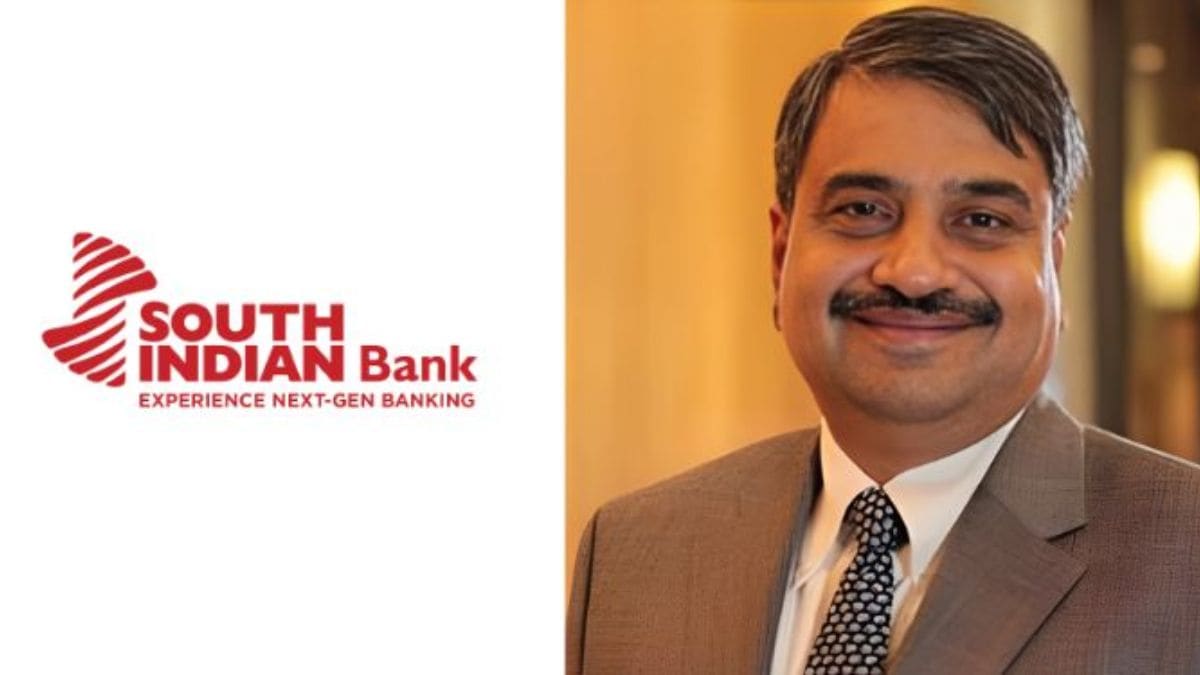
South Indian Bank expects its FY26 credit growth guidance of 12% to see some upside, led by traction in retail and MSME loans. Managing Director and CEO PR Seshadri tells Narayanan V about the bank’s credit outlook, record Q3 performance and the impact of rate cuts on margins. Excerpts:
What factors contributed to record Q3 profit?
Our net profit grew 9% year-on-year to a record ₹374 crore. This was driven by two factors: Growth in advance and a change in the advances mix. Advances grew about 11% to ₹96,764 crore. The growth was not limited to corporate loans but was spread across portfolios. This ensured that our interest income grew 6% on a quarter-on-quarter basis.
Slippages declined to a record low of ₹155 crore, while recoveries were strong at ₹350 crore. All these enabled us to deliver another good quarter. There were other supporting factors as well. The cost of funds declined to 4.77% from 4.84%. CASA balances grew by 15% to Rs 37,640 crore.
Pressure on margins?
Net interest income was flat at ₹882 crore. Is there pressure on margins?
The net interest margin (NIM) in the first quarter of FY25 was 3.26%. By Q2, it had come down to 2.8% as there was a cumulative 100-bps change in the repo rate during this period. In Q3FY26, the NIM improved to 2.86%, a 6-bps increase, even though there was a 25-bps repo rate cut in December.
We transmit repo rate changes on a T+1 basis, which means rate cuts become effective the very next day. This is a slight disadvantage for the bank in the near term. However, we also benefit faster than other lenders when rates move in the opposite direction.
Seshadri on rate cut
The 25-bps repo cut in December has partially played out in the third quarter, with the full impact being expected in the quarter to March 2026. If there are further rate cuts, they will also have an impact on our margins, but we are reasonably confident of managing this.
How do you plan to protect margins?
We are moving from low-yielding to higher-yielding assets. We have the flexibility to reduce corporate exposure and increase retail and gold loans, which offer slightly higher yields. We were smaller players in these segments. We have re-engineered our processes and systems to engage in these businesses.
That is enabling us to grow market share as well as help manage the NIM more proactively. Part of the impact from rate reductions will also be offset as deposits come up for repricing. Having said that, externally benchmarked repo-and T-bill-linked loans account for about 42–43% of our book, while MCLR-linked loans are around 6%, with a small base-rate book.
Roughly half of our loan book is on fixed rates, and our externally benchmarked portfolio is smaller than that of many of our peers, which enables us to manage margin pressures better.
What is your credit growth outlook?
We have been saying that we will grow north of 12%. Even in the third quarter, we grew by about 12%, so we continue to stick to that guidance.
There could be some upside surprises depending on the external environment. Our focus is more on ensuring that the P&L works for us, rather than growing the balance sheet alone. We want to ensure that growth translates into profitable business and positions us better for the future.
We intend to grow our MSME and retail portfolio and bring down the share of corporate loans to about a third of the balance sheet from over 40% currently.