



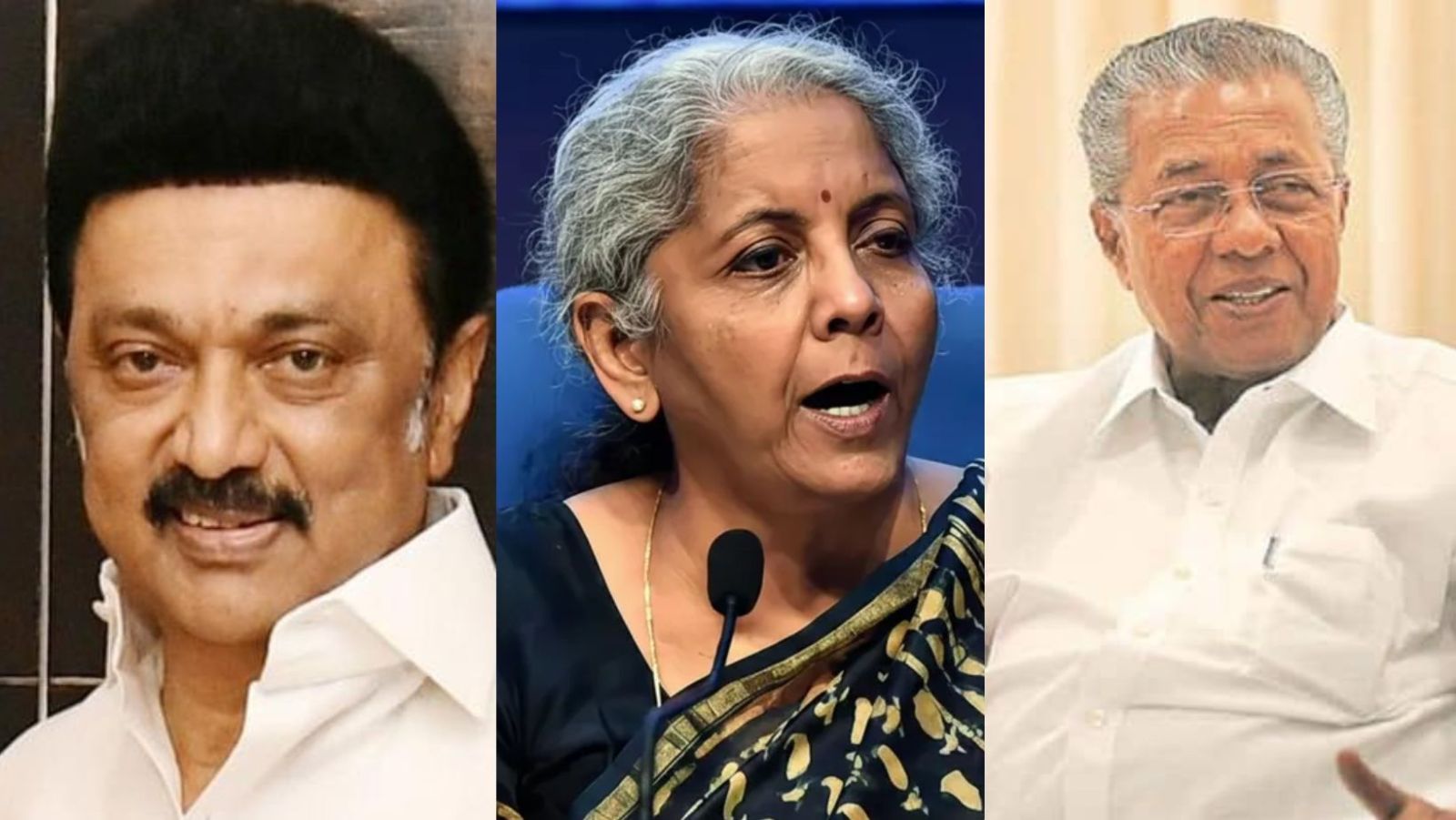
As India counts down to the Union Budget 2026-27, under the limelight are two southern states heading into Assembly elections this year Kerala and Tamil Nadu. Beyond the usual fiscal expectations, the Budget has taken on sharp political overtones.
In both states, the question dominating public debate is not just how much they will get, but whether the Centre will finally acknowledge long-standing grievances or simply offer last-minute, voter-friendly sops. Union Finance Minister Nirmala Sitharaman is set to present her ninth Budget at a time when accusations of “political budgeting” are already flying thick and fast.
What are Tamil Nadu’s expectations from the budget?
From Chennai’s policy circles to political rallies in Madurai, the narrative is divided, is New Delhi extending genuine partnership, or dangling a pre-election promises to a state it has allegedly ignored for years? The ruling Dravida Munnetra Kazhagam (DMK) has spent the past year pushing the argument of “fiscal step-motherly treatment.” The reason behind the claim is the gap between what the state contributes to the Centre and what it receives in return.
Ahead of the budget, DMK MP Kanimozhi said,” They have to give a lot of funds to Tamil Nadu, at least due to elections close now.”
Party spokesperson Dharanidharan told The Economic Times, “Tamil Nadu gives one rupee, we get 29 paise back, but states such as UP get about Rs 3 rupees plus sectorally sponsored schemes for one another Rs 4.5 rupees more.” He further accuses the BJP-led Centre of politicising governance itself, “The BJP is using politics as a basis for everything from foreign policy to domestic politics and that’s ruining the growth of the country.”
A key flashpoint has been the alleged squeezing of Tamil Nadu’s finances. The state government has repeatedly claimed that these delays are being used as leverage to push the National Education Policy and its three-language formula a politically sensitive issue in Tamil Nadu.
The DMK has also alleged arbitrary allocation, “Gujarat gets about Rs 400 crores, Tamil Nadu gets only Rs 20 crores, even states that always produce Olympians. So this arbitrary allocation of funds is a problem.”
Disaster aid controversy
After severe floods in Tuticorin and Chennai, the Centre’s claims on relief assistance triggered another confrontation. “They lied. What did they like? They, that they have given Rs 900 crores, but that was the money which every state, irrespective of us, cyclone or disaster has happened, and all the states are supposed to get.”
In contrast, the DMK points to Gujarat receiving additional aid even after relatively lighter rainfall, “On the contrary, Gujarat, when it got only 25 centimetres of rain, they got about Rs 2000 crores, additional to what is allocated to every state… which Tamil Nadu did not get,”Dharanidharan explained.
Kerala: High expectations after years of disappointment
In Kerala, the anticipation is equally intense, shaped by a sense of repeated neglect. With Assembly polls nearing, there is a strong belief that the Centre may finally soften its stance. In January, Prime Minister Narendra Modi visited Thiruvananthapuram to lay the foundation stone and flag off multiple projects.
He launched the PM SVANidhi Credit Card, disbursed loans to one lakh beneficiaries, and flagged off three new Amrit Bharat Express trains, gestures widely seen as politically significant.
Congress MP Shashi Tharoor said ahead of the budget, “We have a lot of issues in Kerala, and with the elections coming in about three months’ time, we expect a lot from the budget. We will all be listening attentively… We have seen the economic survey, which shows growth. But that growth should not be jobless growth. We need jobs for the young people of this country. What would the government do to generate employment? That is the main thing I am going to look forward to in the Finance Minister’s speech
Kerala Finance Minister K.N. Balagopal submitted a detailed letter to the Centre listing 29 demands. Among them a Rs 21,000-crore special fiscal correction package, Rs 1,000 crore to mitigate human-animal conflict, a Defence R&D Corridor and a Rare Earth Corridor and an dditional borrowing space of 0.5% of GSDP
The state has also reiterated long-standing demands such as an AIIMS, the Sabari Rail project connecting Angamaly and Erumely, and rescue packages for cashew, coir, and handloom sectors. Kerala has additionally proposed “catastrophe bonds” to deal with recurring natural disasters.
Kerala’s business community is closely watching the Budget for relief to export-oriented sectors. According to the state government, US reciprocal tariff measures have hit marine products, spices, cashew, and textiles hard, causing an estimated annual loss of Rs.2,500 crore.
Why expectations are high
In the 2025-26 Union Budget, Kerala received less than Rs 40,000 crore out of the Rs 25 lakh crore earmarked for states, far below expectations. A requested Rs 24,000-crore special package was denied. Major demands such as national project status for the Vizhinjam International Seaport, an AIIMS, a railway coach factory, and special rehabilitation packages for Wayanad and Mundakkai-Chooralmala did not make it to the Budget.
Tamil Nadu, too, expressed dissatisfaction last year regardless receiving Rs 49,754.95 crore as its share of central taxes and access to 50-year interest-free capital expenditure loans. Key demands such as Metro Rail projects for Coimbatore and Madurai were left out, which led Chief Minister M.K. Stalin to accuse the Centre of “partiality.”