


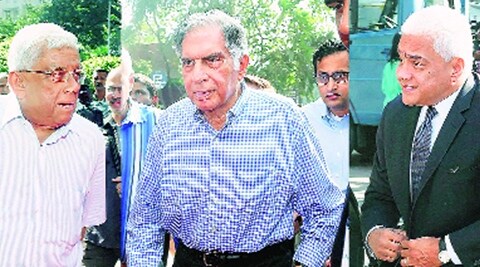

With Cyrus Mistry springing a surprise on Monday evening by announcing his decision of stepping down from the six listed Tata Group firms, the extraordinary general meeting convened to remove him from the board of Indian Hotels Company (IHCL) on Tuesday turned into a tame affair with shareholders talking about the need for a compromise and rapprochement as any litigation may be harmful for the company.
While stepping down from the boards of the six firms, Mistry on Monday had said that he will take legal recourse to secure the interests of the Tata Group and regain lost ethical ground.
Though there was concern about any litigation being harmful for the company, the air at the EGM was a relaxed one with Mistry having done the needful and there was no voting and no demand for angry explanations over his removal. In fact, there were suggestions that veteran banker Deepak Parekh, who’s an independent director in the company, should mediate between the warring sides.
“I would like to say that, instead of all the litigation and wasting of shareholders money, there should be a compromise,” said a long-time shareholder of Tata Group companies, adding that Deepak Parekh would be the right person to mediate between the warring factions.
Watch what else is making news:
On his part, Parekh kept saying after the meeting that he was waiting for Cyrus. When this caused raised eyebrows, he clarified that he meant Cyril (Shroff).
Around 35 shareholders expressed their views to interim chairman Ratan Tata along with Tata Trusts trustee RK Krishna Kumar and Sir Dorabji Tata Trust managing trustee R Venkataramanan, who attended the meeting.
IHCL managing director and chief executive officer Rakesh Sarna chaired the meeting.
The EGM also saw the company’s former ED and CFO, Anil Goel, rebut Mistry’s claims that the company had a flawed international strategy and had acquired the landmark Sea Rock Hotel in Bandra at highly inflated prices. Claiming that all deliberations and decision-making during the June 2009 acquisition had the board’s consent, Goel said that the valuations were based on that of independent valuers with no interference from the Tata trusts. “We recognise that it was an expensive acquisition, but expensive doesn’t mean knowingly overpaid,” Goel said.
The action shifts from Wednesday through Friday when the EGMs of three companies — Tata Steel, Tata Motors and Tata Chemicals — will be held, respectively, and though Mistry has stepped down from their boards, the shareholders will consider the removal of Nusli Wadia, who’s an independent director.