


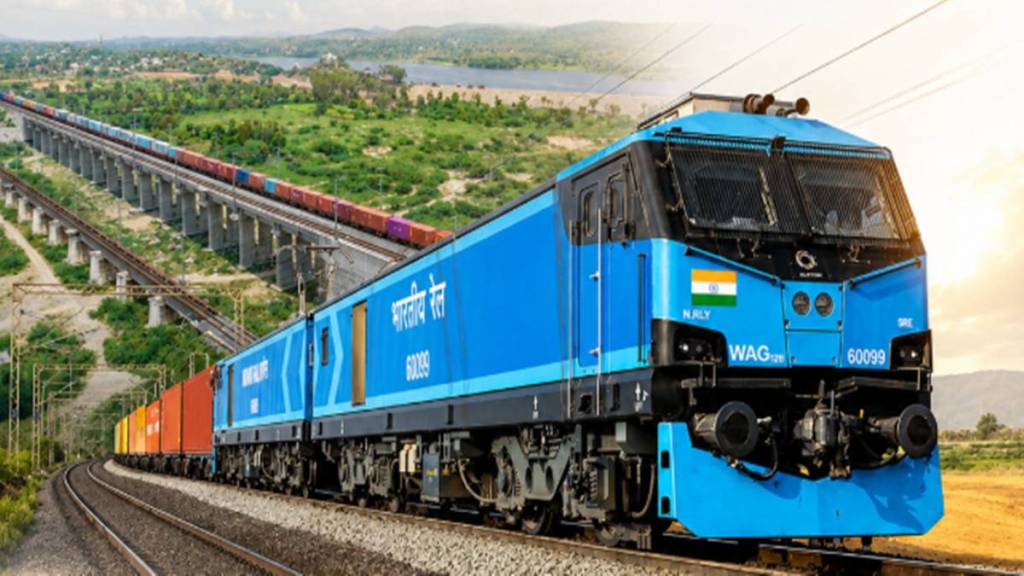

India’s dedicated freight rail network has received a major boost today after Prime Minister Narendra Modi inaugurated the final three sections of the Western Dedicated Freight Corridor (WDFC), taking the country’s dedicated freight corridor network to completion.
Dedicated Freight Corridor -> more freight carrying capacity -> boost to economy pic.twitter.com/MOYnF0dcrC
— Ashwini Vaishnaw (@AshwiniVaishnaw) September 8, 2026
Speaking at the inauguration, PM Modi said the Eastern and Western Dedicated Freight Corridors are now complete and are emerging as the backbone of India’s trade and commerce. The three newly inaugurated WDFC sections cover 326 route kilometres and cost more than ₹20,700 crore to develop.
Dadri-JNPT freight time cut by 8 hours
The completion of the final section has reduced the average freight transit time between Dadri and JNPT from around 66 hours to about 58 hours.
Shobhit Bhatnagar, Director, Operations & Business Development, Dedicated Freight Corridor Corporation of India Limited (DFCCIL), said while addressing the media that the completion of the Mumbai section has resulted in a direct saving of around eight hours in freight transit time.
Vadodara, Gujarat: Ahead of the Western Dedicated Freight Corridor inauguration, Shobhit Bhatnagar, Director, Operations & Business Development, Dedicated Freight Corridor Corporation of India Limited, says, "From Dadri to JNPT, it used to take around 66 hours until the Mumbai… pic.twitter.com/NoC13JjjPN
— IANS (@ians_india) September 8, 2026
“From Dadri to JNPT, it used to take around 66 hours. As of today, the average transit time is around 58 hours,” Bhatnagar said. This reduction in transit time is expected to make rail freight more competitive and help industries move goods to ports faster.
Direct connectivity to JNPT
The completed WDFC also provides direct rail connectivity to Jawaharlal Nehru Port (JNPT), one of India’s major container-handling ports.
The corridor also enables double-stack container trains to move directly towards major ports. This allows more containers to be transported in a single train, improving freight capacity and reducing the number of train movements required.
For businesses, faster movement and higher capacity can translate into lower logistics costs and more predictable supply chains.
Four key freight hubs connected
The latest commissioning strengthens freight movement across key locations, including New Sanand, New Makarpura, New Umbergaon and New JNPT. These locations connect industrial and manufacturing centres with the western coast, creating a faster freight route between production hubs and ports.
The WDFC is particularly important for the movement of containers, automobiles, industrial goods and other bulk and manufactured cargo.