


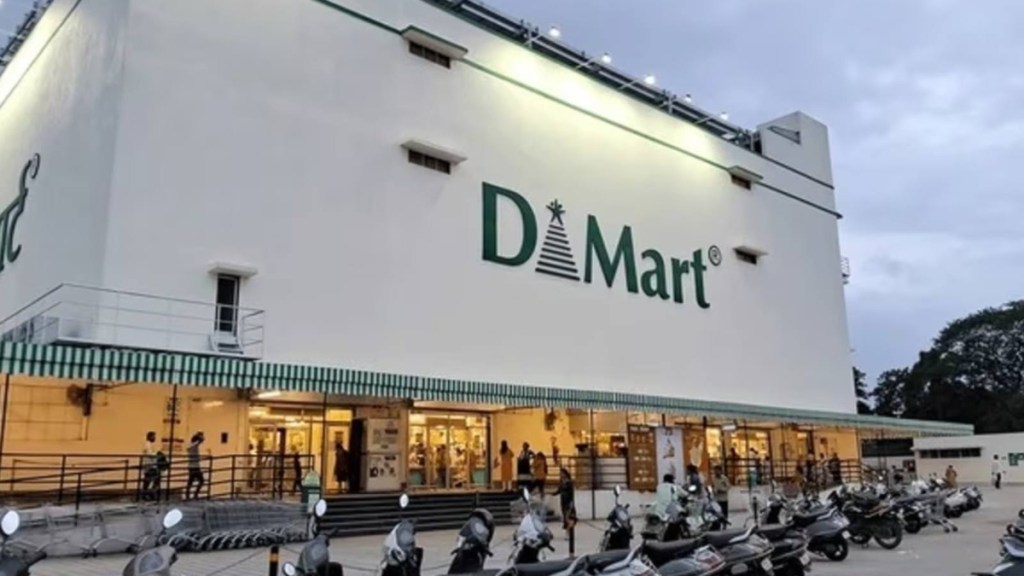

For years, DMart’s answer to India’s digital grocery revolution was straightforward: build an online business, but do it the DMart way—larger baskets, lower prices, scheduled deliveries and, above all, discipline on costs. That strategy is now being put to its hardest test.
Avenue Supermarts Ltd (ASL), which operates DMart, has slashed the footprint of its online grocery arm DMart Ready to 11 cities from 24 a year ago. Seven more cities were exited in the June quarter alone. The retreat is not because online grocery has stopped growing. It is because that growth has yet to generate enough profit to justify the cost of pursuing it everywhere.
Avenue E-Commerce Ltd (AEL), which operates DMart Ready, reported FY26 revenue of Rs 4,093.61 crore, up 16.9% from Rs 3,502.42 crore a year earlier. But its loss widened to Rs 306.53 crore from Rs 247.37 crore.
That is the crux of DMart’s online reset: stop buying scale and start proving that e-commerce can make money.
“We made a conscious choice to double down on DMart Ready in 11 key cities where the vast majority of our online business comes from,” Anshul Asawa, chief executive officer and managing director of Avenue Supermarts, said in a recent earnings call. “We want our team to be laser-focused on proving that we can run a truly sustainable, profitable e-commerce model here.”
Asawa said the focus would be on three areas: tailoring assortment for online shoppers, improving delivery speed and making the digital interface easier to use. Most customers, he said, should eventually receive their orders within six hours.
“Our approach would be to make sure that this 6-hour delivery model, we are able to prove in these 11 cities and then once we are able to do that, then we will take it further up,” he said, adding that quick-commerce companies had chosen a “very different route”.
That route is increasingly difficult to compete with. Blinkit, Zepto and Swiggy Instamart have trained urban consumers to value immediacy, backed by dense dark-store networks and deliveries often completed within minutes. DMart Ready is instead betting that shoppers making larger grocery purchases can trade speed for value.
The bigger question is whether DMart can keep its online and offline businesses separate without allowing quick commerce to erode its core.
Asawa was unequivocal: “There is no plan to integrate AEL with the ASL business.”
The reason is operational as much as strategic. DMart’s physical stores are high-throughput, large-format outlets. Turning them into omnichannel fulfilment centres, Asawa said, would be “hugely challenging” given their footfalls and throughput. “So, the plan is to keep them separate,” he said.
That may make sense financially. But the market is beginning to ask whether the quick-commerce threat is already showing up inside DMart stores.
DMart’s like-for-like growth for stores older than two years slowed to 5.5% in Q1 FY27 from 7.1% a year earlier. More concerning, older stores in large metros were flat, even as non-metro stores continued to grow.
Analysts are divided. Jefferies has flagged quick commerce as a structural overhang and highlighted the flat performance of mature metro stores. Citi cut its FY27-FY29 revenue estimates after the June quarter, citing slower growth and intensifying competition.
Others remain more constructive. Motilal Oswal and Axis Securities continue to point to DMart’s value proposition and store economics, while Morgan Stanley and Bernstein remain positive on its longer-term prospects.
That split captures DMart’s dilemma. Its physical-store model remains its moat—but that moat is strongest where quick commerce is also strongest: India’s large cities.
For now, DMart is refusing to fight quick commerce on its terms. It is concentrating DMart Ready where the economics are strongest and leaving the rest of the market to competitors.