


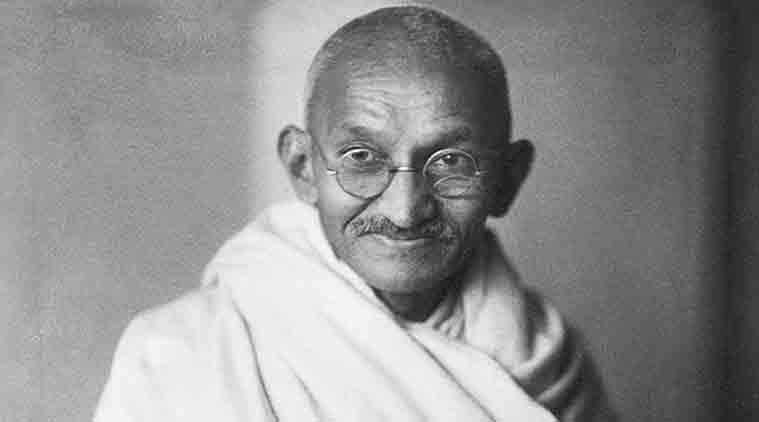

Middle class citizens living in urban areas of the country are burdened with a variety of taxes. While paying taxes is the responsibility of all citizens, it is an understandable reaction when they expect good returns in terms of services rendered by local bodies like municipal corporations. But, what to do when authorities are interested only in collecting taxes and not rendering services they are expected to offer? Mahatma Gandhi had a radical view on this issue.
“If I were a taxpayer within the jurisdiction of a local board or a municipality, I would refuse to pay a single pie by way of additional taxation and advise others to do likewise unless the money we pay is returned four-fold,” Gandhi was quoted as saying in his book ‘India of My Dreams’ , compiled by RK Prabhu.
In the chapter on ‘Urban Sanitaton’, Gandhi elaborated on duties of the members of local boards and municipalities. “Those who enter local boards and municipalities as representatives go there not to seek honour or to indulge in mutual rivalries, but to render a service of love and that does not depend upon money. Ours is pauper country,” Gandhi said.
Father of the Nation further said, “If our municipal councilors are imbued with a real spirit of service, they will convert themselves into unpaid sweepers, bhangis and road-makers, and take pride a in doing so. They will invite their fellow-councilor, who may not have come on the Congress ticket, to join them and if they have faith in themselves and their mission, their example will not fail to evoke response. This means that a municipal councilor has to be a whole timer. He should have no axe of his own to grind.”
Gandhi said that members entering these bodies should “make their contribution to municipal activities.” For this, “a regular register should be maintained.” For those members, who are “too poor” to make monetary contribution but “able-bodied and physically fit can be asked to give their free labour.”
Gandhi suggested that the municipal bodies can make money by properly managing the “night soil”. “If night-soil was properly utilized, we would get manure worth lakhs of rupees and also secure immunity from a number of diseases.”
The Mahatma was particularly concerned about sanitation in living areas. “By our bad habits we spoil our sacred river banks and furnish excellent breeding grounds for flies, with the result that the very flies which through our criminal negligence settle upon uncovered night-soil defile our bodies after we have bathed.” he said, adding, “A small spade is the means of salvation from a great nuisance.”
Gandhi was of the view that leaving night-soil, cleaning the nose, or spitting on the road “is a sin against God as well as humanity, and betrays a sad want of consideration for others. The Man who does not cover his waste deserves a heavy penalty even if he lives in a forest.”
As India celebrates the birth anniversary of Mahatma Gandhi and also the third year of Swachh Bharat Abhiyan launched by Government of India, words of Father of the Nation are worthy of a recall. For they still make a lot of sense, 70 years after independence.