


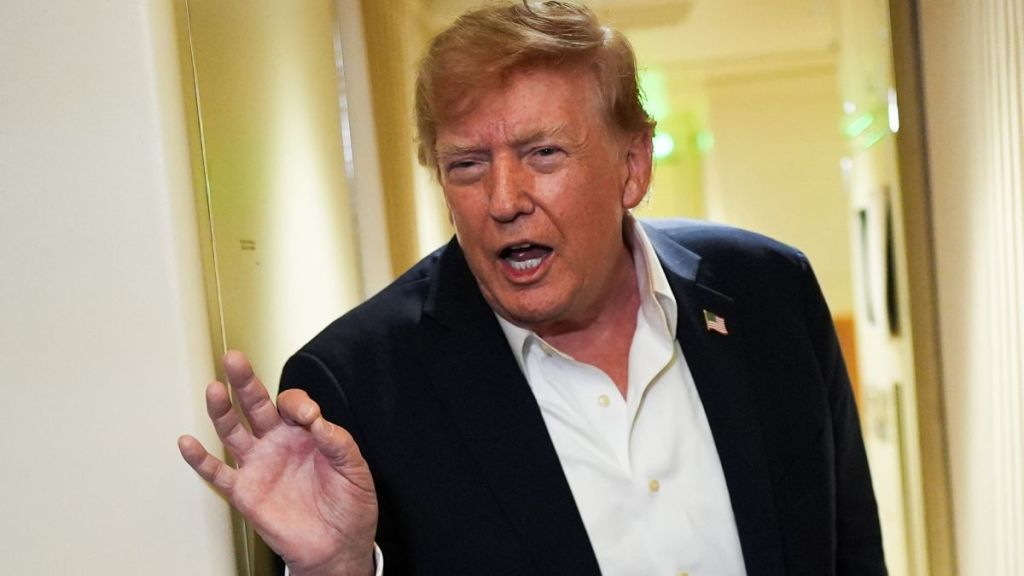

US President Donald Trump recently praised Prime Minister Narendra Modi’s government for its efforts to curb illegal opium cultivation. But at the same time, India has once again been named by the US as a major drug-producing or transit country for the next fiscal year.
The two developments came together in Washington’s annual counter-narcotics determination for fiscal year 2027. US officials have said India’s inclusion on the list does not mean Washington believes the Indian government has failed to tackle illegal drugs.
Trump praises India’s anti-drug efforts
In a statement released by the US State Department on September 16, Trump specifically welcomed India’s efforts to stop illegal opium poppy cultivation and strengthen its supply chains.
“I welcome Prime Minister Modi and the Government of India’s efforts to address illicit opium poppy cultivation and bolster supply chain integrity. I look forward to continued cooperation through the United States-India Drug Policy Framework,” Trump said.
The statement came as the Trump administration released its annual list of countries considered major sources or transit points for illegal drugs entering the US.
Earlier today, President Donald Trump released a global report on combating illicit drugs around the world. Prime Minister Modi has done a remarkable job fighting illicit drugs, and the United States applauds his efforts! Our two nations will continue combatting drugs together. https://t.co/RI2Sf7QqXY— Ambassador Sergio Gor (@USAmbIndia) September 16, 2026
Why India is still on the US list
India has been included on the FY2027 list along with more than 20 other countries, including Afghanistan, Pakistan, China, Mexico, Colombia and Venezuela. However, US officials have stressed that being named on the list does not automatically mean a country is failing to control drugs.
The designation takes into account factors such as geography, trade and transport routes. Countries with busy ports, long borders or conditions that make drug production and trafficking easier can appear on the list even when their governments are actively working against the illegal drug trade.
India has also not been put in the more serious category reserved for countries that Washington says have “failed demonstrably” to meet their international counter-narcotics responsibilities.
For FY2027, that harsher designation was given to Afghanistan, Bolivia, Burma and Colombia.
India’s inclusion, on the other hand, came with a clear reference to continued cooperation between New Delhi and Washington on counter-narcotics efforts.
Trump talks up wider drug crackdown
Trump also used the announcement to highlight major gains in his administration’s fight against drug cartels and narco-terrorist groups.
“The narcoterrorists responsible for this invasion are either dead, in jail, or living in fear knowing they will be next to face American justice,” Trump said.
He added that the US military now has standing authorisation to directly strike narco-terrorist targets overseas.
Trump also claimed that drug interceptions along the US southern border have fallen by more than half. He linked the decline to tighter border enforcement after what he described as four years of open-border instability under the previous administration.
He further said overdose deaths across the US have fallen sharply, claiming the drop had helped save tens of thousands of American lives.
Trump also pointed to record drug seizures in the US and an increase in the extradition of major cartel figures by allied governments.
“We have inflicted unprecedented losses on our enemies, and we are just getting started,” he said.
India-US drug cooperation
The latest comments come as the US and India continue to expand cooperation on drug trafficking and related issues.
Washington and New Delhi formalised the US-India Drug Policy Framework for the 21st Century in September 2024. The framework focuses on three broad areas: stopping the trafficking of illegal drugs and precursor chemicals, strengthening cooperation on addiction and public health, and protecting pharmaceutical supply chains.
The cooperation has continued under the current US administration.
In January 2026, officials from the US Office of National Drug Control Policy and India’s Narcotics Control Bureau held the first meeting of the US-India Drug Policy Executive Working Group in Washington.
The two sides reaffirmed their commitment to fighting narco-terrorism. Indian and US narcotics officials met again in March 2026 on the sidelines of a UN drug-policy meeting in Vienna. They agreed to continue discussions through further meetings of the working group.