



US President Donald Trump on Saturday claimed that the United States carried out midnight operation in Venezuela’s Caracas and captured President Nicolás Maduro and his wife, Cilia Flores to stand trial for criminal charges in the US .
In a post on Truth Social, Trump said that the operation was conducted “in conjunction with US law enforcement” and said further details would be shared at a press conference at Mar-a-Lago later on Saturday. Locals described low-flying aircraft over the capital as at least seven blasts echoed across different neighbourhoods.
Who is Nicolás Maduro?
Nicolás Maduro Moros, 63, is among Latin America’s most divisive leaders. He has clung to power through economic collapse, mass migration and persistent allegations of electoral manipulation.
Born into a working-class, leftist family in Caracas, Maduro’s political rise was unconventional. A former bus driver and union organiser, he emerged as an activist campaigning for Hugo Chávez after the latter’s failed 1992 coup. That loyalty forged a lasting alliance. Following Chávez’s election in 1999, Maduro rose steadily through the ranks, serving as a National Assembly deputy, later its president and then as foreign minister from 2006 to 2012. In that role, he advanced a confrontational foreign policy, cutting ties with Israel and Taiwan while deepening alliances with Cuba, Russia and China.
Chávez named Maduro vice president in 2012, effectively anointing him as successor. After Chávez’s death the following year, Maduro narrowly won a special election with just over 50% of the vote. This slim mandate soon hardened into a more authoritarian style of rule.
Maduro’s presidency and Venezuelan economy
His presidency has coincided with Venezuela’s steep economic decline. The economy has shrunk dramatically as oil revenues collapsed, while price controls, currency manipulation and deficit spending fuelled hyperinflation. The bolívar (currency) became nearly worthless and an estimated eight million Venezuelans fled abroad.
Maduro also consolidated power politically by reshaping institutions, relying heavily on military loyalty and suppressing dissent. Opposition efforts to unseat him, including a major challenge in 2019, failed to fracture that support.
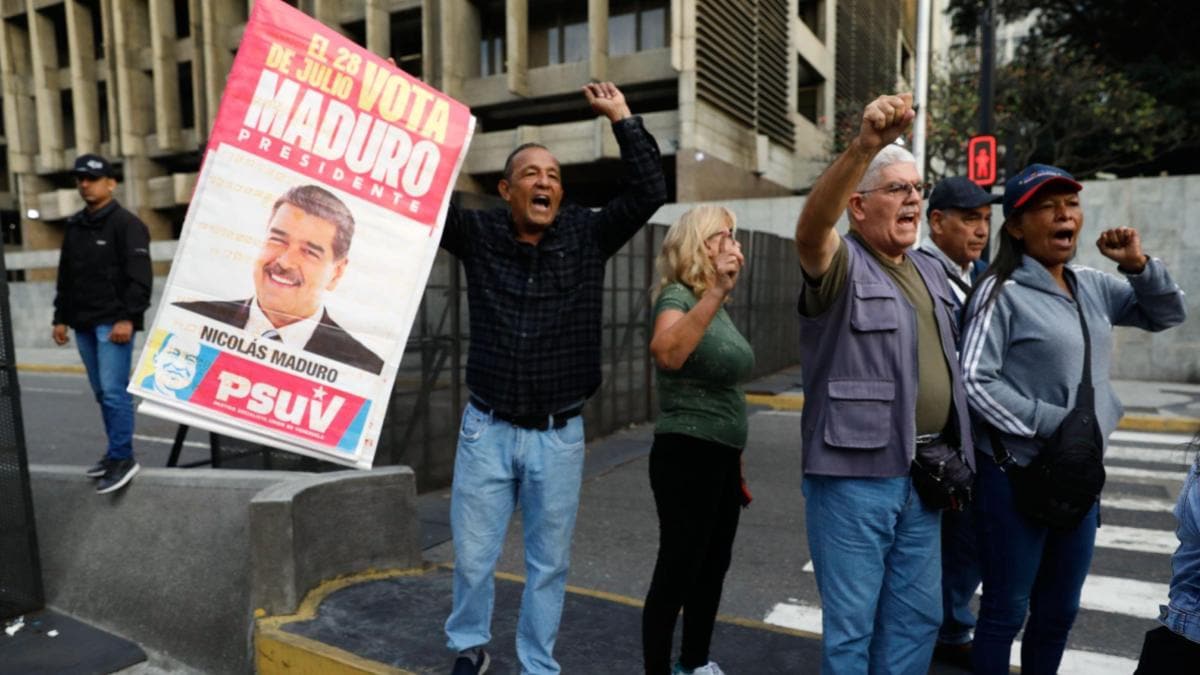
The disputed 2024 election marked his most serious test yet, with opposition figures claiming a decisive victory and international observers raising sharp concerns over credibility.