



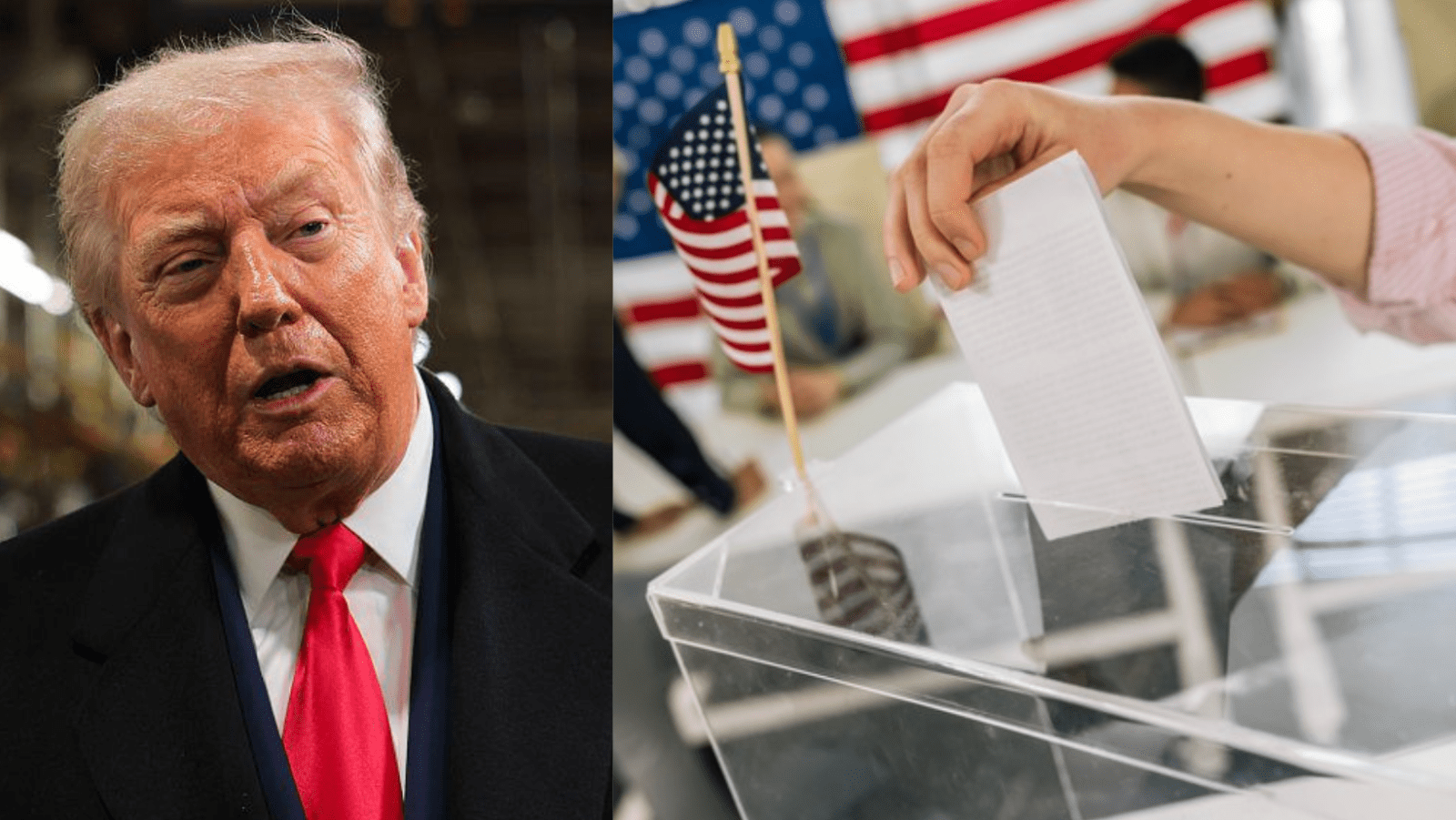
US President Donald Trump has renewed his push for stricter voter eligibility laws, calling for the passage of the SAVE Act after sharing claims of alleged voter fraud in Nevada. On Tuesday, Trump took to Truth Social to argue that the SAVE Act is urgently needed. Sharing a screenshot of a post from X, he wrote, “These people must be in JAIL, for a long time. Totally RIGGED ELECTION!!!”
The post he reshared made several allegations related to Nevada’s voting process. These included claims that tens of thousands of people voted more than once, that deceased individuals cast ballots, that some voters were living outside the state, and that votes were tied to non-existent, vacant, or commercial addresses. It also alleged that non-citizens had voted.
What is the SAVE Act?
The SAVE Act, short for the Safeguard American Voter Eligibility Act, proposes some major changes to how Americans register to vote. According to a factsheet by the Center for American Progress, the legislation would require all US citizens to present documentary proof of citizenship in person when registering to vote or updating their voter registration details.
Under the bill, most Americans would need to show a valid passport or a birth certificate. Government-issued driver’s licenses, including REAL IDs, as well as military or tribal identification cards, would not be accepted as proof of citizenship. The act would also shift the responsibility of verifying eligibility from election officials to individual citizens, requiring voters to prove their right to vote.
How the SAVE Act would change voter registration
If enacted, the SAVE Act would fundamentally alter the voter registration system across the country. Online voter registration would be eliminated, mailed registration forms would no longer be accepted, and voter registration drives would effectively end.
Even minor updates such as changing an address, updating a name, or switching party affiliation, would require voters to appear in person at an election office with original or certified documents.
Who could be most affected by the law
According to Center for American Progress, a large portion of the US population may not have the documents required under the SAVE Act. Around 146 million American citizens reportedly do not hold a valid passport, a number close to the total turnout in the 2024 presidential election. Passport ownership is uneven across the country, with lower rates concentrated in several Republican-leaning states.
The bill could also disproportionately affect women. An estimated 84 percent of women who marry change their surname, meaning tens of millions may not have a birth certificate that matches their current legal name. The SAVE Act does not explicitly allow for the use of marriage certificates or name-change documents to address this issue.
Lower-income and working-class Americans could also face challenges. Passport ownership is significantly lower among people earning under $50,000 a year and among those with a high school education or less.
Trump urges Republicans to act before 2026
In an earlier address to the lawmakers, Trump urges to move quickly on a national voter ID law before the next midterm elections.“You want to have Voter ID. You want to insist on it. You want to insist on it,” he said.
Trump specifically promoted the SAVE Act, which passed the House in 2025 but stalled in the Senate. He also hinted at rebranding the bill, saying, “SAVE Act or the ‘Save America Act.’ I think we’re going to change the name a little bit.”
Several Republican lawmakers publicly backed Trump’s comments. Senator Mike Lee wrote on social media, “Thank you, Mr. President! The SAVE Act will help SAVE America! Let’s get it done.” Representative Byron Donalds added, “The SAVE Act ensures ONLY US CITIZENS can vote in US elections.”
Democrats, however, have long opposed the legislation, arguing that it amounts to voter suppression. They say the bill would deprive millions of eligible American citizens of their right to vote by placing unnecessary and burdensome barriers in the registration process.