



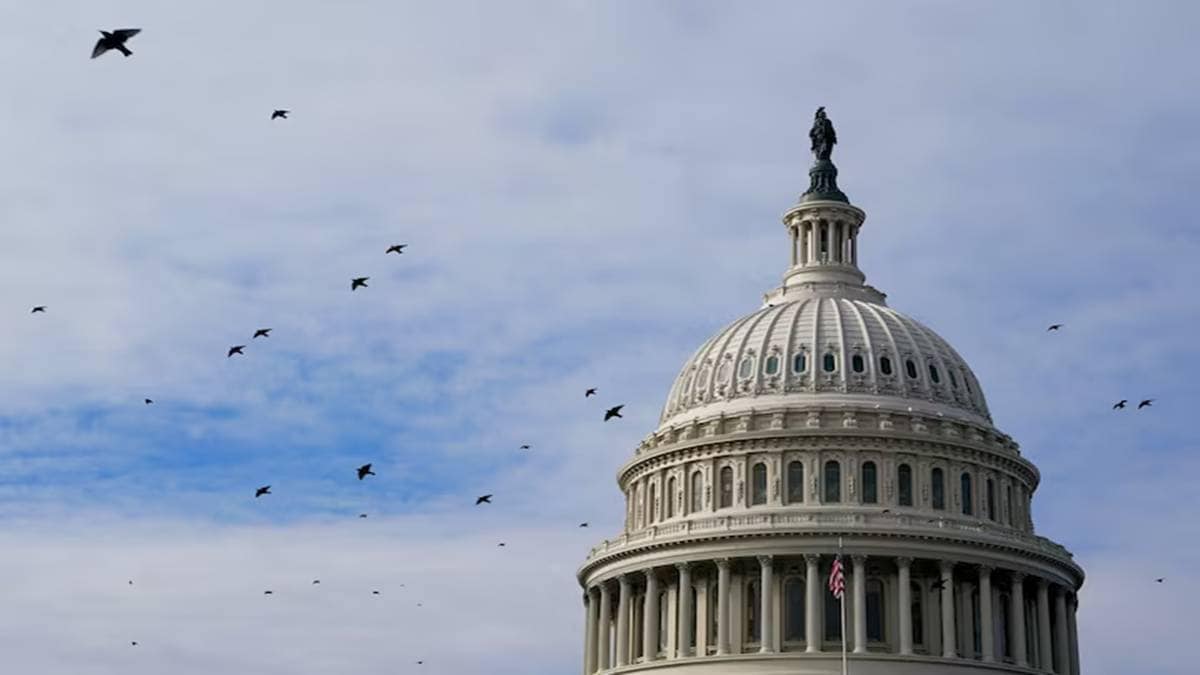
With the midnight deadline looming, the US government was headed toward a partial shutdown as Congress appeared unlikely to clear a spending package in time. The Office of Management and Budget directed federal departments to prepare for an “orderly shutdown,” noting that several government funds would expire at 11:59 pm.
After hours of delay, the US Senate cleared the stopgap spending package with a strong vote of 71-29, highlighting broad agreement to keep most government operations running. However, the House of Representatives remains to be out of Washington is not expected to consider the bill until Monday. As a result, a partial government shutdown is set to begin shortly after midnight Eastern Time.
Despite the looming lapse, Democrats and Republicans have sought to prevent their sharp differences over immigration enforcement from triggering prolonged disruptions across federal agencies. That approach marks a clear difference from last autumn, when a bitter standoff then focussed on healthcare led to a record 43-day shutdown that cost the U.S. economy an estimated $11 billion. As per Reuters, historical data from the Congressional Research Service indicates that since 1977, the government has experienced 10 funding gaps lasting three days or fewer, most with minimal impact on daily life.The expectations are that the current shutdown, if it occurs, may be brief.
Why is a shutdown now looking likely?
The US Senate was heading towards a final vote on Friday afternoon, but the US House of Representatives was out of town and not expected to take up the measure until Monday at the earliest, making the shutdown likely, though potentially brief. The dispute is related to immigration enforcement, with lawmakers trying to prevent the flight from impacting the rest of the government funding, as reported by Reuters.
Which agencies are impacted?
In the memo signed by Russel T. Vought, OMB told agencies that because Congress would not finish its work before the funding expiry, “affected agencies should not execute plans for an orderly shutdown.” It also added that employees should report to work for their next regularly scheduled duty period to carry out shutdown activities. The memo also stated that the administration would keep working with Congress and expected the lapse to be of a short period. The letter by OBM also indicated that government functions should resume once the President signs a bill providing funding.
The document lists several areas whose appropriations would expire at 11:59 pm. The list includes the Department of Homeland Security, Defense, Financial Services, the Department of Labor, Department of Education, Department of Health and Human Services, Transportation, the Department of State, the Department of Housing and Urban Development, and related programs.
All about the Senate deal
The emerging plan would separate DHS funding from the broader package. This would allow lawmakers to keep agencies such as the Department of Defense and the United States Department of Labor operating while negotiations continue on restrictions for federal immigration agencies. DHS funding would be extended for two weeks to give negotiations more time, as per Reuters.
The Senate Democrats got angered after a second US citizen was shot dead by immigration agents in Minneapolis and threatened to block the wider funding package to push Donald Trump to rein in DHS.